Languages
Thursday, October 8, 2026



News and Views from the Global South
Green Economy
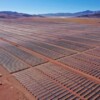
China is the Driving Force Behind More, Newer Renewable Energies in Latin America
China, with its investments, products, technology, and innovation focused on solar and wind farms in Latin America and the Caribbean, as well as on electricity networks and services, stands out as a driving force for the region's shift toward energy less reliant on fossil fuels and increasingly cleaner and greener.
From Drylands to Dignity: How Solar Energy and Climate-Smart Farming Are Empowering Communities in Burkina Faso
In the heart of Burkina Faso’s drylands, in the village of Zoungou, a quiet transformation is underway. Alhaji Birba Issa, a smallholder onion farmer, bends over neat rows of lush green crops, the hum of solar-powered pumps audible in the background.
The Race Towards Clean Energy: A World Still Gripped by Coal
Global investments in energy exceeded USD 3 trillion in 2024, with at least USD 2 trillion being invested in clean energy technology and infrastructure. Infrastructure. Despite that progress, fossil fuel consumption continues to rise with little sign of slowing.
The New Silk Road of Central Asia: Landlocked Countries Now Connected
Once landlocked, now connected, the UN Global Compact has bridged the gap between Europe, Asia, and the Middle East: having many call it the “New Silk Road”.
For the Aged, Their Sunset Years Will Be Bedeviled by Lethal Heatwaves
The global population is aging at a time when heat exposure is rising due to climate change. Extreme heat can be deadly for older populations given their reduced ability to regulate body temperature. Already there has been an 85 percent increase since 1990 in annual heat-related deaths of adults aged above 65, driven by both warming trends and fast-growing older populations.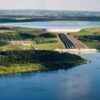
Pumped Storage Hydropower is an Option for Latin America
Having hydroelectric power without damming rivers, dismantling the environment or displacing populations is possible in Latin America and the Caribbean, with reversible power plants that take advantage of their mountainous geography, and pave the way for only renewable sources to generate electricity.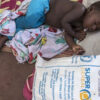
When Life-Saving Treatment Disappears: The Coming Crisis in Child Malnutrition
On July 1st, USAID officially shuts down and transfers operations to the U.S. State Department. Amid growing uncertainty about the future of U.S. foreign assistance structures and funding, supply chains that deliver life-saving treatment to malnourished children worldwide have broken down, triggering a global nutrition crisis.
Brazil’s Most Sustainable Capital Puts Value on its Waste
Living with her neighbours, getting to know them and chatting with them is what Lucila Neves enjoys most in the community orchard of Portal de Ribeirão, a neighbourhood in the south of Florianopolis, considered the most sustainable of Brazil's 27 state capitals.
Make Use of all Urban Waste, a Utopia in Brazil?
In 2014, Santa Catarina became the first and only state free of open-air garbage dumps in Brazil. Now, 14 of its municipalities are seeking to also free themselves from landfills and make use of nearly all urban solid waste.
UNOC3: Bringing Ocean Education and Science to the Global Agenda
A greater understanding and appreciation of the world’s oceans is needed to protect them. As the global community prepares to convene for the ocean conference, they must also prepare to invest in scientific efforts and education that will bolster their joint efforts.
Energy Storage Has Yet to Take Off in Mexico
Researcher Edilso Reguera and his team began studying electric battery manufacturing in 2016, but in 2023, they ramped up efforts to develop a lithium-based prototype for motorcycles.
A Shift in the Sands: The Reshaping of Global Influence in the Gulf
The Gulf's most powerful weapon isn't a military, a United Nations (UN) Security Council seat, or a legacy of global diplomacy. Choosing multilateralism and mega-projects over militaries and old-world diplomacy, they are tipping the scale without firing a single shot. Their approach is more modern, where money, alliances, and an active vision for the future are the weapon of choice.
Former Energy Ministers from Saint Lucia and Uruguay Named REN21 Renewable Energy Champions
The Renewable Energy Policy Network for the 21st Century (REN21), a global network that advances renewable energy through collaboration and knowledge sharing, has named Dr James Fletcher of Saint Lucia and Dr Ramón Méndez Galain of Uruguay as its first Renewable Energy Champions.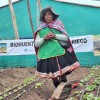
Andean Women Farmers in Peru Face Climate Crisis with Green Practices
"Up here in the highlands, there’s a lot of frost, and everything seems bleak. But I’m so happy since I got my greenhouse and started growing vegetables in a healthy way. I feel like we’re overcoming the challenges of the weather," Anacleta Mamani, a Quechua farmer from the community of Poques (about an hour’s drive from Cusco, the former imperial capital of Peru), told IPS.
Farmers Need Science Solutions in Their Hands Sooner Than Later
Climate change is outpacing science and farmers are paying the price. Agricultural research innovations need to reach farmers before it is too late.
Organic Fertilizers Prove Effective on Tea as Farmers Abandon Synthetic Inputs
On the outskirts of Kericho town within Kenya’s Rift Valley region, Kaptepeswet tea farm, an organic tea estate sprawling on a 50-acre piece of land, is a testament that organic fertilizers can be used on mature tea bushes and still produce the desired quantity and quality of premium leaves.
International Day of Forests
‘Now is the time for decisive, collaborative action’
The Forest Declaration Assessment Partners have called for urgent reforms to the international financial system to halt deforestation and protect biodiversity. It has also pitched for redirecting the public subsidies to mitigate the direct and indirect environmental risks from both public and private finance. 
Hortolandia Emerges as an Energy and Environmental City in Brazil
Almost everything seems new or under construction in the southern Brazilian city of Hortolandia, from its wide avenues and cable-stayed bridge to its large buildings and riverside parks.
Mexican Electric Vehicles Struggle to Accelerate
Mexico has seen several attempts at assembling electric vehicles (EVs), powered by rechargeable batteries, which have faced challenges related to industrial scale, supply chains, and competitiveness
Mexico’s New Economic Plan Lacks Energy
This January, Mexico has embarked on a new industrial path for the next six years, where the viability of its energy component faces fundamental challenges that put it at risk.
Education Cannot Wait Interviews Adenike Oladosu, ECW Global Climate Champion and BBC 100 Women 2024
Adenike Oladosu is a leading Nigerian ecofeminist, climate justice leader and researcher. She was appointed as an ECW Global Climate Champion on World Environment Day in June 2024. In December of last year, Adenike was honored by #BBC100Women, selected as one of the BBC’s 100 most influential and inspiring women from around the world. She was also a finalist for the Pritzker Emerging Environmental Genius Award.
« Previous Page — Next Page »





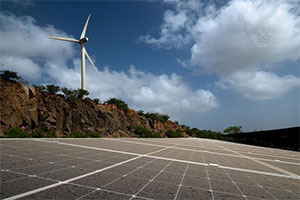 Renewable Energy in Cabo Verde. Credit: UN Photo/Mark Garten
A green economy is an economic model that aims to reduce environmental risks and build a sustainable future. Many of the UN SDGs seek to facilitate a green economy, such as ensuring access to affordable and reliable clean energy, building sustainable cities and communities, and implementing urgent action to combat climate change. Various key negotiations have strived to achieve a green economy, such as the Green New Deal and the Inflation Act of 2022. COP30, held in Belém, Brazil in 2025, agreed to mobilize $1.3 trillion annually for climate action and launched the Belém Mission to 1.5°C. However, the conference was not able to develop a fossil fuel reduction roadmap. Recent years have witnessed a sharp transformation in the geopolitical landscape of international sustainability cooperation. In March 2025, the United States stepped back from formal multilateral support for the SDGs, while China is on the rise as an international leader in renewable energy production. The actions of these global powers may shape shifting alliances on environmental governance. IPS is dedicated to sharing timely news on international developments in building a sustainable future.

The Week with IPS

NEXT STOP - SDGs
Tracking global progress towards a sustainable world
Tracking global progress towards a sustainable world
