Languages
Monday, November 16, 2026



News and Views from the Global South
Economy & Trade

Covid-19 Cannot Be Defeated by a Divided World
Announcing an independent evaluation of the global Covid-19 response on 9th July, World Health Organization (WHO) Director-General Dr Tedros Adhanom Ghebreyesus asked why it has been “difficult for humans to unite and fight a common enemy that is killing people indiscriminately?”.
Cheap or Adequate and Accessible to Everyone?
The COVID-19 pandemic has revealed some lesser-known realities, or some we had not wanted to think about, and exposed its consequences for the right of people to feed themselves in dignity.
Can Private Finance Really Serve Humanity?
The recent explosion of private finance has nursed the hope, dream or illusion that it can be mobilized for the public good, e.g., to achieve the Sustainable Development Goals, associated with Agenda 2030. However, such hopes ignore how changes in financial investing have deeply transformed corporations, national economies and prospects for the world economy and social progress.
Electrification of Transport: A Challenge for Urbanised Latin America
Electric transport, still limited in Latin America despite its urban benefits, could expand during the post-pandemic economic recovery, says Adalberto Maluf, president of the Brazilian Association of Electric Vehicles (ABVE).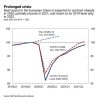
Toward a More Resilient Europe
Europe, like the rest of the world, faces an extended crisis. An element of social distancing—mandatory or voluntary—will be with us for as long as this pandemic persists. This, coupled with continued supply chain disruptions and other problems, is prolonging an already difficult situation. Based on updated IMF projections released last month, we now expect real GDP in the EU to contract by 9.3 percent in 2020 and then grow by 5.7 percent in 2021, returning to its 2019 level only in 2022. If an effective treatment or vaccine for COVID 19 is found, the recovery could be faster—but the opposite would hold true if there are large new waves of infection.
Heifer Nepal Farmers Persevere During COVID-19 Pandemic
For nearly three months, the government of Nepal implemented a strict lockdown to combat the spread of COVID-19. And while it slowed the spread of the virus, it also put a tremendous economic burden on many families nationwide. As of June 15, the country transitioned to a “soft lockdown,” easing some restrictions such as allowing private vehicles to operate on an odd/even-day scheme. But the economic effect is already being seen.
Lebanese Financial Crisis Validates Importance of Abolishing ‘Kafala’
They were promised the world but ended up in a Lebanese household. This is the story of many domestic workers in Lebanon. With a 70-year-old sponsor system still in place, domestic workers are tied to their employers with little or no basic rights. The ‘Kafala’ system is the major problem behind what we have been seeing in Beirut in the last months.Covid-19 And Migrant Workers: Planning the return and reintegration of forced returnees
During the pandemic, forced return of migrants has become a major issue of concern for intergovernmental bodies and the global civil society engaged in migration issues. The United Nations Network on Migration (UNNM) has urged states "to suspend forced returns during the pandemic, in order to protect the health of migrants and communities, and uphold the human rights of all migrants, regardless of status". UNNM has called for a halt to arbitrary expulsions and reiterated that their "protection needs must be individually assessed; and that the rule of law and due process must be observed". It reminded the states that these obligations under international law "can never be put on hold and are vital to any successful approach to combatting Covid-19 for the benefit of all".
Teleworking Is Not Working for the Poor, the Young and the Women
The COVID-19 pandemic is devastating labor markets across the world. Tens of millions of workers lost their jobs, millions more out of the labor force altogether, and many occupations face an uncertain future. Social distancing measures threaten jobs requiring physical presence at the workplace or face-to-face interactions. Those unable to work remotely, unless deemed essential, face a significantly higher risk of reductions in hours or pay, temporary furloughs, or permanent layoffs. What types of jobs and workers are most at risk? Not surprisingly, the costs have fallen most heavily on those who are least able to bear them: the poor and the young in the lowest-paid jobs.
Beware the ‘Hunger’ to Access Indigenous Peoples’ Land and Resources for Post-COVID-19 Recovery
When governments and states begin their recovery journey from the economic downturn caused by the coronavirus pandemic, there might be a heightened threat to indigenous peoples, their land and resources. “The fear is [that] the economic recovery is based on access to land and natural resources,” Lola García-Alix, senior advisor on Global Governance at the International Work Group for Indigenous Affairs (IWGIA), told IPS.
Financialization: Tackling the Other Virus
The 1971 Bretton Woods (BW) system collapse opened the way for financial globalization and transnational financialization. Before the 1980s, most economies had similar shares of trade and financial openness, but cross-border financial transactions have been increasingly unrelated to trade since then.
The Quiet Survivors of a Global Pandemic
The issue of women’s rights, feminism and gender is complex and ongoing in most countries including Bangladesh. When I was asked to write about impact of COVID-19 on women and girls, I found myself drawn towards writing about women’s situation in general as that automatically impacts COVID-19 response as well. Since I am a woman who has been a part of many different cultures, yet a Bangali at heart, I am not only a survivor within its ranks but also responsible for being a part of the solution to the problems we face.
GGGI signs a Contribution Agreement with the European Union to provide support in accelerating Greening Uganda’s Urbanization and Industrialization Agenda
The European Union (EU) represented by the European Commission in Uganda and the Government of Uganda through the Global Green Growth Institute (GGGI) have signed a contract today to cooperate on advancing the Greening Uganda’s Urbanization and Industrialization agenda. This project is part of the European Union’s Inclusive Green Economy Uptake Programme (GreenUP) financed under the 11th European Development Fund (EDF) and will be implemented for a 36 months period with a total cost estimated of just under EUR 5mln. The MoU was signed by European Union in Uganda and Ms. Dagmar Zwebe, Country Representative of the GGGI Uganda office.
Building Back Greener in Africa
COVID-19 continues to race across the African continent. People are dying, and even more are being pushed into hunger and poverty, in many cases risking to overturn years of development gains.
Innovative Financial Approaches Key to Unleash SIDS Economic Potential
Our world is transfixed by the great human toll and economic impact of the worst global pandemic in a century. For the 65 million inhabitants of small island developing states (SIDS), the impact of the novel coronavirus (COVID-19) is reminiscent of the worst forms of extreme weather events that SIDS contend with annually. Such events cost lives, undermine our hard-earned development gains, and hamper the aspirations and quality of life of our people. Our governments are routinely compelled to shift already scarce resources from social and economic investments to recovery and sustenance in the aftermath of disasters. For decades islands have been treading a development tightrope, which is increasingly precarious with the intensification of adverse climate impacts.
Donald Trump, Working Class Hero?
In his early February annual State of the Union address, US President Donald Trump typically hailed his own policies for increasing wages and jobs to achieve record low US unemployment. Directly appealing to labour for a second term, Trump claimed exclusive credit for the US “blue-collar boom”.
Impact of COVID-19 on Women and Children in South Asia
The onset of the coronavirus pandemic in early 2020 set off a series of health and economic crises that feed upon each other. The health crisis exacerbates the economic crisis by disrupting supply chains, throwing large number of people (particularly those working in the informal sector) out of work and closing down large numbers of enterprises – particularly micro, small and medium enterprises (MSME).
The Missing SDG: Ensure the Digital Age Supports People, Planet, Prosperity & Peace
As the nations of the world prepare to gather virtually to assess progress towards the Sustainable Development Goals (SDGs), society is just beginning to imagine what a post-COVID world might be like.
Beyond Ending Conflict in Africa, We Must Tackle its Root Causes
Hanna Tetteh is the United Nations Under-Secretary-General and Special Representative of the Secretary-General to the African Union. As head of the UN Office to the African Union (UNOAU), she spoke with Africa Renewal’s Kingsley Ighobor on, among other issues, the current state of the UN-AU partnership and how women and young people can help resolve conflict.
Global Economic Recovery must Prioritise Restructuring of Debt for Developing Countries
Unless there is a restructuring of debt for developing countries, the servicing for this debt will take away valuable resources from these nations that are needed to prevent the further suffering of people during the coronavirus pandemic -- particularly with regards to safeguarding the health systems, and protecting the “integrity and resilience of economies”.
Rethink Food Security and Nutrition Following Covid-19 Pandemic
The Covid-19 crisis has had several unexpected effects, including renewed attention to food security concerns. Earlier understandings of food security in terms of production self-sufficiency have given way to importing supplies since late 20th century promotion of trade liberalization.« Previous Page — Next Page »


 UN Commission on International Trade Law Holds Colloquium on Harmonizing Law in Age of Digital Trade and Finance. Credit: UN Photo/Manuel Elías
Trade has historically been a geopolitical tool that can both be used to propel development as well as entrench inequalities. In various nations in East Asia and Latin America, increased trade, as often seen in export booms, has allowed them to achieve influential standings within the global economy. On the other hand, many low-income countries in Sub-Saharan Africa, Asia, and Latin America struggle to maintain a robust trade performance, and oftentimes are subjugated to exploitative trade dynamics through intense extraction of their natural resources. In recent decades, international trade has reached a new era as emerging economies across the world are rising in economic preeminence. Stable international trade is crucial to world peace as global interconnectedness facilitates reliable diplomacy. Nevertheless, significant challenges are on the rise. Notably, a major wave of United States tariff escalations in January 2025 lifted US import taxes to their highest level since the 1930s, changing market dynamics and forcing renegotiations with global trading partners.These articles are aimed at informing readers about the complexities of trade and its varying effects on development, with a special focus on the consequences of the global economic crisis, the potential of fair trade and the gender implications of trade policies.
Updated by Yilan Batista and Shuli Wong August 2026

The Week with IPS

NEXT STOP - SDGs
Tracking global progress towards a sustainable world
Tracking global progress towards a sustainable world
