Languages
Tuesday, November 17, 2026



News and Views from the Global South
Economy & Trade

The Struggle for Land and Food in the Locked-down Philippines
Landless farmers who produce rice for the landlords of big “haciendas” can’t get more than a little pocket money from their harsh work—not enough to provide diverse and healthy food for their families. Seasonal workers on sugar-cane plantations know that they can count on only six months of earnings. When summer arrives, those whose irrigation facilities have been destroyed by typhoons, or those who never had any, struggle while waiting for the rain.
COVID-19: Reset Food Systems Now for a Better Future
The COVID-19 pandemic has highlighted the inherent fragility of food systems, Marta Antonelli told an international video conference organised by the Barilla Center for Food Nutrition (BCFN).
Covid-19 Recessions: This Time It’s Really Different
The world economic contraction so far this year is largely due to measures, especially at the national or local level, to contain or prevent Covid-19 contagion, particularly those restricting business operations, thus reducing economic activity, output, incomes and spending.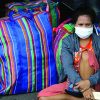
Lifelines in Danger
The COVID-19 pandemic is crippling the economies of rich and poor countries alike. Yet for many low-income and fragile states, the economic shock will be magnified by the loss of remittances—money sent home by migrant and guest workers employed in foreign countries.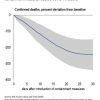
How the Great Lockdown Saved Lives
Since the COVID-19 outbreak was first reported in Wuhan, China in late December 2019, the disease has spread to more than 200 countries and territories. In the absence of a vaccine or effective treatment, governments worldwide have responded by implementing unprecedented containment and mitigation measures—the Great Lockdown. This in turn has resulted in large short-term economic losses, and a decline in global economic activity not seen since the Great Depression. Did it work?
This Year of Living Dangerously
Indonesia’s founding President Sukarno delivered his annual Independence or National Day address on 17 August 1964 anticipating the forthcoming year as Tahun vivere pericoloso, the ‘year of living dangerously’. 2020 may well be the world’s turn, and not only due to the obvious Covid-19 threat to the world.
Beyond the Crisis
Looking back to the start of 2020, the world has changed almost beyond recognition. To protect public health, the global economy was put into stasis. Shops closed, factories were mothballed, and people’s freedom of movement was severely curtailed. No country has escaped the health, economic, and social impacts of the COVID-19 crisis. Tragically, more than 260,000 people have died and millions have been infected. The IMF is projecting global economic activity to decline on a scale not seen since the Great Depression. It is truly a crisis like no other.
The Consequential Effects of Covid-19 on the Climate Crisis
The tragedy of the coronavirus pandemic and its associated challenges have thrown our world into chaos, with the virus destroying lives and livelihoods in its path.
COVID19 and Its Impact on Pacific Island States
 By now, the impact of COVID19 on our daily lives has been well documented, especially in advanced economies. Anxiety about the future continues to grow everywhere. Much of the corporate news coverage we consume has focused on the toll this pandemic will take on mainland countries. Often neglected, however, is the unique position Pacific Island States find themselves in.

How a Post-COVID-19 Revival Could Kickstart Africa’s Free Trade Area
The African Continental Free Trade Area was launched two years ago at an African Union (AU) summit in Kigali. It was scheduled to be implemented from 1 July 2020. But this has been pushed out until 2021 because of the impact of COVID-19 and the need for leaders to focus on saving lives.
Innovation Is an Imperative – for Sustainable Food Systems
Hunger and food insecurity continue to rise. The official 2019 statistics refer to 821 million people suffering from hunger all over the world. According the recently launched Global Report on Food Crises, there are further 135 million people facing crisis levels of hunger or worse. WFP estimates that due to the impacts of COVID19, additional 130 million people could be pushed to the brink of starvation by the end of 2020. This means a total increase of 265 million people. If there will be no appropriate and urgent actions, “we could be facing multiple famines of biblical proportions within a short few months”, said David Beasley, WFP Executive Director, addressing the UN Security Council on 21st April.
Politics, Profits Undermine Public Interest in Covid-19 Vaccine Race
With well over five million Covid-19 infections worldwide, and deaths exceeding 340,000, the race for an effective vaccine has accelerated since the SARS-Cov-2 virus was first identified as the culprit.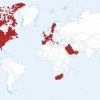
‘Declare remittance as an essential financial service’
The UK and Switzerland are calling for greater global collaboration to ensure access to digital remittance services to support people during the coronavirus outbreak.
Crisis Hits Oil Industry and Energy Transition Alike
While it attempts to cushion the effects of the coronavirus pandemic, the Latin American and Caribbean region also faces concerns about the future of the energy transition and state-owned oil companies.
Unite Behind Environmental Science: Transforming Values and Behaviour is as Important as Restoring Global Ecosystems
Restoring damaged ecosystems is vital to avoid the collapse of nature’s most valuable contributions to people, but International Day for Biological Diversity 2020 should also be a wake-up call about the importance of addressing our social, economic and systemic values, because it is these that are driving the destruction of nature.
COVID-19 Pandemic and the Pacific Islands
As of 11 AM (AEST) on 20th May 2020 the incidence of COVID-19 virus (henceforth virus) on the Pacific Islands was limited. Active cases (deaths) in some of the Pacific Islands were Australia 7,072 (100), New Zealand 1,503 (21), PNG 8(0), Guam 154 (5), Fiji 18 (0), Timor-Leste 24 (0), French Polynesia 60(0), and New Caledonia 18(0).1 Standards of comparison are not uniform across the region since testing capacities of the various countries differ widely. The low number of cases in the smaller Pacific Islands compared to their larger neighbours, i.e., Australia and New Zealand, reflect both variations in testing standards as well as their smaller population size. The smaller Pacific Islands were also not subject to some of the aberrations experienced by the larger countries, e.g., large number of arrivals from foreign countries in planes and cruise ships.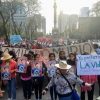
Mexico’s Development Banks Fuel the Fossil Energy Trade
Since 2012, Teresa Castellanos has fought the construction of a gas-fired power plant in Huexca, in the central Mexican state of Morelos, adjacent to the country's capital.
To Restore Forests, First Start With a Seed
In 2011, when Rwanda committed to restoring 2 million hectares of land in a global effort to restore 150 million hectares of degraded and deforested areas by 2020 — it seemed like a big ask.
Striking at the core of the COVID-19 employment crisis
What is happening now
In the early months of 2020, much of the globe was put on pause as governments fought to contain the COVID-19 outbreak. For many, work came to a grinding halt as factories and shops were forced to close their doors, transforming a global health catastrophe into a labour market and economic crisis.
EXCLUSIVE: In the Face of the COVID-19 Pandemic We Are Only as Strong as the Weakest of Us
When the COVID-19 virus travelled from Wuhan, China halfway across the world through Europe, the Americas and beyond in the space of a few weeks, it gave us proof, if one was ever needed, of how tightly interconnected we all are. Not only are our globalized economies interdepended, but also we ourselves are one with the environment around us, and with one another. We are one humankind sharing one planet. And yet, all too often we seem to forget it, as we carelessly revert to misguiding differences between “us” and “them.” Take, for example, the distinction between rich and poor countries, or as economists put it, between advanced economies and least developed countries. In the face of COVID-19, the only difference that matters is if we are sick or healthy. Other than that, we are all the same, regardless of economic status or geographic location.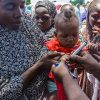
Africa Needs a DOVE Fund: Or Should We Starve So We Can Pay our Debts?
Sub-Saharan Africa has a debt problem. According to the most recent World Bank debt statistics, in 2018 the region had about $493 billion in long term external debt.« Previous Page — Next Page »


 UN Commission on International Trade Law Holds Colloquium on Harmonizing Law in Age of Digital Trade and Finance. Credit: UN Photo/Manuel Elías
Trade has historically been a geopolitical tool that can both be used to propel development as well as entrench inequalities. In various nations in East Asia and Latin America, increased trade, as often seen in export booms, has allowed them to achieve influential standings within the global economy. On the other hand, many low-income countries in Sub-Saharan Africa, Asia, and Latin America struggle to maintain a robust trade performance, and oftentimes are subjugated to exploitative trade dynamics through intense extraction of their natural resources. In recent decades, international trade has reached a new era as emerging economies across the world are rising in economic preeminence. Stable international trade is crucial to world peace as global interconnectedness facilitates reliable diplomacy. Nevertheless, significant challenges are on the rise. Notably, a major wave of United States tariff escalations in January 2025 lifted US import taxes to their highest level since the 1930s, changing market dynamics and forcing renegotiations with global trading partners.These articles are aimed at informing readers about the complexities of trade and its varying effects on development, with a special focus on the consequences of the global economic crisis, the potential of fair trade and the gender implications of trade policies.
Updated by Yilan Batista and Shuli Wong August 2026

The Week with IPS

NEXT STOP - SDGs
Tracking global progress towards a sustainable world
Tracking global progress towards a sustainable world
