Languages
Wednesday, October 21, 2026



News and Views from the Global South
Economy & Trade
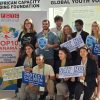
Protect the Rights and Future of Youth, Right Now, From Addiction and Harm
As the world commemorates UN Human Rights Day December 10, with the theme, “Our Rights, Our Future, Right Now,” it’s time to ask: Are we truly listening to what the youth envision for their present and future?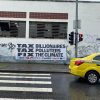
South Africa’s G20 Presidency: A Call for Transformative Leadership in a Fractured World
South Africa’s G20 Presidency begun in December, with only 12% of SDG targets on track and significant backsliding on more than 30%. As we write this today, there is an urgent need for a paradigm shift and practical solutions for a progressive, people-centred, and development-driven agenda in a fractured global landscape that needs collective healing.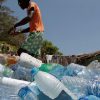
Plastics, Power, and Politics: The High-Stakes Fight for a Global Treaty
As the fifth round of negotiations of the Intergovernmental Negotiating Committee (INC) for a global plastics treaty concluded in Busan, South Korea (25 November-December 1 2024), the meeting underscored both the complexities and the promises of multilateralism. What we saw in Busan was indicative of other environmental treatymaking spaces, including ones on climate and biodiversity.
Another Tsunami Sweeps Sri Lanka
On 26 December 2004 a powerful Asian tsunami swept over many of Sri Lanka’s coastal provinces, killing thousands of people and wildlife, devastating habitats and even washing away a trainload of passengers far from the rail tracks.
UNCCD COP16 Raises Hopes for Ambitious Global Land Action
While many delegates at the 16th meeting of the Conference of the Parties to the UN Convention to Combat Desertification (UNCCD COP16) hope that this could be the convention’s own Paris moment—referring to the historic Paris agreement inked by UNFCCC signatories—however, this hedges heavily on the UN parties’ seriousness to combat drought, desertification and land degradation.
New Approaches Urgently Needed to Tackle Resurgent Social Crises
Despite uneven economic recovery since the pandemic, poverty, inequality, and food insecurity continue to worsen, including in the Asia-Pacific region, which used to fare better than the rest of the Global South.
Rural Laboratory Innovates in Northeastern Brazil
In the municipality of Congo, in the state of Paraiba, in the driest territory of Brazil's semi-arid region, an original initiative seeks to prove it is possible to overcome several challenges concerning family farming. It is the EcoProductive Pilot Project.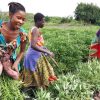
How an App Transformed Farming for Rural Tanzanian Women
In the sun-scorched soils of Moshi, where every drop of rain counts, two female farmers have defied the odds through technology. Mwajuma Rashid Njau and Mumii Rajab, once locked in a daily struggle to survive, have found a mobile phone their best ally.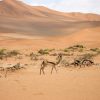
Focus on Africa: IPBES Plenary Session Makes Inaugural Visit to Biodiverse Continent
The Intergovernmental Science-Policy Platform on Biodiversity and Ecosystem Services’ (IPBES) first Plenary session in Africa is a “crucial acknowledgement of Africa’s important contribution to biodiversity conservation, which is a global public good, a heritage that Africa has the privilege to share with the peoples of the world,” says Dr. Luthando Dziba, from South Africa, co-chair of the IPBES Multidisciplinary Expert Panel.
South Africa’s G20 Presidency in 2025: A Pivotal Moment for the Country and Africa
In 2025, South Africa will assume the presidency of the G20, a pivotal moment in the African country's international diplomatic efforts. The Group of Twenty (G20), is an intergovernmental economic forum comprising 19 countries and two regional unions - the European Union (EU), and recently the African Union (AU). It represents 85 per cent of the global economy, 75 per cent of world trade and 67 per cent of the global population.
COP29 Falls Short on Finance
COP29, the latest annual climate summit, had one job: to strike a deal to provide the money needed to respond to climate change. It failed. This was the first climate summit dedicated to finance. Global south countries estimate they need a combined US$1.3 trillion a year to transition to low-carbon economies and adapt to the impacts of climate change. But the last-minute offer made by global north states was for only US$300 billion a year.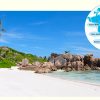
Giving the Ocean a Fighting Chance Through the Great Blue Wall
The Ocean is our life source, but for decades it has been repeatedly marred by humankind. With the disposal of pollutants into the Ocean, overexploitation of Ocean resources and the human-driven increase of global temperatures, the Ocean is changing and not for the better. Our Oceans are warming, corals are dying, fish stocks are declining, toxic chemicals are being released into the Ocean – these eAects are clearly visible today, but there is hope. There are organisations from all around the world that are fighting to save our Ocean.
Maya Train is Yet to Deliver Promised Benefits
Indigenous craftsperson Alicia Pech doesn’t know about the Maya Train (TM), the Mexican government's most emblematic megaproject that runs through five states in the country’s south and southeast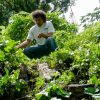
Solar Project Causes Social and Environmental Conflict in Rural El Salvador
With machete in hand, Salvadoran farmer Damián Córdoba weeds the undergrowth covering the trunk of what was once a leafy tree to show the deforestation taking place on the Santa Adelaida farm, where a company seeks to install a solar park in western El Salvador.
Lahore’s Smog: With the Sun Out, the Government Lifts Restrictions
Atif Manzoor, 45, the owner of the renowned blue pottery business in Multan, had every reason to feel cheerful last week when the sun finally came out. For a good three weeks, the city of Sufi shrines had been shrouded in an envelope of thick smog.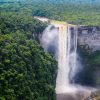
Guyana’s Dream to Be a Green Oil Producer
Long before the transformative discovery of its offshore oil in 2015, Guyana had made a strong pledge to decarbonization and climate action as set forth in its Low Carbon Development Strategy (LCDS) 2030. The development of its oil industry has led to remarkable economic growth in Guyana, including a 62.3% growth rate in 2022.
Bangladesh Bans Polythene Bags Again, Sparking Hopes for the Eco-Friendly ‘Sonali Bag’
After Bangladesh’s interim government banned polyethene bags, a new sense of hope has emerged for the Sonali bag—a jute-based, eco-friendly alternative developed in 2017 by Bangladeshi scientist Dr. Mubarak Ahmed Khan. Sonali bag, or the golden bag, is named after the golden fiber of jute from which it is made.
Explainer: Why COP29 Baku Outcome is a Bad Deal for Poor, Vulnerable Nations
The culmination of bitter, difficult, and challenging climate negotiations concluded with an announcement from the COP29 Presidency of Azerbaijan of the "agreement of the Baku Finance Goal—a new commitment to channel USD1.3 trillion of climate finance to the developing world each year by 2035." This is on top of the USD 300 billion that the developed world is to extend to developing nations annually by 2035.
Mayan Farmers Improve Their Livelihoods and Polyculture of Milpa in Mexico
María Bacab, a Native Maya, considers herself the “guardian of seeds” as she cares for the milpa - an ancestral Mesoamerican polyculture that mixes maize, beans, squash and other vegetables - and promotes its practice and use in Mexico.
Solar and Wind Power Wealth Does Not Reach Consumers in Chile
Chile, a country rich in solar and wind energy and with huge photovoltaic power stations and wind turbines in its elongated territory, managed to change its grid by incorporating renewable energies, which account for an installed capacity equivalent to 43.8 % of its electricity production.
COP29 Focus On Climate Migration as Hotter Planet Pushes Millions Out of Homes
Migration is growing as the planet gets even hotter. Climate change is fuelling a migration crisis and millions of people in vulnerable nations are continually being uprooted from their homes. The climate and migration nexus are undeniable and the global community has turned to the Baku climate talks for urgent and sustainable solutions.« Previous Page — Next Page »





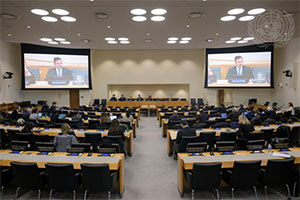 UN Commission on International Trade Law Holds Colloquium on Harmonizing Law in Age of Digital Trade and Finance. Credit: UN Photo/Manuel Elías
Trade has historically been a geopolitical tool that can both be used to propel development as well as entrench inequalities. In various nations in East Asia and Latin America, increased trade, as often seen in export booms, has allowed them to achieve influential standings within the global economy. On the other hand, many low-income countries in Sub-Saharan Africa, Asia, and Latin America struggle to maintain a robust trade performance, and oftentimes are subjugated to exploitative trade dynamics through intense extraction of their natural resources. In recent decades, international trade has reached a new era as emerging economies across the world are rising in economic preeminence. Stable international trade is crucial to world peace as global interconnectedness facilitates reliable diplomacy. Nevertheless, significant challenges are on the rise. Notably, a major wave of United States tariff escalations in January 2025 lifted US import taxes to their highest level since the 1930s, changing market dynamics and forcing renegotiations with global trading partners.These articles are aimed at informing readers about the complexities of trade and its varying effects on development, with a special focus on the consequences of the global economic crisis, the potential of fair trade and the gender implications of trade policies.
Updated by Yilan Batista and Shuli Wong August 2026

The Week with IPS

NEXT STOP - SDGs
Tracking global progress towards a sustainable world
Tracking global progress towards a sustainable world
