Languages
Thursday, October 1, 2026



News and Views from the Global South
Editors' Choice

Girls in Kenya Are Repurposing the Invasive Mathenge Tree Into Furniture
Char Tito is hammering nails into wood at Kakuma Arid Zone Secondary School in Turkana County, northern Kenya. The 16-year-old is making a traditional chair under the scorching sun outside one of the classroom blocks.
Is There a Case for UN Optimism?
On April 16, Seton Hall University's School of Diplomacy and International Relations hosted UN General Assembly President Philemon Yang as part of its World Leader Forum.
Why the UN Staff Union Does Not Agree with the High Commissioner’s Expensive & Poorly-Managed Project
Like you, we attended last week’s townhall where UN High Commissioner (for Human Rights) Volker Turk presented his latest plans for moving staff out of headquarters. We note that this project has been carried out without adequate consultation with the staff union. The key points we learned and which we are concerned about: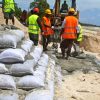
South-West Pacific Communities Threatened by Ocean Heat, Sea-Level Rise
The South-West Pacific experienced unprecedented warming in 2024, according to a World Meteorological Organization (WMO) report released today (June 5)—threatening islands in a region where half the population lives close to the coast.
Noor Mukadam Got Justice, But Why Does Pakistan’s Legal System Fail Its Women?
“It’s brought me some closure,” said Shafaq Zaidi, a school friend of Noor Mukadam, reacting to the Supreme Court’s May 20 verdict upholding both the life sentence and death penalty for Noor’s killer, Zahir Jaffer.
Truce on the Line: After the War Stops, the Suffering Continues
In the war-worn borderlands of Jammu and Kashmir, the silence that followed the May 10 ceasefire between India and Pakistan is not the comforting kind—It is uneasy.
Climate Justice Starts with a Bus Ride: A Lifeline for Delhi’s Waste Pickers
Every day, Delhi’s waste pickers walk three to four kilometers under the blazing sun, collecting and sorting the garbage that keeps India’s capital functioning. Their work is essential—yet largely invisible.
South Asian Cities Faced Relentless, Record-Breaking Heatwaves Last Year
From the blistering heat of Delhi’s streets to Colombo’s humid corners, workers in the informal economy are silently enduring the toll of labour on their bodies and livelihoods.
Abundance of Renewable Energy Attracts Major Data Centers to Brazil
Brazil hopes to soon reap benefits of its largely renewable energy matrix. Data centers, whose demand is growing with the strides made by artificial intelligence, are the new frontier for these still-uncertain investments.[pullquote]3[/pullquote]
Lawmakers Work to Build Women’s Representation in Politics and the Workplace
Jelena Pekić, MP of the Federation of Bosnia and Herzegovina (House of People) and Deputy Speaker of the Canton Sarajevo Assembly, Lana Prlić, MP of the Federation of Bosnia and Herzegovina (House of Representatives) and Marina Riđić, Assistant Representative, UNFPA Bosnia and Herzegovina, spoke to IPS ahead of the Study Tour on Gender Equality and Women's Empowerment in Bosnia and Herzegovina.
Can These Prehistoric Sea Creatures Survive Climate Change?
In November, tens of thousands of male olive ridley sea turtles (Lepidochelys olivacea) start congregating on just five kilometers of nearshore in Odisha in eastern India. They wait for the females of the species to arrive. The survival of these prehistoric sea species has largely depended on suitable pairing and mating. However, research findings from around the world indicate that, in the long term, there may be a limited number of males at these mating sites compared to an overwhelming number of females.
UNOC3: Bringing Ocean Education and Science to the Global Agenda
A greater understanding and appreciation of the world’s oceans is needed to protect them. As the global community prepares to convene for the ocean conference, they must also prepare to invest in scientific efforts and education that will bolster their joint efforts.
UN 80 Reforms, Lacking Transparency, Come Under Heavy Fire
As the UN continues with its plans to restructure the world body, designated UN 80, the complaints continue to pour in—first, the Staff Union in New York and now, the Staff Union in Geneva. After a meeting with management last week-- to discuss UN 80 through the Staff-Management Committee (SMC)—a memo addressed to staffers, says that among the issues raised was “the continuing lack of transparency and lack of consultation”.
Energy Storage Has Yet to Take Off in Mexico
Researcher Edilso Reguera and his team began studying electric battery manufacturing in 2016, but in 2023, they ramped up efforts to develop a lithium-based prototype for motorcycles.
Kenya Pilots AI System to Protect Black Rhino Calves in Aberdare National Park
Conservationists in Kenya’s Aberdare National Park have piloted an artificial intelligence (AI) system designed to detect and deter hyenas—as part of an effort to protect black rhino calves ahead of their reintroduction to the zone.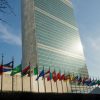
The UN Faces a Different Kind of Crisis — a Slow Erosion of Trust, Legitimacy, & Effectiveness
In 1945, with cities in ruins and hope stretched thin, 50 nations gathered in San Francisco and reached for a better world. From the ashes of fascism, genocide, and world war, they forged a charter — a binding declaration that peace, justice, and human dignity must be protected through international cooperation.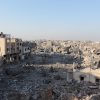
Palestinians Call Out Israel’s Mission To Destroy Their History and Cultural Heritage in Gaza
Israel’s ongoing war of annihilation in Gaza has wiped out hospitals, schools, homes, water, and food, reducing the Palestinian territory to a wasteland and leaving a death toll of more than 53,000 people. But an equally lethal campaign has been unleashed against the foundations of Palestinian society and identity.
Economic Growth is the Wrong Metric for Our Time
As the United States lurches toward isolationism and authoritarianism, its political problems are now bleeding into pocketbook anxieties that Trump's policies will torpedo economic growth, both domestically and globally.
Global Push to Protect Oceans Gains Momentum Ahead of UN Conference in Nice
As delegates prepare for the third United Nations Ocean Conference (UNOC) in Nice, France, momentum is building around ocean governance, finance for marine conservation, and an urgent shift toward a regenerative blue economy. Ocean advocates say the world is at a critical juncture—and the next few weeks could shape the future of marine protection for decades.
Using AI as an Ally: What the latest UNDP Human Development Report Means for Latin America, Caribbean
The United Nations Development Programme’s 2025 Human Development Report (HDR) says crises such as the Covid-19 pandemic have contributed to ‘the flatlining of decades of progress in the Human Development Index,’ with Latin America and the Caribbean facing unique challenges and opportunities.
UN Reform – Once Again?
The UN is going through another exercise in reforming itself under immense pressure from the US, its main funder. This time US President Donald Trump has expressed himself much more forcefully and seems determined to pare down US contributions and demand further curtailing of UN expenses, while some other donors, reluctant to show their own hands, are quietly cheering on the US.« Previous Page — Next Page »


The Week with IPS

NEXT STOP - SDGs
Tracking global progress towards a sustainable world
Tracking global progress towards a sustainable world
