Languages
Monday, November 9, 2026



News and Views from the Global South
Biodiversity
MEXICO-US: The Perverse Patent of the Yellow Bean
Patenting an invention in the United States and benefiting from the patent rights is, in theory, an incentive for innovation and scientific discovery. But in practice it can spur theft, as occurred with a variety of Mexican bean.ENVIRONMENT: Not Enough Done to Protect Biodiversity
The UN conference on biodiversity opened in the former German capital Bonn this week in the face of new evidence that many countries, particularly the industrialised ones, are not complying with their declared goal of "substantially reducing the loss of biological diversity."
PERU: Women – The Guardians of Potato Biodiversity
In South America’s Andes mountain region, indigenous women have traditionally been responsible for selecting, conserving and managing seed potatoes from the countless native varieties of the crop, thus ensuring diversity and continued production while contributing to food security among their people.PHILIPPINES: Deforestation – MNCs, Militants, Soldiers, Farmers Blamed
Outside the office of the Department of Environment and Natural Resources (DENR) in Compostela Valley province sits a pile of confiscated, milled hardwood - a monument to the deforestation caused mainly by parties to a festering armed conflict.ENVIRONMENT: Only the Cover Is Green
Notice how green the public relations campaigns of multinational corporations have become.
CLIMATE CHANGE-CUBA: Prized Wetland in Danger
If the worst outcomes predicted for climate change in Cuba become reality, a large portion of the Ciénaga de Zapata, the largest and best preserved wetland in the islands of the Caribbean Sea, could disappear by the second half of this century.
PERU: Highlands Families Work to Save Their Birthright – the Potato
A plate of parboiled potatoes of various sizes, shapes and colours welcomes the visitor to Huama, a town in the southern Peruvian Andes, at an altitude of 4,500 metres.
BIODIVERSITY-US: Loggers, Owls Not Out of the Woods Yet
Some wounds heal slowly, and the wounds of the logging community on the U.S. northwest Pacific coast are still smarting nearly 20 years after measures to protect a threatened species devastated their industry.
ENVIRONMENT: “Doctor” Nature in Danger
"When we harm nature, we are harming ourselves," says Aaron Bernstein, a doctor at Harvard Medical School and one of the authors of the upcoming book "Sustaining Life: How Human Health Depends on Biodiversity".
PERU: Preserving the Potato in Its Birthplace
Thousands of varieties of potato (Solanum tuberosum), one of the most widely-eaten and well-known foods in the world, have been developed in the heart of South America’s Andes mountains, where the crop was domesticated more than 8,000 years ago.
ENVIRONMENT: Alien Species Plague the Land That Time Forgot
Juicy, wild-growing blackberries, guava and passion fruit plants may be savoured by humans and animals alike, but in this particular part of the world - sometimes called the Land That Time Forgot for its largely pristine biodiversity - they are three problematic invasive species.
ENVIRONMENT-MEXICO: Biodiversity for Sale on the Streets
Trafficking of wildlife in Mexico is threatening to drive many species to extinction long before 2030. Nevertheless, the government believes by that year Mexico will remain one of the world's five most biologically diverse countries.ENVIRONMENT-VENEZUELA: Farewell, Trawl-Fishing
Trawl-fishing is on its way out in Venezuela, amid demonstrations by artisanal fisherfolk who support the new law as amended by President Hugo Chávez.MEXICO: New Rules Pave the Way for Transgenic Crops
After a three-year-long process, Mexico is about to clear the way for legal cultivation of transgenic crops, in spite of resistance from environmentalists and several small farmer associations.
ENVIRONMENT-ARGENTINA: Privatise Wetlands to Protect Them?
The vast Esteros del Iberá wetland, in northeast Argentina, is the focus of a controversy pitting conservationist goals against business interests, with private and public entities found on both sides.
ENVIRONMENT-BRAZIL: Fisherfolk to the Rescue – of Turtles
It's 5am and the fisherfolk of the Brazilian village of Barra da Lagoa embark to see what the sea has left for them in their nets. Among the scant fish catch of the night, they fortunately don't find any sea turtles injured or agonising in their traps.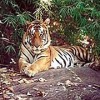
ENVIRONMENT-INDIA: Tribal Rights Won’t Trouble Tiger Health
Walking through morning sunlight streaming through tall teak trees, A.K. Singh deputy conservator of forests, points out the ‘core, critical tiger habitat’ in the heart of this sprawling national park.ENVIRONMENT: Polar Bears in Limbo as Drilling Leases Go Forward
A coalition of environmental groups sued the George W. Bush administration Monday for delaying a decision to protect polar bears threatened with extinction due to the melting ice in its Arctic habitat. Polar bears could be the first species officially threatened by climate change.
ENVIRONMENT-INDONESIA: Deforestation Causing More Than Landslides
While conjecture remains over whether deforestation was to blame for the landslides and floods that killed dozens of people in Indonesia on Dec.26 last year, there appears to be a consensus regarding other consequences of forest destruction.
DEVELOPMENT: NGOs Wary of Doomsday Seed Vault
Agricultural non-governmental organisations (NGOs) working in India and elsewhere are criticising the newly-opened Global Seed Vault (GSV) at Svalbard in Norway as fundamentally unjust in its objectives.
Q&A: ''Plan by TNCs to Control Seeds Bound to Fail''
An attempt by a handful of developed countries and trans-national corporations (TNCs) to monopolise and control the world's seeds is doomed to failure, says Tewolde Berhan Gebre Egziabher, director-general of Ethiopia's Environment Protection Agency, and a formidable negotiator at biodiversity-related fora.« Previous Page — Next Page »





The world's diverse flora and fauna are facing urgent threats due to pollution, climate change, commercialization of nature and other forms of harmful human intervention. The widespread loss of biodiversity is worrying not simply because of the disappearance of exotic species which deserve saving, but because tampering with nature's equilibrium means that the loss of one form of life is a threat to another. IPS taps into its own diverse network of correspondents around the world to report on continuing and emerging dangers to nature's riches - and the struggle to protect them.

The Week with IPS

NEXT STOP - SDGs
Tracking global progress towards a sustainable world
Tracking global progress towards a sustainable world
