
Friday, November 20, 2026



News and Views from the Global South
Climate Change
CLIMATE CHANGE: Who Pays for Carbon on 'Made in China' Labels?
Standing on the brink of a year when its capital hosts the much-proclaimed ‘Green Olympics’, China is anxious to present a constructive presence at the United Nations climate change conference underway in Bali, Indonesia.CLIMATE CHANGE – AUSTRALIA: Rudd Urged to Lead Binding Targets at Bali
While Australia’s newly-elected Labour Party (ALP) government will ratify the Kyoto Protocol - even receiving a standing ovation at the United Nations climate change conference in Bali - Prime Minister Kevin Rudd may oppose moves to commit rich nations to specific targets on cutting greenhouse gas (GhG) emissions.US-CHINA: Public, Elite Attitudes Reflect “Hope and Fear”
While the Chinese and U.S. publics and elites hold generally favourable views of each other, distrust between them also persists, according to a new "mirror" survey of both countries released here Monday.CLIMATE CHANGE: Who Should Pay the Carbon Bill?
The family has just finished up an expensive seven-course restaurant meal, and the late-arriving cousins can only snack on bread sticks. When the bill arrives, the truculent, rich uncles - Canada, Japan and the United States - insist that the cousins, although poor and still very hungry, ought to pay a full share.CLIMATE CHANGE: Trade, Finance Issues Add to Wrangling in Bali
Three poles - trade, finance and the environment - have emerged at a pivotal international conference on climate change, posing a daunting task for leaders to find common ground before the end of this two-week meeting, Friday.CLIMATE CHANGE: Survival of Pacific Islands Rests on Bali Outcome
With the effects of climate change lapping at their shores, representatives of the small island nations to the United Nations climate change conference underway in Bali are hoping that the industrialised countries will learn from the new Australian government’s decision to ratify the Kyoto Protocol.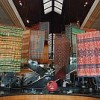
CLIMATE CHANGE: No Deal in Sight at Bali
As a major United Nations 'framework convention' on climate change (UNFCCC) crossed into its second half on Monday, the official view is one of optimism that progress has been made in laying the ''building blocks'' for a future agreement.CLIMATE CHANGE: Forests Could Cool or Cook the Planet
A two-degree Celsius rise in global temperatures could flip the Amazon forest from being the Earth's vital air conditioner to a flamethrower that cooks the planet, warns a new report released at the climate talks in Bali, Indonesia Friday.CLIMATE CHANGE: ‘Not Fair Picking on India, China’
Painting China and India as the villains of climate change, while letting rich industrialised countries get away with rising emissions of greenhouse gases (GhGs) that cause global warming, is patently unfair says an internationally-reputed non-government organisation (NGO).ENERGY: Nascent Biofuel Market Has Birth Defects
The development of an international market for crop-based fuels could reduce climate changing gas emissions and mitigate the inflationary impacts of the current euphoria surrounding this energy alternative, but it is a process that will take years.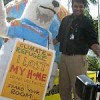
CLIMATE CHANGE: Cut GhGs or Face Extreme Events – Scientists
Scientists attending a major United Nations conference on climate change on this Indonesian resort island warn that unless greenhouse gas (GhG) emissions are contained extreme geo-climatic events are only expectable.CLIMATE CHANGE: CO2 Cuts Needed Across the Earth
Imagine that the world's leading industrial nations stopped spewing greenhouse gases tomorrow. Now stop smiling: Severe climate change would still plague the world within a generation because of pollution in developing countries.
DEVELOPMENT: Food Prices Climbing, With No End in Sight
Globalisation, climate change, and the mass production of biofuels are pushing up food prices worldwide, which could jeopardise the livelihoods of the world's poorest, according to a report released Tuesday by the International Food Policy Research Institute (IFPRI).ENVIRONMENT: Pacific Islands Get Climate Change to Water Summit
It could have been a Pacific Islands summit on climate change. Of the nine heads of state attending the first Asia Pacific Water Summit (APWS), underway in this Japanese town, seven are from the islands and more concerned with global warming than anything else.CLIMATE CHANGE: Washington in the Crosshairs
The U.S. government of President George W. Bush is heading for a rough ride during a major international conference about the planet's future that began this week on the Indonesian resort island of Bali.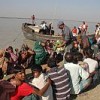
CLIMATE CHANGE: Bangladesh Takes Its Trauma to Bali
Bangladesh sees in the United Nations climate change conference, currently underway on the Indonesian resort island of Bali, an opportunity to remind the world of its special vulnerability.
CLIMATE CHANGE: Forests, the Great Green Hope?
Expanding European forests absorbed 126 million tonnes of carbon dioxide from 1990 to 2005 - equivalent to 11 percent of European Union emissions from human activities - while a U.N. target to plant one billion trees mainly in Africa has been surpassed.
CLIMATE CHANGE-JAPAN: Looking to Play a Key Role in Bali
Japan expects to play a key role at the 11-day conference which begins Monday on the Indonesian resort island of Bali, under the aegis of the United Nations Framework Convention on Climate Change(UNFCC).CLIMATE CHANGE: Latin America Wants Rich Nations to Foot the Bill
Latin American governments will call for greater commitments from industrialised countries to curb climate change and to provide financial support for developing countries to deal with its effects.
Q&A: ‘Emissions Trading Can Raise Billions To Combat Climate Change’
Developed countries have a "moral duty" to help the world's poorest countries combat the consequences of climate change to which they have contributed the least, says German Development Cooperation Minister Heidemarie Wieczorek-Zeul.ENVIRONMENT-AUSTRALIA: Ratifying Kyoto – No Easy Job for New Gov't
While Australia’s prime minister-elect, Kevin Rudd, can expect plaudits when he attends next week’s United Nation’s Climate Change conference in Bali, for his pledge to ratify the Kyoto Protocol, the ratification process may not be as easy as first anticipated.« Previous Page — Next Page »


As unsustainable human consumption and production systems are driving changes in average temperatures and weather patterns, "abnormal" is increasingly becoming the norm. So far, a lack of financing has been standing in the way of a comprehensive global plan for climate adaptation, and a global financial crisis has contributed to an increasing reliance on public-private partnerships. Our Climate Change page provides you with the latest news about international and local efforts to address what's frequently been called "the challenge of our time", the forces behind the climate change and the impact it has on the world's most vulnerable populations. Along the way, we bring you stories on growing citizen awareness, new scientific data, and emerging climate policies towards sustainable development.

The Week with IPS

Tracking global progress towards a sustainable world

