
Friday, November 20, 2026



News and Views from the Global South
Climate Change

Q&A: 'How the MDGs Could Curtail Development'
Some of the ways in which the MDGs are being pushed could actually limit development, says Inge Kaul, former director of the United Nations Development Programme (UNDP) Office of Development Studies.ENVIRONMENT: Biofuels – Great Green Hope or Swindle
A raft of new studies reveal European and American multibillion dollar support for biofuels is unsustainable, environmentally destructive and much more about subsidising agri-business corporations than combating global warming.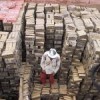
EGYPT: An Environmental Make-Over for an Ancient Industry
Air pollution is so bad in Cairo that living in the sprawling city of 18 million residents is said to be akin to smoking 20 cigarettes a day. According to the World Health Organisation, the average Cairene ingests more than 20 times the acceptable level of air pollution a day.
ENVIRONMENT: Ambitious Inventory of Marine Life
The inclusion of coral on the Red List of Threatened Species 2007 - of the World Conservation Union (IUCN) - is the first result of an ambitious marine life observation project, one that has goals of global conservation.CLIMATE CHANGE: South American Scientists Call for Social Commitment
Counteracting the effects of climate change in Latin America requires the involvement of society, two of the South American scientists on the IPCC, which was awarded the 2007 Nobel Peace Prize, said in Ecuador.ENVIRONMENT-LATAM: Ethical Development to Cool Off the Planet
Brazilian Environment Minister Marina Silva suggested an ethically and politically sustainable development model at a conference in this southeastern Brazilian city that has brought together national and international authorities and experts, business leaders and researchers to discuss solutions to fight climate change in the region.ENVIRONMENT-BOLIVIA: Slash and Burn – a Smoking Gun
Every year, when the (southern hemisphere) spring arrives in Bolivia, the skies are covered with smoke, while anti-pollution campaigns to dissuade farmers from using their traditional slash-and-burn farming technique fall on deaf ears.
Q&A: “We’ve Stopped Believing in Ourselves”
Dr. Michael Byers, a professor of politics and international law at the University of British Columbia, recently released a provocative book titled "Intent for a Nation - A Relentlessly Optimistic Manifesto for Canada's Role in the World."
HAITI: After the Deluge, Residents Turn to Each Other
Cars crossing Gonaives Avenue shoot plumes of murky water from their rears. Men on motorcycles stick to the shoulder of the road, dodging large puddles. As the flooding in this coastal city begins to slowly recede, residents are starting to assess the measure of destruction.
CLIMATE CHANGE-US: Delay Now, Pay Dearly Later
The United States is facing hundreds of billions of dollars in weather-related damages in coming years if it does not act urgently on climate change, the first-ever comprehensive economic assessment of the problem has found.
ENERGY-SOUTH AFRICA: The Poor Fly Under the Solar Water Heating Radar
Earlier this year, IPS reported that the South African coastal city of Cape Town was debating a "first of a kind" bylaw that would make solar water heating compulsory for relatively costly new buildings, and certain renovations. This got us thinking: what of solar water heating for less expensive structures - especially homes being built under the country's extensive low cost housing programme...Are any initiatives on the drawing board in this regard?CLIMATE CHANGE: Nobel Prize Recognises Scientific Community
Climate change is linked to world peace because the effects of global warming can threaten stability and harmony in the world, according to Rajendra Pachauri, one of thousands of international scientists who are to share the Nobel Peace Prize with former U.S. Vice President Al Gore.ENVIRONMENT-EUROPE: Education Ministers Step In
Representatives from 51 countries agreed at a three-day conference in Belgrade this week to undertake new environmental improvements to build sustainable development.
POLITICS-US: "Candidate Gore" a Long Shot, Despite Nobel
It was only two days ago that a group called www.draftgore.com took out a very expensive full-page ad in the New York Times in a direct appeal to former Vice President Al Gore to run for the Democratic Party's presidential nomination in the 2008 election.RIGHTS: Indigenous Congress Demands Teeth for UN Declaration
Indigenous leaders are holding a regional congress in Bolivia to discuss strategies to oblige governments to take on board as state policy the Declaration on the Rights of Indigenous People, adopted by the United Nations General Assembly on Sept. 13.DEVELOPMENT: World Bank Chief Vows "Inclusive" Globalisation
Robert Zoellick, the World Bank president, pledged on Wednesday his agency would ensure that the world's poorest people share in the benefits of economic globalisation.ENERGY-BRAZIL: Elephant Grass for Biomass
Sugarcane is gradually being edged out of pole position for biofuel efficiency, as studies by the Agrobiology Centre at the state Brazilian Agricultural Research Corporation (Embrapa) are finding that elephant grass has even greater potential.
CLIMATE CHANGE: Forests Join the Carbon Market
With deforestation as the second leading source of climate-changing greenhouse gas emissions, experts are focusing the discussion on the viability of compensating countries for protecting their forests.
Q&A: 'Listen to the Rural Poor'
The world's rural poor are hardest hit by climate change. But their concerns do not draw the focus of public debate, says Lennart Båge, president of the International Fund for Agricultural Development (IFAD) in Rome.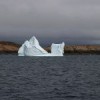
CLIMATE CHANGE: Entire Landscapes on the Move
The hot breath of global warming has now touched some of the coldest northern regions of world, turning the frozen landscape into mush as temperatures soar 15 degrees C. above normal.ENERGY: Citigroup, Bank of America Raked Over Coal
U.S. environmentalists seeking to turn up the heat on the coal industry, which they blame for a litany of problems, are targeting two banks they say have taken the lead in financing mines.« Previous Page — Next Page »


As unsustainable human consumption and production systems are driving changes in average temperatures and weather patterns, "abnormal" is increasingly becoming the norm. So far, a lack of financing has been standing in the way of a comprehensive global plan for climate adaptation, and a global financial crisis has contributed to an increasing reliance on public-private partnerships. Our Climate Change page provides you with the latest news about international and local efforts to address what's frequently been called "the challenge of our time", the forces behind the climate change and the impact it has on the world's most vulnerable populations. Along the way, we bring you stories on growing citizen awareness, new scientific data, and emerging climate policies towards sustainable development.

The Week with IPS

Tracking global progress towards a sustainable world

