
Tuesday, November 10, 2026



News and Views from the Global South
Climate Change

Africa’s Mineral Wealth May Just have to Stay in the Ground to Protect a Changing Climate
As a result of climate change, resource extraction industries in Africa will be impacted by asset stranding, researchers say.
Can Cities Save the World?
By 2050 two thirds of the world’s population will live in cities, and that infrastructure could be the key to managing the climate crisis, if we act now.
China Wants to Mainstream Environmental Protection
In the 2014 China-US joint announcement on climate change, China promised to peak its greenhouse gas (GHG) emissions around 2030. Later this commitment was cemented in the Paris Agreement signed in 2016.
Combining Biogas and Solar, the Best Energy Deal in Brazil
"Biogas is the best energy, it has no contraindications," and if you combine it with solar it becomes "the best energy business," at least in Brazil, says Anélio Thomazzoni.
The looming climate crisis: Where is our Greta Thunberg?
The Inter-governmental Panel on Climate Change (IPCC) has issued its latest warning saying that the world’s oceans are rising twice as fast as they did in the last century due to fast-disappearing ice-sheets in the Antarctic and Greenland. The IPCC predicts that as much as two-thirds of the permafrost could be gone before the end of the current century, further exacerbating carbon dioxide emissions as humongous amounts of CO2 trapped in the permafrost would be released in the process. In other words, all the apprehensions about climate change are much more menacing than anticipated earlier, making for huge shifts in climate patterns that will wreak havoc on the coastal cities and habitations around the world. On the one hand, rising sea levels will inundate low-lying coastal areas and, on the other hand, all the entrapped heat in the oceans will give rise to far more destructive cyclones more frequently. The world as we knew it in the pre-industrial era is gone for ever.
Barbados Prime Minister Warns of Mass Migration Backlash Because of Climate Crisis
The Prime Minister of Barbados Mia Mottley tells IPS her patience is running thin, as she challenges the world to tackle the climate crisis.
Confronting New Climate Reality in Asia & the Pacific
Last week, world leaders gathered at the United Nations in New York for the Climate Action Summit. Their goal was simple: to increase ambition and accelerate action in the face of a mounting climate emergency.
Caribbean Adopts Remote Sensing to Prepare for Hurricanes
 The Caribbean is currently deploying a new technology to help it build resilience to natural disasters. Known as LIDAR, the acronym for light detection and ranging, the technology is being used to gather data that will help regional governments better predict the impacts of climate-related events and determine how best to prepare for them.

Q&A: How Vietnam went from Zero to Hero in Developing Solar Projects and What Other Countries Can Do for Climate Change
A week ago, downtown New York witnessed one of the most historic moments in the climate action moment — hundreds of thousands of people attended the Climate Strike, where teen activists delivered powerful speeches and blows to world leaders for not taking climate change seriously.
Investments to Cushion African Countries against Climate Shocks Not Enough
African Development Bank (AfDB) President Akinwumi Adesina unveiled millions of dollars of new pledges at the United Nations this week amid growing fears of climate change ravaging the continent and derailing anti-poverty targets.
A Rising Youth Movement Picks Up Where Governments Have Failed
When the Youth Climate Summit concluded last week, Secretary-General Antonio Guterres predicted that if governments still lack the political will to make peace with nature, “there is huge hope in what the youth is doing all over the world".
Oceans in Crisis as they Absorb the Brunt of Climate Change
Warnings of strong winds, high waves and reduced visibility along the East African coastline are increasingly common. But local fisher folk like Ali Sombo from Kwale County, situated along Kenya's Indian Ocean Coastline, don't always heed the warnings by the Kenya Meteorological Department (KMD) to stay clear of the open sea during rough waters.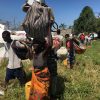
Climate Emergency: A Humanitarian Call to Action
We saw this coming. As humanitarians, our risk assessments in different parts of the world have always factored in the potential for extreme weather events and the spread of vector-borne diseases, of drought, desertification, and mass displacement. Emergency first responders like us work up scenarios for interventions and gain experience each time we put our planning to the test in real crises.
How to ‘Fix the Business of Food’ and Save the Planet
With up to one billion undernourished people around the world, and agriculture and land use systems increasingly vulnerable to climate change and land degradation, more companies within the global food industry need to start aligning their operations with the United Nations Sustainable Development Goals or SDGs.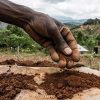
Fighting Climate Change: We Must Not Forget the Soils
Around the world, citizens took to the streets to demand their governments address climate change. In the U.S., this widespread activism illustrates the findings of a newly released report by the Chicago Council on Global affairs which found for the first time that the majority of Americans consider climate change a threat and the most critical foreign policy issue facing the country.
Nature’s Solution to Climate Change
When it comes to saving the planet, one whale is worth thousands of trees.
Africa’s Industrial Development: Turning Challenges into Opportunities
When world leaders gathered in New York for the 70th session of the General Assembly back in 2016, and proclaimed the period 2016-2025 as the Third Industrial Development Decade for Africa (IDDA III), it reaffirmed the importance of industrialization in supporting Africa’s own efforts towards sustained, inclusive and sustainable economic growth and accelerated development.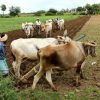
We Need Biodiversity-Based Agriculture to Solve the Climate Crisis
The Earth is living, and also creates life. Over 4 billion years the Earth has evolved a rich biodiversity — an abundance of different living organisms and ecosystems — that can meet all our needs and sustain life.
World’s Hard Fought Battle Against Climate Change
UN Secretary-General Antonio Guterres describes the ongoing crisis as a “climate emergency”-- as the world continues its hard fought battle against devastating droughts, floods, hurricanes and rising sea levels that threaten the very existence of small island developing states located in low-lying areas.
Confronting the New Climate Reality in Asia and the Pacific
In less than ten days world leaders will be gathering at the United Nations in New York for the Climate Action Summit. Their goal is simple; to increase ambition and accelerate action in the face of a mounting climate emergency. For many this means ambition and action that enables countries to decarbonize their economies by the middle of the century. But that is only half the equation. Equally ambitious plans are also needed to build the resilience of vulnerable sectors and communities being battered by climate related disasters of increasing frequency, intensity and unpredictability.
A Brief Guide to the Impacts of Climate Change on Food Production
Food may be a universal language – but in these record-breaking hot days, so too is climate change. With July clocking in as the hottest month on Earth in recorded history and extreme weather ramping up globally, farmers are facing the brunt of climate change in croplands and pastures around the world.« Previous Page — Next Page »





As unsustainable human consumption and production systems are driving changes in average temperatures and weather patterns, "abnormal" is increasingly becoming the norm. So far, a lack of financing has been standing in the way of a comprehensive global plan for climate adaptation, and a global financial crisis has contributed to an increasing reliance on public-private partnerships. Our Climate Change page provides you with the latest news about international and local efforts to address what's frequently been called "the challenge of our time", the forces behind the climate change and the impact it has on the world's most vulnerable populations. Along the way, we bring you stories on growing citizen awareness, new scientific data, and emerging climate policies towards sustainable development.

The Week with IPS

Tracking global progress towards a sustainable world

