
Sunday, November 22, 2026



News and Views from the Global South
Environment
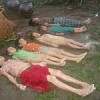
BURMA: Foreigners, Cameras Banned in Cyclone-Hit Areas
Images of the dead keep trickling out of Burma. The most moving are those of children who died when Cyclone Nargis tore through their world in the populous Irrawaddy delta.CUBA: ‘Green’ Farming Techniques to Boost Production
The application of agroecological techniques and the salvaging of traditional farming methods have revolutionised food production in rural areas along the southern edge of the Cuban capital.
DEVELOPMENT: Can Sorghum Solve the Biofuels Dilemma?
A new crop that provides food, animal feed and fuel at the same time promises to help developing countries redirect money spent on oil imports to benefit their own farmers. Is sweet sorghum biofuel's "holy grail"?HEALTH-KENYA: Months After Dump Scare, Problems Persist
Every day, the Dandora dumpsite in the eastern part of Nairobi receives 2,000 tonnes of rubbish - about half of the waste generated daily by the capital's 4.5 million people. The 12-hectare site is a low mountain of smouldering trash. Vultures and marabou storks circle overhead in anticipation of a meal.CHINA: Temblor – Test of Openness
As the death toll from a devastating earthquake in south-western China continues to climb, the disaster is proving a credibility test for the government, whose mandate is derived from maintaining stability and social order and providing for the welfare of people.EUROPE: New Safety Concerns Raised Over Nuclear Plants
Some international organisations and governments in industrialised countries are pushing for further development of nuclear power, but amidst growing doubts over the safety of several nuclear installations.
Top-Rated Agro-Science Has Achilles Heel
Brazil achieved excellence in agricultural technology as the result of a state network of research centers that played a key role in the country's farming boom.
Food Price Inflation Threatens Children
Breast feeding, enriched foods and monitoring of children's growth are among the basic weapons for fighting a potential new wave of childhood malnutrition in Latin America, say experts.Ecobreves – CHILE: Citizens Halt Dams in Capital
The withdrawal of a project to build to hydroelectric dams on Chile's Maipo River, planned by the AES Gener company, is a "citizen triumph", according to the Maipo River Citizen Organization.Ecobreves – BRAZIL: Native Plants to Clean Up Contaminated Soil
Brazil could recuperate and decontaminate soil poisoned with mercury, lead, nickel and other metals that are dangerous to human health, using native plants. The technique is known as "phytoextraction" and was developed at the University of Sao Paulo.Ecobreves – HONDURAS: Funds to Preserve Environmental “Lungs”
Honduras is asking for 50 million dollars in international cooperation to preserve the Plátano River Biosphere Reserve and generate sustainable production projects for the local communities, according to official sources.Ecobreves – VENEZUELA: Ávila National Park Has New Friends
Biologists, anthropologists, environmentalists, palm gatherers and volunteers last week adopted the "Caracas Manifesto for the Warairarepano", the indigenous name for the Ávila National Park.Ecobreves – CUBA: Crocs in Danger
Experts are monitoring the potential effects of climate change on the reproductive process of the Cuban crocodile (Crocodylus rhombifer Cuvier), concentrated in the Ciénaga de Zapata, a wetland in the south of the western province of Matanzas.
BURMA: 'Junta Aid Blocks Could Multiply Cyclone Toll'
Burma’s military regime may soon face charges of allowing tens of thousands of its own people to die through incompetence and bureaucratic red-tape placed in the way of international relief efforts for over one million cyclone victims in the country.ENVIRONMENT-ASIA: Mekong Commission Fends Off Credibility Charges
The head of the Mekong River Commission (MRC) has defended the regional body against charges that it faces a crisis of credibility arising from inability to guide hydropower development on the Mekong mainstream.Q&A: "Literally, This Is Energy From Dirt"
You've heard of solar power, and also wind power. Now, you might start hearing about soil power as well.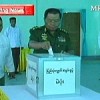
BURMA: Junta Holds Referendum in Cyclone Aftermath
Shortly after sunrise on Saturday, a few men and women in this town on the banks of a river broke their morning routines to cast ballots - an act unusual in the military-ruled country.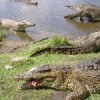
CLIMATE CHANGE-CUBA: Prized Wetland in Danger
If the worst outcomes predicted for climate change in Cuba become reality, a large portion of the Ciénaga de Zapata, the largest and best preserved wetland in the islands of the Caribbean Sea, could disappear by the second half of this century.BRAZIL: Sugarcane Alcohol Tarnished by U.S. Maize Ethanol
Recent efforts by President Luiz Inácio Lula da Silva to clearly mark the difference between Brazilian ethanol and the agrofuels produced by the United States are an admission that signing an agreement with Washington to promote a global bioethanol market was a serious political mistake, say analysts.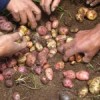
PERU: Highlands Families Work to Save Their Birthright – the Potato
A plate of parboiled potatoes of various sizes, shapes and colours welcomes the visitor to Huama, a town in the southern Peruvian Andes, at an altitude of 4,500 metres.
BIODIVERSITY-US: Loggers, Owls Not Out of the Woods Yet
Some wounds heal slowly, and the wounds of the logging community on the U.S. northwest Pacific coast are still smarting nearly 20 years after measures to protect a threatened species devastated their industry.« Previous Page — Next Page »


Through our global network of local writers, we are continuing our award-winning coverage of global and local environmental challenges, with a focus on the people for whom the ecosphere matters in a direct way: rural dwellers who have little means to protect themselves against adverse conditions; communities that need to switch to sustainable development in order to survive; poor women and children, who are the most vulnerable in natural disasters. Sponsored by the United Nations Environment Program (UNEP), the United Nations Development Program (UNDP) and The World Bank (WB), IPS also maintains the award-winning Tierramérica, a specialised information service on environment and development.

The Week with IPS

Tracking global progress towards a sustainable world


