
Sunday, November 22, 2026



News and Views from the Global South
Environment
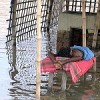
CLIMATE CHANGE: Most Vulnerable Left to Sink or Swim
The world's minorities and indigenous groups are the "silent victims" of the potentially disastrous effects of climate change, says a new study by Minority Rights Group (MRG) International.ENVIRONMENT-NICARAGUA: Indigenous Groups Sound Forest Fire Alarm
Indigenous community leaders have sent a letter to the Nicaraguan authorities requesting protection against the risk of a potentially huge forest fire that would endanger about 60,000 families.
ENVIRONMENT-INDIA: Tribal Rights Won’t Trouble Tiger Health
Walking through morning sunlight streaming through tall teak trees, A.K. Singh deputy conservator of forests, points out the ‘core, critical tiger habitat’ in the heart of this sprawling national park.RIGHTS-US: U.N. Panel Finds Two-Tier Society
The United States government is drawing fire from international legal experts for its treatment of American Indians, Blacks, Latinos and other racial minorities.BALKANS: Serbia Goes to Polls over Kosovo Independence
The coalition government of Serbia has become the first political victim of the independence declared by Kosovo, once the southern region of Serbia.ENVIRONMENT: Polar Bears in Limbo as Drilling Leases Go Forward
A coalition of environmental groups sued the George W. Bush administration Monday for delaying a decision to protect polar bears threatened with extinction due to the melting ice in its Arctic habitat. Polar bears could be the first species officially threatened by climate change.ECONOMY: Market Heating Up the Globe
One way to look at the climate problem is through the lens of the market. If you do, only one conclusion is possible - the climate change problem is a massive market failure, a failure of market mechanisms to factor in future costs of a change in climate in real time prices.
PARAGUAY: Fighting for Survival in a Green Desert Wonderland
"The first red stains on Nicanor’s white shirt" reads the inscription on a memorial niche at the side of the road to Ypecuá, 230 kilometres from Asunción, where peasant farmers are fighting for their land and against the diseases caused by agrochemicals used on nearby soybean plantations.CHINA: ‘Reshuffling the Mandarins Won’t Stem Corruption’
China’s leaders are poised to unveil a proposal for creating super-ministries in the hope that centralised power can help overcome regional and industrial opposition to their plans for more moderate growth and better environmental protection.RIGHTS: Go Green, Save the Indigenous
African indigenous peoples are important custodians of their natural environments with valuable local knowledge and skills, but are struggling to survive, according to a report.Ecobreves – HONDURAS: Protests Against Forest Exploitation
More than 400 residents of three villages in El Porvenir municipality, located in the central Honduran department of Francisco Morazán, have protested forest exploitation on Pacaya Hill, which is the source of their water supply.Ecobreves – MEXICO: A Highway and Its Discontents
A project to build 62 kilometers of highway in an area neighboring the Mexican capital where there is a major forest has created tension between the government, environmentalists and residents.
La Niña and Climate Confusion
While the climate cycle known as La Niña gradually winds down over the equatorial Pacific, its local consequences have surprised experts in the countries most affected.
Fisherfolk to the Turtle Rescue!
A conservation campaign is motivating fisherfolk in southern Brazil to fight accidental capture of sea turtles.Ecobreves – ARGENTINA: Historic Ruling Defends Wetland
A 20-kilometer embankment constructed by an agri-business firm in the Esteros del Iberá wetlands, in the eastern Argentine province of Corrientes, must be demolished, says a court order.Ecobreves – BRAZIL: Banks Join Defense of Amazon
Banks, whether public or private, will have to apply environmental criteria as of July 1 in granting loans for rural activities in the Brazilian Amazon.
ENVIRONMENT-INDONESIA: Deforestation Causing More Than Landslides
While conjecture remains over whether deforestation was to blame for the landslides and floods that killed dozens of people in Indonesia on Dec.26 last year, there appears to be a consensus regarding other consequences of forest destruction.
ENVIRONMENT-MEXICO: Record Reforestation, But Some Still Sceptical
A year ago, environmental activists criticised Mexico's national forest policy, saying it was deceptive and insufficient. Now voices are being heard that extol the government's effort and its goal to plant 280 million trees in 2008 - 30 million more than in 2007.ENVIRONMENT: Action Will Prove Much Cheaper
Government inaction will lead to increased climate change, species loss, increased water shortages and health problems by 2030, according to a new OECD report. But key challenges can be addressed at a fraction of the cost of inaction.
BRAZIL: Small Fishermen Trade in Nets for Oyster Farms
In a modest restaurant on a beach at the southern tip of the Brazilian island of Florianópolis, a couple celebrates, with champagne and oysters, "one more year of vacations and love."
CANADA: Native Leader Serving Six Months for Opposing Mine
Algonquin community leader Robert Lovelace had never been charged with an offence, but when a uranium company began prospecting for radioactive ore on unceded native land without engaging in consultation, he decided to take action, organising a non-violent blockade.« Previous Page — Next Page »


Through our global network of local writers, we are continuing our award-winning coverage of global and local environmental challenges, with a focus on the people for whom the ecosphere matters in a direct way: rural dwellers who have little means to protect themselves against adverse conditions; communities that need to switch to sustainable development in order to survive; poor women and children, who are the most vulnerable in natural disasters. Sponsored by the United Nations Environment Program (UNEP), the United Nations Development Program (UNDP) and The World Bank (WB), IPS also maintains the award-winning Tierramérica, a specialised information service on environment and development.

The Week with IPS

Tracking global progress towards a sustainable world


