
Sunday, November 22, 2026



News and Views from the Global South
Environment
CANADA: Gov't Urged to Rein in Mining Sector
Canadian mining companies continue to come under scrutiny from civil society organisations for international human rights violations and environmental damage that critics say the Canadian government has done little to check.
Q&A: "Sanitation Is a Political Orphan"
Last month, the Prince of Orange, Willem-Alexander of the Netherlands, and U.N. Secretary-General Ban Ki-moon joined forces to declare 2008 the International Year of Sanitation (IYS).ENVIRONMENT: Pacific Islands Get Climate Change to Water Summit
It could have been a Pacific Islands summit on climate change. Of the nine heads of state attending the first Asia Pacific Water Summit (APWS), underway in this Japanese town, seven are from the islands and more concerned with global warming than anything else.CLIMATE CHANGE: Washington in the Crosshairs
The U.S. government of President George W. Bush is heading for a rough ride during a major international conference about the planet's future that began this week on the Indonesian resort island of Bali.SOUTHERN AFRICA: Co-operation and Investment a Defence Against Floods
To prevent, monitor and manage floods in the Zambezi River Basin - and reduce the number of flood victims - regional governments and parties involved in the water sector urgently need to adopt a more proactive approach, experts said during the third Zambezi Basinwide Stakeholders Forum, held recently in Victoria Falls, northern Zimbabwe.ENVIRONMENT-ASIA: ‘Talking Dirty’ on Sanitation Can Save Lives
Although 2.6 billion people in the world - two-thirds of whom are in southern or eastern Asia - are living without access to basic sanitation, the issue has been a poor cousin to water supply in terms of visibility and financing.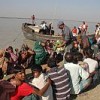
CLIMATE CHANGE: Bangladesh Takes Its Trauma to Bali
Bangladesh sees in the United Nations climate change conference, currently underway on the Indonesian resort island of Bali, an opportunity to remind the world of its special vulnerability.BRAZIL: Sanitation for All…in 115 Years
Just 47 percent of the population of Brazil is hooked up to the main sewage system, and at the current rate of public spending on sanitation, universal coverage will be reached when the country celebrates its 300th anniversary of independence, in the year 2122.
ENVIRONMENT-SOUTH AFRICA: Radioactive Water, the Price of Gold
Large gold-mining companies operating to the west of South Africa's commercial centre, Johannesburg, stand accused of contaminating a number of water sources with radioactive pollutants.
CLIMATE CHANGE: Forests, the Great Green Hope?
Expanding European forests absorbed 126 million tonnes of carbon dioxide from 1990 to 2005 - equivalent to 11 percent of European Union emissions from human activities - while a U.N. target to plant one billion trees mainly in Africa has been surpassed.
CLIMATE CHANGE-JAPAN: Looking to Play a Key Role in Bali
Japan expects to play a key role at the 11-day conference which begins Monday on the Indonesian resort island of Bali, under the aegis of the United Nations Framework Convention on Climate Change(UNFCC).ENVIRONMENT-ZAMBIA: An Unwelcome Guest Has Taken Root
An invasive shrub has colonised a corner of the Lochinvar National Park, upsetting the balance of one of Zambia’s most diverse ecosystems. Mimosa pigra, originally from Mexico, is now threatening wildlife and pastoralists who depend on grazing lands in and around the park.SOUTHERN AFRICA: “Make the Issue of Water Attractive to the Authorities”
To tackle droughts in Southern Africa, one needs to think out of the box instead of pointing fingers at obvious causes such as lack of rainfall, experts said this week during the third Zambezi Basinwide Stakeholders Forum, held in Victoria Falls, Zimbabwe.CLIMATE CHANGE: Latin America Wants Rich Nations to Foot the Bill
Latin American governments will call for greater commitments from industrialised countries to curb climate change and to provide financial support for developing countries to deal with its effects.
Nascent Biofuel Market Has Congenital Defects
It will take a long time to root out the distortions caused by economic and political interests in the budding market for biofuels, say experts.Ecobreves – BRAZIL: National Plan Announced Against Climate Change
The National Plan for Climate Change to be elaborated by the Brazilian government is much welcome, though it should have been done and implemented long ago, say activists.Ecobreves – VENEZUELA: Fishers Save the Dolphins
Dolphins that are part of the Caribbean seascape of the Venezuelan coastline have won the respect of artisanal and sports fishers, ensuring that these mammals are enjoying good health, biologist María Gabriela Silva, of the environmentalist group Seavida, told Tierramérica.Ecobreves – CUBA: Protecting Pets from Natural Disasters
The Cuban Animal Protection Association and the governmental Cuban Society for Veterinary Medicine will work together to devise ways to protect household pets during natural disasters or war.Ecobreves – BRAZIL: Solar Energy for Sao Paulo's Public Buildings
Public buildings to be constructed in Sao Paulo, Brazil's most populous state, with 40 million inhabitants, will have solar energy units to heat at least 30 percent of the hot water consumed.Ecobreves – CHILE: Everyone Against Whale Hunting
Government, Parliament and non-governmental organizations in Chile rejected Japan's announcement of renewed hunting of more than 1,000 whales, for supposedly scientific purposes, in the Southern Ocean Whale Sanctuary, near the costs of Australia and New Zealand.« Previous Page — Next Page »


Through our global network of local writers, we are continuing our award-winning coverage of global and local environmental challenges, with a focus on the people for whom the ecosphere matters in a direct way: rural dwellers who have little means to protect themselves against adverse conditions; communities that need to switch to sustainable development in order to survive; poor women and children, who are the most vulnerable in natural disasters. Sponsored by the United Nations Environment Program (UNEP), the United Nations Development Program (UNDP) and The World Bank (WB), IPS also maintains the award-winning Tierramérica, a specialised information service on environment and development.

The Week with IPS

Tracking global progress towards a sustainable world


