
Sunday, November 22, 2026



News and Views from the Global South
Environment
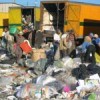
RIGHTS: For Some, Childhood Is Rubbish
"When I thought of my future, I saw my whole life picking through this rubbish dump," says 20-year-old Julia Castillo. "I never thought I'd get away."CLIMATE CHANGE: Survival of Pacific Islands Rests on Bali Outcome
With the effects of climate change lapping at their shores, representatives of the small island nations to the United Nations climate change conference underway in Bali are hoping that the industrialised countries will learn from the new Australian government’s decision to ratify the Kyoto Protocol.
CLIMATE CHANGE: No Deal in Sight at Bali
As a major United Nations 'framework convention' on climate change (UNFCCC) crossed into its second half on Monday, the official view is one of optimism that progress has been made in laying the ''building blocks'' for a future agreement.Ecobreves – MEXICO: Warning to Real Estate Investors
If legal actions against the Paraíso del Mar real estate project are successful, those who invested in the western Mexican state of Baja California enterprise will lose a lot of money.Ecobreves – ARGENTINA: Whale Deaths Double
The unusual spike in the number of dead whales found on the beaches of the southern Argentine province of Chubut in October and November has caused concern at the Whale Conservation Institute (ICB).
Bali Forecast: Low Expectations
Don't expect clear actions to come from the climate conference in Bali. The mission is to hammer out an agenda for negotiations and a measurable threshold of commitments to fight global warming, say experts.
Pots and Pans Against Climate Change
To minimize its impact on the climate, a restaurant in Santiago is making more efficient use of heat and energy, purchasing "clean" electricity and carbon certificates.Ecobreves – BRAZIL: Critics Aim at Genetic Resources Law
The public consultation for a legislative bill on genetic resources in Brazil only allows comments by mail or Internet, which impedes the participation of many traditional communities who possess vast knowledge on the use of biodiversity, criticize social justice groups.Ecobreves – CENTRAL AMERICA: A Push for Renewable Energy
The Central American Economic Integration Bank (BCIE) over the next five years will finance small and medium scale renewable energy projects with 89 million dollars.CLIMATE CHANGE: Forests Could Cool or Cook the Planet
A two-degree Celsius rise in global temperatures could flip the Amazon forest from being the Earth's vital air conditioner to a flamethrower that cooks the planet, warns a new report released at the climate talks in Bali, Indonesia Friday.CLIMATE CHANGE: ‘Not Fair Picking on India, China’
Painting China and India as the villains of climate change, while letting rich industrialised countries get away with rising emissions of greenhouse gases (GhGs) that cause global warming, is patently unfair says an internationally-reputed non-government organisation (NGO).DEVELOPMENT-SOUTHERN AFRICA: Local is Essential
Local communities in Southern Africa should be given a greater opportunity to participate in initiatives for the management and conservation of natural resources such as water. This was one of the main conclusions of the third Zambezi Basinwide Stakeholders Forum, held recently in Victoria Falls, Zimbabwe.ENERGY: Nascent Biofuel Market Has Birth Defects
The development of an international market for crop-based fuels could reduce climate changing gas emissions and mitigate the inflationary impacts of the current euphoria surrounding this energy alternative, but it is a process that will take years.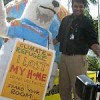
CLIMATE CHANGE: Cut GhGs or Face Extreme Events – Scientists
Scientists attending a major United Nations conference on climate change on this Indonesian resort island warn that unless greenhouse gas (GhG) emissions are contained extreme geo-climatic events are only expectable.POLITICS: Lawmakers Call a Halt to Indo-US Nuclear Deal
The Manmohan Singh government’s hopes of garnering at least a semblance of support for the controversial United States-India nuclear cooperation deal from elected political representatives outside the ruling United Progressive Alliance (UPA) have crashed.CLIMATE CHANGE: CO2 Cuts Needed Across the Earth
Imagine that the world's leading industrial nations stopped spewing greenhouse gases tomorrow. Now stop smiling: Severe climate change would still plague the world within a generation because of pollution in developing countries.DEVELOPMENT: 'MNCs Gaining Total Control Over Farming'
Food security campaigners are now more concerned than ever that farmers are turning dependent on large multinational corporations (MNCs) for seeds, fertilisers, pesticides and other inputs while also becoming more vulnerable to pressures to produce genetically engineered crops.
/CORRECTED REPEAT*/ENVIRONMENT-INDIA: Subsidised Tourism Worsens Andamans' Woes
Tourism, promoted as a major economic activity and employment generator in India’s far-flung Andaman Islands, has run into opposition lately. Concerns are being raised, ironically, by local residents and tour operators who are supposed to be the prime beneficiaries.
DEVELOPMENT: Food Prices Climbing, With No End in Sight
Globalisation, climate change, and the mass production of biofuels are pushing up food prices worldwide, which could jeopardise the livelihoods of the world's poorest, according to a report released Tuesday by the International Food Policy Research Institute (IFPRI).RIGHTS-PARAGUAY: More Than a Rap on the Knuckles
The Paraguayan government was reprimanded by a United Nations expert committee for the extent and degree of poverty in the country, the denial of land to campesinos and indigenous people, the indiscriminate use of agrochemicals and the persistence of discrimination against women.SOUTHERN AFRICA: The Indispensable Role of Mud Flats, Marshes and Swamps
The need for greater urgency in addressing loss of wetlands in the Zambezi River Basin has been highlighted at a recent meeting in northern Zimbabwe.« Previous Page — Next Page »


Through our global network of local writers, we are continuing our award-winning coverage of global and local environmental challenges, with a focus on the people for whom the ecosphere matters in a direct way: rural dwellers who have little means to protect themselves against adverse conditions; communities that need to switch to sustainable development in order to survive; poor women and children, who are the most vulnerable in natural disasters. Sponsored by the United Nations Environment Program (UNEP), the United Nations Development Program (UNDP) and The World Bank (WB), IPS also maintains the award-winning Tierramérica, a specialised information service on environment and development.

The Week with IPS

Tracking global progress towards a sustainable world


