
Monday, November 23, 2026



News and Views from the Global South
Environment
PERU: Mining Project Hurting Highland Ecosystem
The preliminary results of a study by researchers at the University of Texas have shown that the exploration phase of the Río Blanco mining project in Peru’s northwestern Andes mountains caused damages to the area’s biological diversity.
ENVIRONMENT-MALAYSIA: Mega City Project Robs Common Green
Alarmed civil society groups are coming together to oppose a massive urban development project that could result in 33 tower blocks of over 40 storeys each being built on one of the last huge green spaces left on land-starved Penang island.EL SALVADOR: Closing of Dumps Necessary But Not Sufficient
After several years’ delay, authorities in El Salvador are about to permanently close down the unofficial open-air rubbish dumps that have polluted the country for decades.ENVIRONMENT-COTE D’IVOIRE: Soya By Way of War
When the failed coup of September 2002 led to a prolonged period of isolation for northern Côte d'Ivoire, farmers in this rebel-held region counted the cost.ARGENTINA: Camping in the Treetops to Save Forests
Greenpeace activists are camped out in the treetops in the Yungas forest in northwestern Argentina to press the Senate to pass a new law that would curb the heavy logging of native forests, and to draw attention to the destruction.
ENVIRONMENT-GERMANY: What a Lake Says About Climate Change
When the East German nuclear power plant Rheinsberg was shut down almost 20 years ago, environmentalists expected that fauna and flora in nearby Stechlin lake would survive without further damage.
ENVIRONMENT: Getting Some More Blue Into the Danube
The biggest river research expedition of the year is on its way to see if the Danube can be the Blue Danube again.
ENVIRONMENT: Critics Weigh In as IFC Tightens Mining Rules
The International Finance Corporation (IFC) faces pointed criticism in coming days as an effort to lessen the damage wrought by large mining projects enters a new phase.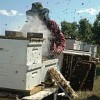
ENVIRONMENT: Breakthrough on Mystery of Vanishing Bees
Over the past year, honey bees have been dying across North America in unprecedented numbers and, until this month, no one seemed to be able to prove beyond a reasonable doubt what the cause may have been.ENVIRONMENT-INDIA: Cleaning Up After Bhopal Gas Tragedy – Not Begun
A generation after the world’s worst ever industrial disaster occurred at a U.S. multinational-owned pesticide plant in Bhopal, central India, responsibility continues to be evaded on cleaning up thousands of tonnes of toxic chemicals that have contaminated the soil and water in the vicinity.ENVIRONMENT-AFRICA: Game Parks Offering Protection in Name Only?
The sharp decline of Africa's abundant wildlife is now happening inside the continent's protected areas, a new analysis indicates. Africa's world renowned parks are destined to become isolated pockets of wilderness with few large animals left, as is the case in Europe, conclude the authors of an article in the current edition of the 'African Journal of Ecology'.
BRAZIL: Ethanol Divides Agribusiness
The expansion of sugarcane farming to produce more ethanol in Brazil has run into unexpected resistance in Rio Verde, a prosperous town in the central state of Goiás, and it is coming from agribusiness leaders.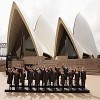
CLIMATE CHANGE: APEC Leaders Get Off With ‘Aspirational Goals’
An agreement by 21 Asia Pacific Economic Cooperation (APEC) forum leaders on Saturday to adopt ‘’aspirational goals’’ to reduce greenhouse gas (GHG) emissions has been criticised by voluntary agencies as grossly inadequate for saving the world from the effects of climate change.
Small Improvements in Hurricane Preparedness
The aftermath of Hurricane Mitch in 1998 marked the beginning of some protection efforts in Honduras, but there is not yet a national policy for reducing the country's vulnerability to hurricanes.
Global Warming Fuels Chinese Inflation
A persistent drought threatens the harvest of grains in China, driving up food prices.Ecobreves – CHILE: Warning on Salmon Farms in Earthquake Zone
The environmental group Oceana has urged the Chilean government to take a cautionary attitude in taking a decision to renew authorization for raising salmon in floating cages in the Aysén fjord, 1,600 km south of the capital.Ecobreves – HONDURAS: Reforesting the Capital's “Lungs”
Fruit and timber trees -- 300,000 of them -- have been planted over the past two years on Juan A. Laínez hill, once one of the Honduran capital's main green spaces, and environmental "lungs".Ecobreves – CUBA: The Return of a Natural Pool
A natural pool, Los Cangilones, along the Máximo River in the central Cuban province of Camagüey, will once again receive bathers year-round, after being rescued from contamination from the waste of a nearby fish farm.Ecobreves – VENEZUELA: Sea Turtles Faithful to Their Beaches
A hawksbill turtle (Eretmochelys imbricata) that was marked with a metal plate three years ago has returned to lay eggs in Macuro, on the northeastern Venezuelan peninsula of Paria.Ecobreves – BRAZIL: Agro-industry's Own Environmental Research Center
The main entities of Brazil's agricultural-industrial sector announced last week the creation of ARES, the Institute for Responsible Agribusiness.ENVIRONMENT: NGOs Unite on Earth's Greatest Crisis
A three-day meeting of over 2,500 delegates from more than 500 non-governmental organisations (NGOs) and representing 80 countries affirmed that climate change "is potentially the most serious threat humanity and our environment have ever faced."« Previous Page — Next Page »


Through our global network of local writers, we are continuing our award-winning coverage of global and local environmental challenges, with a focus on the people for whom the ecosphere matters in a direct way: rural dwellers who have little means to protect themselves against adverse conditions; communities that need to switch to sustainable development in order to survive; poor women and children, who are the most vulnerable in natural disasters. Sponsored by the United Nations Environment Program (UNEP), the United Nations Development Program (UNDP) and The World Bank (WB), IPS also maintains the award-winning Tierramérica, a specialised information service on environment and development.

The Week with IPS

Tracking global progress towards a sustainable world


