
Monday, November 23, 2026



News and Views from the Global South
Environment
HEALTH: World Faces New Threats of Water Scarcity
The world is on the verge of "a new and more serious era of water scarcity" than ever before, is the ominous warning coming out of an international water conference here.Q&A: A Hope "To Link the Efforts of all the Actors" in Fighting Desertification
Desertification poses a severe threat in the West African state of Mauritania, and Mohamed Yahya Lafdal is on the front lines of fighting the scourge.KOREAS: 'Bilateral Summit – Wrong Place, Wrong Time'
If you try to please your host too much you risk being snubbed. This could be the advice that South Korean President Roh Moo-Hyun gets from his mentor and predecessor in office, Kim Dae-Jung, as he prepares to fly to Pyongyang for a bilateral summit this month.POLITICS-INDIA: Nuke Deal With US Draws Domestic Opposition
The "breakthrough" United States-India nuclear cooperation agreement finalised three weeks ago in Washington has run into serious all-round opposition in India and put Prime Minister Manmohan Singh in a piquant situationENVIRONMENT-COTE D’IVOIRE: Acacias Come to the Service of Mangroves
Mangroves, it could be said, have perfected the art of multi-tasking. Found along tropical coastlines, these trees and shrubs may prevent soil erosion, while their roots create breeding places for various marine species. So, when a particular mangrove forest is shown to have been reduced by two thirds in less than 20 years, there is major cause for concern.
Q&A: Global Fight to Protect the Ozone Layer Celebrates 20 Years
The main achievement of the 20-year-old Montreal Protocol was to establish the process for recovering the ozone layer that protects life on Earth, although the enormous hole that opens every year over Antarctica will continue to happen for the next decade, says the head of the Ozone Secretariat, Marco González.
A Green Crusade in Nicaragua
Nicaragua is attempting to reverse the loss of water resources with a massive planting of trees, which are essential to capture rainfall in areas that recharge rivers and lakes.Ecobreves – HONDURAS: Peasants Tested for Toxins from Mining
Thirty health experts finished tests of 62 inhabitants from El Pedernal, a village in the central Honduran valley of Siria, to determine if they have high levels of cyanide, lead, arsenic and mercury from mining operations nearby.Ecobreves – CHILE: Kids Protect Ozone Layer
Through the end of August, children in the fifth and sixth grades at schools in Chile's Tarapacá (north), Metropolitan (central) and Magallanes (south) regions can participate in a painting contest titled "I protect the ozone layer."Ecobreves – VENEZUELA: Producing Natural Fertilizers and Pesticides
In the Venezuelan southwest, near the Colombian border, the government has inaugurated the first of 21 laboratories to produce bio-pesticides and bio-fertilizers.Ecobreves – URUGUAY: Climate Change Threatens Coastline
Uruguayan politicians and citizens must be aware of the threats of climate change, especially for the coastal areas, says Pablo Mandeville, the United Nations permanent representative in this small South American country.Ecobreves – BRAZIL: Agro-Toxins Kill Bees
A cocktail of agro-chemicals increasingly used in direct planting of soy is decimating bee colonies in Brazil's far south.
Satellites Show Logging Decline in Peruvian Amazon
Deforestation in the Peruvian Amazon, intense in zones near roads and mining operations, has had little impact in protected forests, say researchers.
PERU: Pollution Emergency Plan Instead of Real Action for La Oroya
Far from halting the source that is poisoning the Andean city of La Oroya, which is home to the Doe Run smelting complex, the Peruvian government ordered a contingency plan for the days when air pollution is worst, as if it were dealing with a natural disaster.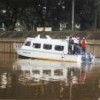
ENVIRONMENT-INDONESIA: Riding Water Taxis to Clean Rivers
On weekends, groups of children and their parents crowd around South Jakarta’s Halimun Pier waiting to take a joy ride on one of two water taxis, recently introduced by the administration.ENVIRONMENT-MALAYSIA: Water a Sacred Gift Affirm Interfaith Leaders
When religious leaders from different faiths sought to jointly affirm the sacredness of water as the source of life but were shooed away by authorities, it was seen as a move to scuttle interfaith harmony as well as support plans to privatise a common resource.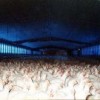
HEALTH-US: “Too Many Animals, Too Much Manure in One Place”
Imagine 600,000 hens confined in seven sheds - with a total of four workers to care for them and cages so dilapidated that birds often became entangled in frayed wires and died horribly.LATIN AMERICA: Vying for Leadership, Lula Heads North, Chavez South
Political and economic alliances with a view to strengthening Latin American integration are subtly shifting as Brazilian President Luiz Inácio Lula da Silva visits Mexico, Central America and the Caribbean this week and Venezuelan President Hugo Chávez tours Argentina, Uruguay, Ecuador and Bolivia.ENVIRONMENT-SPAIN: Offshore Wind Power for Earthly Benefits
A boost for renewable energy, a growing sense of corporate responsibility for the environment, and the decision to create a large offshore wind park are news items that have had little impact in Spain.ENVIRONMENT-PAKISTAN: Drip Irrigation – Answer to Water Shortages
Faced with acute water shortages, the Pakistan government has launched a 1.3 billion US dollar subsidised drip irrigation programme that could help reduce wastage over the next five years.CUBA: ‘If Worked Properly, the Land Can Produce Anything’
"If you work it properly, the land here can produce anything, and with a guaranteed market. Cuba is an agricultural country. We should not have to import food," says Rubén Torres, who has made a success of farming outside of the city of Santa Clara in central Cuba.« Previous Page — Next Page »


Through our global network of local writers, we are continuing our award-winning coverage of global and local environmental challenges, with a focus on the people for whom the ecosphere matters in a direct way: rural dwellers who have little means to protect themselves against adverse conditions; communities that need to switch to sustainable development in order to survive; poor women and children, who are the most vulnerable in natural disasters. Sponsored by the United Nations Environment Program (UNEP), the United Nations Development Program (UNDP) and The World Bank (WB), IPS also maintains the award-winning Tierramérica, a specialised information service on environment and development.

The Week with IPS

Tracking global progress towards a sustainable world


