
Wednesday, November 25, 2026



News and Views from the Global South
Environment
ENVIRONMENT-CHILE: Ecologists Divided on Bachelet
The environmental movement in Chile has divergent expectations when it comes to the environmental policy to be implemented by President-elect Michelle Bachelet, a physician and socialist.DEVELOPMENT: China and India Grow Organically
China and India are emerging as new giants in production of organic food, United Nations experts say.ARGENTINA: Growing Alarm over Mining Boom
The number of mining ventures in Argentina grew 400 percent in just two years, concentrated in the western part of the country along the border with Chile, and the situation has environmentalists and community organisations up in arms.WORLD ECONOMIC FORUM: Disgraceful Distinctions
While the corporate world élite hold their traditional annual meeting in this Swiss alpine resort, civil society organisations again did their best to spoil the party, pointing a symbolic finger at corporate environmental and social irresponsibility. The targets this time were Chevron, Walt Disney and Citigroup.ARGENTINA-CHILE: Canadian Company Gives It All for Glacier Mining Site
The controversial, billion-dollar Pascua-Lama gold mine project, located on the Chile-Argentina border and requiring the removal of Andean glaciers, may begin construction this year despite strong opposition from environmentalists.SOUTH ASIA: Pakistan, India in Canal Cleanup Act
To the average consumer the piles of outsize vegetables in the local markets look appealing and fresh, especially when given an occasional sprinkle of water. But there is more to the giant greens than meets the eye.ENVIRONMENT-INDIA: ‘Officials Protected, Not Tigers’
When authorities demolished properties belonging to Fateh Singh Rathore, on the periphery of this famed tiger sanctuary, this month, it looked as though the government was ready to tackle encroachments on India's protected forest lands that threaten wildlife populations.IRAN: Keeping Nuclear Negotiations Critical
By allowing inspectors from the International Atomic Energy Agency (IAEA) to visit and verify its nuclear programme this week, Iran has indicated readiness to work with the United Nations watchdog, while continuing to limit the role of the Western powers.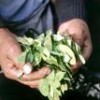
The Business of Legal Coca
Chewing gum, soft drinks, soaps and other products based on the coca plant proliferate throughout the Andes region. Evo Morales, who was sworn in as Bolivia's president on Sunday, promises to promote the legal market for coca. Will he succeed?KYRGYZSTAN: Illnesses Flow from Dirty Water
In a middle school in Burghandy village in south Kyrgyzstan, pupils come to school with their own bottle of boiled water or tea, clearly labelled with their names.ENVIRONMENT: China Sends Smoke Signals on Kyoto Protocol
As global concern about climate change and rising carbon dioxide emissions grows, China - the developing world's biggest polluter, is sending confusing signals about its willingness to clean up energy production and tackle environmental pollution.BRAZIL: A Push for More Local Scientists in the Amazon
Foreign experts conduct most of the scientific studies of the vast and biologically rich Amazon region. Brazil is trying to triple the number of local graduate students in related fields by 2010.ENVIRONMENT: World Stands at a Crossroads
With 60 percent of the Earth's ecosystems in trouble right now, according to the Millennium Ecosystem Assessment, what will the future be like in 2050?ENVIRONMENT-MALAYSIA: Dirty Dam Draws Dirty Smelters
Transnational aluminium smelters, some teaming up with Malaysian partners, are beating a path to eastern Sarawak state with an eye to surplus power from the problem-ridden Bakun Dam.BRAZIL: An Energy Source Both Cheap and Eco-Friendly
Very low-cost electricity that is not just clean but potentially beneficial for the environment, and comes from a flexible source that can be set up on any river without altering its course is the promise a Canadian company made in Brazil this week.ENVIRONMENT-MEXICO: Peasant Activist Makes Her Mark
Mexican rural activist Celsa Valdovinos, who won the 2005 Chico Mendes environmental prize, forged her life as an eco-leader in a context of poverty, illiteracy and violence in her home state of Guerrero.ENVIRONMENT: Biotech “Revolution” May Be Losing Steam
Just four countries plant 99 percent of the world's genetically engineered (GE) crops, despite more than a decade of hype about the benefits of agricultural biotechnology.ENVIRONMENT: Where Europeans Are Still in the Dark
Fifty-seven-year-old Mihai Petre has lived with the dark and cold much of his life. For years now he has been trying to get a loan to buy a generator for his house, but no bank has wanted to advance him a loan.URUGUAY-ARGENTINA: Pulp Frictions Threaten Integration
The Mercosur trade bloc and South American integration are being put to the test by the growing frictions between Uruguay and Argentina over the construction of two pulp mills on the Uruguayan side of a river dividing the two nations.PAKISTAN: As Winter Bites, Quake Victims Wait for More Aid
Nearly 100 days after the devastating earthquake in Pakistan, survivors are facing a bitter winter while uncertainties over the financing of humanitarian aid still loom large.WORLD SOCIAL FORUM: Cynicism and Hope Ahead of the Bamako Gathering
With just a day to go before Africa's first-ever World Social Forum (WSF) gets underway in Mali, attitudes towards the meeting appear somewhat mixed in the West African country.« Previous Page — Next Page »


Through our global network of local writers, we are continuing our award-winning coverage of global and local environmental challenges, with a focus on the people for whom the ecosphere matters in a direct way: rural dwellers who have little means to protect themselves against adverse conditions; communities that need to switch to sustainable development in order to survive; poor women and children, who are the most vulnerable in natural disasters. Sponsored by the United Nations Environment Program (UNEP), the United Nations Development Program (UNDP) and The World Bank (WB), IPS also maintains the award-winning Tierramérica, a specialised information service on environment and development.

The Week with IPS

Tracking global progress towards a sustainable world


