
Thursday, November 26, 2026



News and Views from the Global South
Environment
RIGHTS-US: Hiring with One Hand, Deporting with the Other?
Even as the U.S. Department of Homeland Security refuses to guarantee that immigrants displaced by Hurricane Katrina will not face deportation if they seek government help, the agency has suspended sanctions against employers in the Gulf region who hire undocumented workers.DEVELOPMENT: And the Alternative Nobel Prize Goes To…
Social activists from Mexico, Malaysia, Botswana and Canada have won the 2005 "Right Livelihood Award", an honour meant to celebrate groups and individuals who show outstanding vision and work on behalf of the natural world and its people.NIGERIA: Son of Fallen Activist on U.S. “Price of Oil” Tour
"In my book, I imagine my father's last day before his execution. I went into his head, reconstructing it from his letters and poems from prison. He was always convincing me to write, and now I understand why. It's because what you write is what you leave behind."ENVIRONMENT-COLOMBIA: Beautiful Meadows Emerge from the Rubbish
The Don Juanito sanitary landfill has been transformed over 10 years into an ecological park, a waste recycling model in Colombia, where only 40 percent of household waste undergoes adequate treatment.ENVIRONMENT: Air Travel Could Pay the Cost of Polluting
Leading environment groups are backing new European Commission proposals for taxing air travel to limit emissions.HEALTH: “Factory Farms” Churn Out Pollution and Disease
The explosive spread of factory farming of meat and poultry from North America and Europe to developing countries, particularly in Asia and Latin America, is posing a serious threat to human and animal health and surrounding ecosystems, according to a new report released here Wednesday by the Worldwatch Institute.POLITICS-US: Flush From Iraq, Contractors Snap Up Storm Work
The day Hurricane Katrina struck Louisiana, Robert Boh watched the dramatic pictures of the unfolding disaster on television at his in-laws' house in Jonesboro, Arkansas, where his family had taken shelter.VENEZUELA: Gold Mine Pits Jobs Against Environment
Canaima, god of evil in Venezuelan legends, is the name of a 1935 novel by the famed Rómulo Gallegos which explodes that myth, and of a national park whose borders, as if pushed by the deity himself, pit mortals against each other as they fight for survival and wealth, for the environment and gold.CUBA: Power Generation Still Achilles’ Heel of Economy
The Cuban economy continues to be plagued by an energy crisis and blackouts, despite major investments over recent years to modernise a service that now extends to a full 95.6 percent of the country's 11.2 million inhabitants.BRAZIL: Sanitation a Priority Only on Paper
Despite promises to make basic hygiene, sanitation and water services a priority in Brazil, fiscal adjustment policies have pushed urgently needed spending on this sector to the bottom of the government's agenda, according to participants in the 23rd Brazilian Congress on Sanitary and Environmental Engineering.Ecobreves – VENEZUELA: Building on a Devastated Mountain
Venezuela is considering the construction of 30,000 housing units on 3,500 hectares in the north of Avila, the mountain that separates Caracas from the Caribbean Sea, and where flooding and mudslides left thousands dead in 1999, says Environment minister Jacqueline Faría.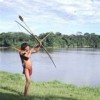
Amazonian Paranoia
A broad sector of the Brazilian population believes that foreign powers aim to take over the Amazon region. Could their fears have a basis in reality?
Prison Is a Blow, but Doesn't Knock Down Peasant-Activist
"If they keep on killing trees, there won't be any more water. I'll continue fighting this. I'm not afraid," says Mexican peasant farmer Felipe Arreaga, released Sep. 15 after spending 10 months behind bars.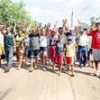
Canaima Pits Miners Against Environment
More than a thousand miners in the Venezuelan town of Las Claritas are demanding their right to work. The government is sending mixed signals about how it will quell the conflict, which has already left several people injured.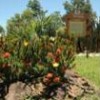
Beautiful Meadows Emerge from the Rubbish
Lush vegetation grows atop what was once garbage in the Don Juanito landfill in Colombia. Some 300 tons of waste are processed there each day in a sustainable way.Ecobreves – BRAZIL: Eco-Education Expands
Ninety-four percent of Brazilian schools include environmental education in their curriculum, as a regular course or in specific projects, according to the 2004 school census, which covered 215,000 schools.Ecobreves – CUBA: Bamboo In Vitro
A project to develop bamboo in Cuba aims to obtain and multiply "in vitro" four species useable as lumber in order to expand its use throughout this Caribbean island.Ecobreves – GUATEMALA: Protests Put the Brakes on Water Law
Guatemalan lawmakers have withdrawn a bill to establish the Water Law in the wake of protests staged in mid-September by thousands of peasant farmers in the western part of the country.Ecobreves – CHILE: No Risk of Drought
Heavy rains and snowfall over much of Chile, more than 70 percent above average and triggered by a prolonged, harsh winter, have ruled out any risk of drought and energy rationing that was proposed earlier this year.DEVELOPMENT: World Bank, IMF Back Debt Cancellation
The World Bank and International Monetary Fund (IMF) have agreed that the debts owed by 18 of world's poorest countries to them and to the African Development Bank will be cancelled "outright" and "upfront", bringing an end to the suspense surrounding the issue for nearly three months.ENVIRONMENT-GERMANY: An Island That Wants to Survive
On this island in northern Germany, nearly 70 percent of the electricity consumed comes from the wind and the sun, through processes that are free of so-called greenhouse gases.« Previous Page — Next Page »


Through our global network of local writers, we are continuing our award-winning coverage of global and local environmental challenges, with a focus on the people for whom the ecosphere matters in a direct way: rural dwellers who have little means to protect themselves against adverse conditions; communities that need to switch to sustainable development in order to survive; poor women and children, who are the most vulnerable in natural disasters. Sponsored by the United Nations Environment Program (UNEP), the United Nations Development Program (UNDP) and The World Bank (WB), IPS also maintains the award-winning Tierramérica, a specialised information service on environment and development.

The Week with IPS

Tracking global progress towards a sustainable world


