
Thursday, November 26, 2026



News and Views from the Global South
Environment
SOUTH AMERICA: Blocking the Wave of Privatisation of Water
The nations of South America must urgently take steps to guarantee that water is legally considered a social, not an economic resource, and to block the advance of transnational corporations, which are increasingly gaining control over public utilities in the developing South, warned the French foundation France Libertés.ENVIRONMENT: Bush Climate Policy More Fossil Than Fuel
Has the United States reached a tipping point on global warming, as yet another destructive hurricane uproots millions of its citizens?BOLIVIA: Fighting Disaster on Two Fronts
Forest fires that have already devastated 800,000 hectares of Amazon jungle and grassland in northern Bolivia, along with heavy snowfall and intense cold in the Andean highlands in the south, forced the government to declare vast extensions of the country a disaster zone.CHILE: Environmentalists Oppose Move to Hand Over Parkland
Environmentalists in Chile are upset over a government decision to hand over part of a national park that is home to endangered species of trees, birds and mammals to a local indigenous community that has long laid claim to the property.U.S.: Years Before Katrina’s Environmental Costs Can Be Measured
Hurricane Katrina may cost the United States more than 200 billion dollars in rebuilding and recovery, but the full environmental cost may take years to calculate, experts say.POLITICS-US: Critics Predict Katrina Whitewash
U.S. President George W. Bush's appointment of his own homeland security advisor to head a White House investigation of what went wrong with the government's Hurricane Katrina response and how to fix it is being greeted with some scepticism by emergency preparedness and response experts.US: Latin American Storm Victims Adrift
Thousands of Latin American immigrants in the southeastern United States uprooted by Hurricane Katrina are now fleeing Hurricane Rita, while activists are demanding that the U.S. government provide them with special protection, because so many are hesitant to seek assistance out of fear of deportation.CUBA: New Medical Brigade to Provide Aid in Natural Disasters
The international team of doctors created by Cuba to deal specifically with natural disasters and epidemics could strengthen risk management systems throughout the Caribbean region, said an official with a specialised United Nations agency.VENEZUELA: Despite Abundant Oil, Hydropower Use Is Growing
Although Venezuela is one of the world's leading oil producers, it reaffirmed its emphasis on hydroelectricity - a cleaner form of energy - on Tuesday, when the 50th turbine in the Guri hydropower complex began to operate.MEXICO: 20 Years On, Many Lessons from Earthquake Still Unlearned
The earthquake that claimed 10,000 lives in the Mexican capital 20 years ago Monday not only drastically changed the appearance of the city, unveiled corrupt building practices, and triggered the creation of numerous social movements, but also left hard lessons and prompted changes.POLITICS-US: 9/11 Lessons Ignored in Katrina Response
The U.S. government's sluggish and uncoordinated response to Hurricane Katrina again drew public attention to some of the key recommendations of the 9/11 Commission that have yet to be implemented or have made unsatisfactory or marginal progress.TOURISM-BOLIVIA: When the Jungle Plays Host
"In Chalalán, the jungle is your host, and we are your guides. All you have to do is leave the city behind and prepare for the great experience of entering another world."SINGAPORE: Futuristic Water Management on Tap
Singapore Prime Minister Lee Hsien Loong believes that the island country's water dependency on mainland Malaysia has been a blessing in disguise which has helped turn ''vulnerability into strength''.ENVIRONMENT: Pollution Takes a Backseat in Congo
Yellow flames from oil rigs light up the night sky, helping Richard Vuadi guides his boat as he sets out to cast his nets along the Democratic Republic of Congo's coast. Oil rigs that dot the horizon have polluted the water, so much that fishermen say they pose health risks.Years Before Katrina's Environmental Costs Measured
Hurricane Katrina wiped out 52 square kilometers of coastal wetlands, and many barrier islands along the Gulf of Mexico coast disappeared. The environmental effects of this mega-storm will be felt for at least 15 years, say scientists.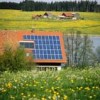
An Island That Wants to Survive
Wind and sun produce 70 percent of the electricity in Foehr, an island in northern Germany in the North Sea that is fighting against rising sea levels.Ecobreves – COLOMBIA: Peasants Recuperate Forests
Some 3,000 peasant farming families in the northern Colombian department of Bolívar this month completed two years in the governmental program Guardabosques, eradicating illegal drug crops in the areas where they work.Ecobreves – BRAZIL: Mega-Pipeline Considered Nonviable
In the short term, the project to build a gas pipeline more than 8,000 km long, from Venezuela through Brazil and ending in Buenos Aires and Montevideo, is financially nonviable, Giuseppe Bacoccoli, of the Federal University of Rio de Janeiro, told Tierramérica.Ecobreves – GUATEMALA: Maya Monument Discovered
A group of Guatemalan archeologists discovered somewhat by luck a Maya monument that dates to the year 677, in the northern department of Petén.Ecobreves – ARGENTINA: Manual for Giving Power to Civil Society
Environmental organizations in Argentina will draft a manual of best practices for how civil society can play a role in the pacts agreed at international summits, Cecilia Iglesias, president of the Environmental Network Civil Association, told Tierramérica.« Previous Page — Next Page »


Through our global network of local writers, we are continuing our award-winning coverage of global and local environmental challenges, with a focus on the people for whom the ecosphere matters in a direct way: rural dwellers who have little means to protect themselves against adverse conditions; communities that need to switch to sustainable development in order to survive; poor women and children, who are the most vulnerable in natural disasters. Sponsored by the United Nations Environment Program (UNEP), the United Nations Development Program (UNDP) and The World Bank (WB), IPS also maintains the award-winning Tierramérica, a specialised information service on environment and development.

The Week with IPS

Tracking global progress towards a sustainable world


