
Thursday, November 26, 2026



News and Views from the Global South
Environment
Ecobreves – BRAZIL: Teeth from Stem Cells
In around five years the people of the world could have the option of a "third set of teeth," formed from stem cells, if resources can be found for experiments, says Brazil's Silvio Dualibi, researcher with the Federal University of Sao Paulo.Ecobreves – GUATEMALA: Mayan Relics Discovered
Archeologists led by Jonathan Kaplan, of the United States, discovered on Guatemala's southern coast a statue and a building with a 400-meter front -- part of a Mayan city corresponding to the late pre-classic period, 300 to 200 years B.C.Ecobreves – CHILE: Environmentalists Fight Government Secrets
The Chilean government has pledged to five environmental groups to promote a constitutional reform that would eliminate the obstacles to information held by public entities.Ecobreves – VENEZUELA: New Evidence of Mercury Contamination
A study of 209 artisanal miners and their families in El Callao, a town in southeast Venezuela along the Yuruari River, a source of gold and diamonds, found that 105 of them had toxic levels of mercury from inhaling the vapors of the heavy metal.Ecobreves – HONDURAS: Communities Unite to Fight Forest Pest
Communities of the Río Plátano biosphere, in the northeastern departments of Olancho and Mosquitia, Honduras, have joined forces and in less than two months staved off four attacks by the northern pine weevil plague in the pine forest.PORTUGAL: Poorest Fire Prevention Record in Southern Europe
When fires break out in southern Europe in the hot summer months, the highest price is paid by Portugal, where the total forest area that has gone up in flames is 24 times greater than that of France, four times that of Spain and three times that of Greece and Italy.SOUTHERN AFRICA: Fences Not the Only Barrier for Cross-Border Park
The Pafuri-Banyini pan in South Africa's north-eastern Kruger National Park teems with game. Elephant bulls amble among clumps of marula trees and impala leap gracefully across the grassland, where buffalo graze.TRADE: NAFTA Tribunal Backs MTBE Ban
A three-member trade tribunal has dismissed a 970-million dollar claim filed by a Canadian company that challenged U.S. regulations banning the use of the gasoline additive MTBE.ENVIRONMENT: Indonesian Infernos Reduce Malaysians to Prayer
As anger mounts among Malaysians choking and spluttering over smoke and haze, from uncontrolled forest fires in Indonesia wafting across the narrow Malacca Straits, Prime Minister Abdullah Badawi has asked citizens to pray alongside other measures.MEXICO: Activist Receives ‘Chico Mendes’ Environmental Prize in Prison
The Sierra Club's prestigious Chico Mendes environmental award is a powerful tool for demanding the release of one of this year's prize-winners, Mexican peasant farmer activist Felipe Arreaga, who is in prison on murder charges.ENVIRONMENT: The Tipping Point Could Come Earlier
A significant rise in temperatures across European cities suggests that a crucial two-degree rise in global temperature could come earlier than feared.SOUTH AMERICA: Mercury, Another Threat to the Amazon
Mercury is a serious threat to the health of the people of the Amazon. In Brazil, more than 2,000 tonnes of this heavy metal have been dumped into the environment by ''garimpeiros'' (artisanal gold miners) since 1980, but some researchers say that a great deal more than that is found in the Amazon jungles.DEVELOPMENT-NEPAL: Quaint Village Turns Model in Sanitation
Until two years back, Khokana was best known for its controversial annual festival of pinching goats to death. The villagers believe this helps drive away the spell cast on them by evil spirits.SCIENCE: Life in the Lab Can Be Cruel
Scientific experimentation with animals is controversial in Italy, not only because thousands of living beings are sacrificed for this purpose each year, but because many consider the practice useless.TSUNAMI IMPACT: Rehabilitation on Andamans Unsustainable, Activists
Rehabilitation work in India's remote Andaman islands, close to the epicenter of the undersea quake which triggered the devastating Dec.26, 2004 tsunami is both unsustainable and ecologically harmful, say experts.ENVIRONMENT-LATIN AMERICA: Laws Don’t Work If They’re Only on Paper
The governments of Latin America and the Caribbean will not be able to curb the growing environmental destruction in the region unless they enforce the laws and international conventions they have adopted, fight poverty, and put a stop to the interference of big corporations in their public polices.CARIBBEAN: Latest Hurricane Forecasts Even More Alarming
High water temperatures in the North Atlantic Ocean and Caribbean Sea are the main reason behind this year's unusually early and active hurricane season, which could be even more severe than was initially predicted, according to experts.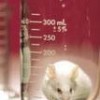
Life in the Lab Can Be Cruel
Millions of mice, rats, rabbits and monkeys are sacrificed in laboratory experiments each year to test medications, cosmetics and other products. Animal rights advocates demand an end to the practice.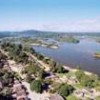
Mercury, Another Threat to the Amazon
Informal gold mining has led to more than 2,000 tons of the dangerous metal mercury being dumped into the Brazilian environment. The eight countries of the Amazon Basin will present a plan of action to protect the region in September.Ecobreves – COLOMBIA: Port a Threat to Whales
Colombian ecologists are fighting the proposed deep-water port in the western Málaga Bay and the Gorgona and Tribugá islands, where in the next few weeks some 800 humpback whales (Megaptera novaeangliae) will begin to gather as part of their annual migration pattern.Ecobreves – BRAZIL: More Contamination, Fewer Males
Urban pollution contributes to the gender imbalance of the population, to the detriment of males, as do violence and the longevity of females.« Previous Page — Next Page »


Through our global network of local writers, we are continuing our award-winning coverage of global and local environmental challenges, with a focus on the people for whom the ecosphere matters in a direct way: rural dwellers who have little means to protect themselves against adverse conditions; communities that need to switch to sustainable development in order to survive; poor women and children, who are the most vulnerable in natural disasters. Sponsored by the United Nations Environment Program (UNEP), the United Nations Development Program (UNDP) and The World Bank (WB), IPS also maintains the award-winning Tierramérica, a specialised information service on environment and development.

The Week with IPS

Tracking global progress towards a sustainable world


