
Thursday, November 26, 2026



News and Views from the Global South
Environment
Ecobreves – PERU: President Blocks Environmental Law
Peruvian President Alejandro Toledo's rejection of the new General Law on the Environment, approved by Congress, has opened a debate on the priorities of the population's quality of life and the conditions that most benefit economic growth.Ecobreves – ARGENTINA: A Move for Responsible Forest Management
The international Forest Stewardship Council and the Argentine Fundación Vida Silvestre (Wildlife Foundation) are calling on government and non-governmental organizations to draft standards for managing forests.Ecobreves – GUATEMALA: Looking for Energy in the Trash
Municipal authorities in the Guatemalan capital began tests to calculate the amount of gas emanating from the city's landfill, with hopes of using it as an energy source for nearby residents.ENVIRONMENT: Tiger Methods Needed to Keep Sri Lanka Clean
Known as one of the world's most ruthless militant outfits, the Liberation Tigers of Tamil Eelam (LTTE) are now earning a green reputation for enforcing a ban on polythene carry bags and other non-biodegradable plastics in territories under its control.ICELAND: Police Pack Off Environmentalists
The police have closed down a camp set up to protest against construction of the Kárahnúkar hydroelectric power plant in Iceland.PERU: Seven Killed in Conflict Over Copper Mining Project
Seven local farmers were killed when police attempted to block a protest march to the site of a copper mine under exploration by a British firm in the northwestern Peruvian region of Piura, according to local residents and authorities and a Catholic bishop.CUBA: The Earth Trembles in the Caribbean Too
Frequently thrashed by the hurricanes that roar through the Caribbean region each year, Cuba knows something about disaster - including earthquakes, due to the proximity of its eastern-most point to the Bartlett-Cayman fault system.ENVIRONMENT-ARGENTINA: Hunting Out of Control
Argentina has become a magnet in recent years for sports hunters - foreign and local - not only because of the relatively inexpensive access to a broad variety and quantity of animals, but also because of the lack of effective regulations to protect the hunted species.POLITICS: Europe Plays Nuclear Poker with Iran
The Iranian government's threat to resume limited nuclear activities after the European Union (EU) missed a deadline on Sunday to offer new incentives is clearly part of a calculated attempt to mount pressure on the EU-3 (Britain, France and Germany).Ecobreves – BRAZIL: Whale Watching on the Rise
The July-November whale watching season has begun in Brazil, a tourist activity that is in its nascent stages but quickly growing. This year the northeastern state of Bahia will increase the number of embarkation points from three to five, in hopes of doubling the number of people going out in boats to see whales like the humpback (Megaptera novaeangliae), which gather there to reproduce.Ecobreves – CHILE: Police Protect Biodiversity
The Chilean National Environment Commission, CONAMA, is training the militarized police, known here as Carabineros, to protect the country's biodiversity.Ecobreves – CUBA: Turtles the New Attraction
A development plan in the village of Cocodrilo, on the southwestern Cuban Isla de la Juventud (Isle of Youth), aims to draw ecotourists to one of the most important projects for hawksbill turtle (Eretmochelys imbricata) management in the Caribbean.Ecobreves – GUATEMALA: The Capital Turns into a Dump
In the Guatemalan capital some 2,300 tons arrive each day at one huge central dump, according to a study conducted for the city government by the company Guatemalan Environmental Engineering Services.Ecobreves – HONDURAS: Women Build Eco-Housing
With no need for iron bars for reinforcement, or cement, women in the village of Campo Cielo, in the outskirts of the Honduran capital, began four months ago to build ecological houses with sand, soil and plastic bottles -- and they are proud of what they have accomplished.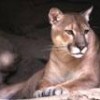
Hunting Out of Control
Some 7,000 foreign hunters visit Argentina each year, setting their crosshairs on deer, antelope or puma. Controls for protected species are scarce.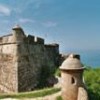
The Earth Trembles in Cuba Too
Santiago, Cuba, founded in 1515, is one of the cities at greatest seismic risk on this Caribbean island. Quake-proof standards guide the construction of new housing.INDIA: After the Deluge, Mumbai Puts Construction on Pause
After authorities counted 420 dead in rain- triggered floods and estimated billions of dollars worth of losses in damaged property and stalled rail, air and road traffic over the week, Mumbai's citizenry has begun questioning frenetic construction in India's main commercial hub and port city.MEXICO: Scientist Condemns Environmental ‘Double Standard’
The Mexican government has ''a double standard'' when it comes to the environment, says Mexican scientist Luis Roberto Acosta, pioneer in the measurement of atmospheric pollutants.ENVIRONMENT: Climate Pact Is No Kyoto, Experts Say
India, China and four other nations have agreed to a new climate change pact championed by the United States that advocates new technologies instead of emissions reductions.PORTUGAL: 25 Percent of Forests Lost in Five Years
While Portugal is already facing its worst drought in three centuries, the environmental outlook was made even bleaker this week by a stunning announcement: almost 25 percent of the country's forest cover has been lost to fire in the past five years.ECONOMY-ZIMBABWE: Running on Empty
The sight of cars caked with dust, lined up outside filling stations, has become a common one in Zimbabwe. Some of the vehicles have been there for days, even weeks, as motorists grapple with what many view as the worst episode yet in the country's recurrent fuel crisis.« Previous Page — Next Page »


Through our global network of local writers, we are continuing our award-winning coverage of global and local environmental challenges, with a focus on the people for whom the ecosphere matters in a direct way: rural dwellers who have little means to protect themselves against adverse conditions; communities that need to switch to sustainable development in order to survive; poor women and children, who are the most vulnerable in natural disasters. Sponsored by the United Nations Environment Program (UNEP), the United Nations Development Program (UNDP) and The World Bank (WB), IPS also maintains the award-winning Tierramérica, a specialised information service on environment and development.

The Week with IPS

Tracking global progress towards a sustainable world


