
Thursday, November 26, 2026



News and Views from the Global South
Environment
Ecobreves – VENEZUELA: Eco-Museum in the Works
Artists, environmentalists, educators and historians have proposed to set up an Ecological Museum of Lake Maracaibo, upon a platform over this body of water near the shore of the city of the same name -- oil capital of western Venezuela.Ecobreves – CUBA: Reforestation to Fight Drought
Two areas of southeastern Cuba hit especially hard by drought received international financing to plant trees -- cashews (Anacardium occidentale) and neems (Azadirachta indica) -- which will create new jobs and help protect both soil and biodiversity.ARGENTINA: Activists Fear Return of Spanish Fishing Vessels
Argentine groups fighting for sustainable fishing are denouncing the pressure from Spain for a new cooperation agreement, which they say could have lethal impacts on the South Atlantic fish stocks, already over-exploited by the Spanish fishing fleet in the 1990s.TSUNAMI IMPACT: The Long Russian Winter May Help
The long and cold Russian winter can be of some help to tsunami victims as Russians head south to Asia in droves to revive themselves and the economies of their destinations.DEVELOPMENT: "Middlemen" Banks Lack Accountability, Report Finds
Intermediary banks and financial institutions that borrow from multilateral international banks to lend to local projects pose a threat to environmental and social standards around the world and should be monitored more closely, says a new report from the World Resources Institute in Washington.ENVIRONMENT: The Day the World Grew Dim
Growing desertification worldwide threatens to create millions of environmental refugees, while rising numbers of powerful dust storms affect the health of people even continents away.BOLIVIA: Dinosaur Tracks Rewrite Palaeontology
The more than 5,000 dinosaur footprints discovered in Cal Orko, in southern Bolivia, have prompted a reconstruction of the planet's history and a correction of the science about these gigantic animals that dominated the landscape until some 65 million years ago, when they disappeared from the face of the Earth.G8 SUMMIT: Further Retreat from Tackling Climate Change
A new leaked document on the current stage of negotiations on the G8 position on climate change shows a further retreat from consensus on many fronts.PARAGUAY: Sweet Experiment with Organic Sugar
In 1994 a Paraguayan sugar company moved to fill the demands of niche markets abroad for sugar produced without agrochemicals. Eleven years later, Paraguay is the world's leading producer and exporter of this organic product.ENVIRONMENT: Greenpeace’s Glory Days ‘Are Not Over’
When German-born Gerd Leipold took over as executive director of the international environmental watchdog Greenpeace in 2001, there were some raised eyebrows.
Sweet Experiment with Organic Sugar
Paraguay is the leading exporter of sugar produced without agrochemicals, a business that is forecast to move 26 million dollars in 2005.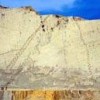
Following the Dinosaur Tracks
A cement quarry in southern Bolivia reveals secrets of 294 species of animals that disappeared 65 million years ago.Activists Fear Return of Spanish Fishing Vessels
Environmental activists in Argentina warn about the negative impacts of potential international fishing agreements that would affect the South Atlantic fisheries.Ecobreves – HONDURAS: Ecologists Stop Construction on Reserve
A group of Honduran ecologists has convinced the government to revoke an environmental permit to build houses in the mountains of La Tigra national park, an important area for water and forest resources surrounding the capital.Ecobreves – PERU:: Oil Company Sanctioned
Sixteen oil wells belonging to the Argentine transnational Pluspetrol, in the northeastern Peruvian department of Loreto, have been shut down as a sanction for contaminating some 100 hectares of forests and wetlands in the Huanganayacu gorge.Ecobreves – ARGENTINA: Successful Campaign Against Mining
A campaign led by a coalition of Argentine non-governmental organizations led the governor of the southern province of Río Negro, Miguel Saíz, to announce on June 4 a decree banning the use of cyanide and mercury in gold mining.Ecobreves – COLOMBIA : More Land for Peasant Farmers
Colombian Agriculture Minister Andrés Arias announced on June 5, during the Peasant Day celebrations, that this year some 40,000 hectares of land -- worth some seven million dollars -- will be handed over to rural workers.ENVIRONMENT: The Blue Gold Rush Begins
The battle over environmental resources is now plumbing new depths, right to the bottom of the oceans.ENVIRONMENT-LATIN AMERICA: A Model That Isn’t Working
The formulas followed in Latin America and the Caribbean to fight environmental damages are not bringing the hoped-for results, and the region is unlikely to meet the commitment of guaranteeing environmental sustainability by 2015 or 2020, one of the eight Millennium Development Goals (MDGs).ENVIRONMENT: Ban Urged on Indiscriminate Long-Line Fishing
International environmental groups are calling on the United Nations to impose a moratorium on industrial long-line fishing, which indiscriminately kills sea turtles and other species whose existence is considered a vital factor in the sustainability of ocean ecosystems.CARIBBEAN: Natural Disasters Endanger Development Goals
In the Caribbean, the destruction wrought by natural disasters poses a serious obstacle to the fulfilment of the Millennium Development Goals established by the United Nations, acknowledged U.N. experts in Cuba.« Previous Page — Next Page »


Through our global network of local writers, we are continuing our award-winning coverage of global and local environmental challenges, with a focus on the people for whom the ecosphere matters in a direct way: rural dwellers who have little means to protect themselves against adverse conditions; communities that need to switch to sustainable development in order to survive; poor women and children, who are the most vulnerable in natural disasters. Sponsored by the United Nations Environment Program (UNEP), the United Nations Development Program (UNDP) and The World Bank (WB), IPS also maintains the award-winning Tierramérica, a specialised information service on environment and development.

The Week with IPS

Tracking global progress towards a sustainable world


