
Thursday, November 26, 2026



News and Views from the Global South
Environment

Priest Proposes 'March for Life' Across Mesoamerica
Roman Catholic priest Andrés Tamayo, winner of the Goldman Prize, popularly known as the environmental Nobel, said in a Tierramérica interview that he and his supporters are planning a region-wide demonstration to protect Central America's forests.
Mapuche Land Dispute a Pending Problem
Indigenous leaders, who continue their demands for their communities' rights over ancestral lands, continue to be stigmatized as ''terrorists'' in Chile, say rights activists.Ecobreves – GUATEMALA: Airport Remodel in Maya Zone
A major effort is under way in Guatemala to boost visits to the country's Maya ruins. This includes renovation of the international airport in Santa Elena, in the northern department of Petén.Ecobreves – ARGENTINA: Clean Energy in Patagonia
A small town in Argentina's southern Patagonia region has set up a laboratory for the production of clean fuel produced with clean energy.Ecobreves – BOLIVIA: Cochabamba Water Project Recognized
The project Water for All, being developed in the outskirts of the central Bolivian city of Cochabamba to provide potable water to the poorest population, could soon receive fresh financing after winning the SEED award on Apr. 22.Ecobreves – MEXICO: International Pressure Wins Environmentalist's Release
Pressure from environmental groups was key in winning the quick release of activist Araceli Domínguez, imprisoned for denouncing the deaths of dolphins in the Mexican resort of Cancún.Ecobreves – COLOMBIA: Catfish Ban
The Colombian rural development institute, INCODER, is banning from May 1 to 30 the fishing, storage, sale and transport of the tiger shovelnose catfish (Pseudoplatystoma fasciatum) in the Magdalena River basin, which crosses national territory from north to south.Ecobreves – PERU: Thermoelectric Plant Threatens Resort
With the backing of non-governmental organizations and of most of the municipal leaders, neighborhood groups in Chilca, a small Peruvian city 64 km south of Lima, announced mobilizations against the planned construction of a thermoelectric plant just 500 meters from the town's limits.Ecobreves – HONDURAS: Massive Logging Deprives Capital of Water
The Honduran Environmental Prosecutor is investigating the state-run electrical energy company and a forestry company for the massive logging of the Guacerique River basin.ENVIRONMENT-CHILE: Gov’t Sues Pulp Mill that Killed Swans
For the first time in Chilean history, the government is suing a private corporation for environmental damage - specifically, for the deaths of a large number of swans in a nearby nature sanctuary.ENVIRONMENT: Water Returns to Iraq’s Eden
Fifteen years after the former Iraqi government used old blueprints dating from the British Empire to drain a vast wetland, the area is slowly creeping back to life.CUBA: April Showers Finally Bring Hope to Drought-Stricken City
Some ran outside to take showers under the rain, other scrambled to collect every last drop in plastic tanks, pails, pots or any other container at hand, and quite a few seemed to be living one of the happiest moments of their lives: for the first time in months, rain was finally falling in this drought-stricken city in eastern Cuba.DEVELOPMENT: A Grim World Bank Prediction for Thailand’s Farmers
It's all bad news this year for Thailand's farming communities, from where the bulk of the country's poor come.TRADE: WTO Talks Threaten Health, Environmental Standards, Activists Warn
World Trade Organisation (WTO) negotiations on non-agricultural market access have already been bogged down by seemingly insurmountable obstacles to reaching a consensus on reducing or eliminating tariffs on the products encompassed, which are essentially industrial goods.ENVIRONMENT: Canadian Greenhouse Gas Plan Spares Industry
Canada plans to shift the burden of massive cuts in greenhouse gas emissions onto the public and away from its booming oil and gas sector.ENVIRONMENT: NGOs Push For Fulfilment of Anti-Pollution Promises
Environmental organisations from around the world will be meeting in the Uruguayan capital to demand compliance with the Stockholm Convention on Persistent Organic Pollutants (POPs) and the expansion of its "black list" of banned chemicals.Ecobreves – CHILE: Tracking Glacier Melt
For the first time in Chile's history there will be a systematic process for monitoring an important glacier in the country's southern region, as a means to measure melting that could be associated with global warming.Ecobreves – VENEZUELA: Emergency at Valencia Lake
Lake Valencia, covering 375 square km and the second largest in Venezuela, is in a state of emergency because of the contamination resulting from the sewage water reaching the lake via rivers, and the imminent increase in incoming water as rainy season expands those rivers.Ecobreves – HONDURAS: Aerodrome Construction Threatens Maya Ruins
The Association of Non-Governmental Organizations of Honduras (ASONOG) denounced to the Cultural Heritage and Environment prosecutors offices that the government's intention to build an aerodrome in Amarillo River valley, in the department of Copán, could harm the environment and Maya ruins and threaten the Maya-Chortí peoples who live there.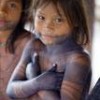
Gene Study Puts Indians on Guard
Indigenous peoples in Latin America cast a suspicious eye towards the Genographic Project, which aims to study their genes to determine how their ancestors populated the planet. A U.S.-based NGO is calling for a boycott.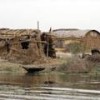
Water Returns to Iraq's Eden
The rehabilitation of wetlands in the region known since ancient times as Mesopotamia stands to benefit four million people.« Previous Page — Next Page »


Through our global network of local writers, we are continuing our award-winning coverage of global and local environmental challenges, with a focus on the people for whom the ecosphere matters in a direct way: rural dwellers who have little means to protect themselves against adverse conditions; communities that need to switch to sustainable development in order to survive; poor women and children, who are the most vulnerable in natural disasters. Sponsored by the United Nations Environment Program (UNEP), the United Nations Development Program (UNDP) and The World Bank (WB), IPS also maintains the award-winning Tierramérica, a specialised information service on environment and development.

The Week with IPS

Tracking global progress towards a sustainable world


