
Thursday, November 26, 2026



News and Views from the Global South
Environment
Spain Lags Behind in Kyoto Protocol Compliance
Spain is the European nation with the biggest increase in greenhouse gas emissions since 1990. Many companies are expected to turn to Latin America in order to meet their emissions reduction quotas. The energy company Endesa has announced it will invest 3.2 billion dollars in the region.Industry's Hidden Environmental Costs
Contaminated soil threatens the health of some two million people in Brazil, say authorities. Gas stations are the leading culprits behind this type of pollution in the state of Sao Paulo, the nation's industrial centerViolence Against Environmental Activists
The assassination on Feb. 12 of Dorothy Stang, a U.S.-born Catholic nun working in the Brazilian Amazon state of Pará, turned international attention to the human rights of environmental activists. Tierramérica offers this guide for navigating the issue on the Internet.
Ecobreves – COLOMBIA: Holy Week, but No Palm Fronds
Colombia's Environment Ministry and Bogotá's Botanical Garden have launched the ''Reconcile with Nature'' campaign to prevent the use of the fronds of the wax palm (Ceroxylon quindiuense) in the celebrations of Christianity's Holy Week.Ecobreves – MEXICO: 'Export' of Law on Transgenics?
The environmental watchdog group Greenpeace warned that the new Mexican law on biosecurity for genetically modified organisms (GMOs) --opposed by environmentalists, a group of farmers, and scientists -- could be used as a model for similar legislation in Central America.Ecobreves – PERU: Oil Companies Resist Ethanol
Sugarcane growers in Peru are demanding that the government comply with the law on Promotion of Bio-Fuel Market, in effect since Jan. 1, and which obligates petroleum refineries to replace the lead in gasoline with ethanol.Ecobreves – HONDURAS:: $320 Million to Fight Water Shortage
Honduran authorities need 320 million dollars to build a reservoir for potable water in the capital, where tight rationing of water supplies has been in effect because of a dry summer and the climate phenomenon known as El Niño.Ecobreves – GUATEMALA: To Jail for Littering
The municipal government of Quiché, a tourist destination in central Guatemala, will send anyone who dumps trash in the streets to prison for 10 to 60 days.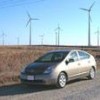
Car Industry Challenges California Law
In 10 years, all new cars in California must emit at least 30 percent less carbon dioxide, says the first law of its kind in the world. But car manufacturers have filed a lawsuit to halt the legislation.
Mapuche Culture a Boon to Health and Palate
Chilean Indians are opening pharmacies and restaurants as a means to disseminate their view of the world... and to create jobs. Most of Chile's 600,000 Mapuches live in poverty.ENVIRONMENT-BRAZIL: Gov’t Offensive in Defence of Amazon Jungle
Hope is sometimes born of tragedy. Decisions adopted by the Brazilian government in the wake of the murders of U.S.-born nun Dorothy Stang and three rural activists in the past week in the northern state of Pará could help curb deforestation and violence in the Amazon jungle region.CLIMATE CHANGE: Chile Poised to Take Full Advantage of Kyoto
An unprecedented summer heat wave has made the issue of climate change a "hot" topic in Chile, as the country is gearing up to be one of the first to take advantage of the new greenhouse gas emissions market.CORRECTION*/ENVIRONMENT-CANADA: Kyoto vs. NAFTA?
Closing North America's biggest coal-fired power plants is a key part of Canada's plan to meet its Kyoto Protocol obligations, but experts warn that U.S. coal companies could claim such a move violates international trade pacts like the North American Free Trade Agreement (NAFTA).HEALTH-CHILE: ‘Unacceptable’ Work Conditions on Farms
Pesticide poisoning, lack of official hiring contracts, widespread child labour and denigrating treatment are the daily reality of hundreds of thousands of agricultural workers in Chile, according to a local and international campaign for health and labour rights.CENTRAL AMERICA: UN Agency Accused of Distributing GM Foods
Environmentalists in Central America have accused the World Food Programme (WFP) of distributing genetically modified food in this region, including one kind of corn that has never been approved for human consumption.CLIMATE CHANGE: OPEC Members Share Responsibility, Say Venezuelan Experts
The petroleum producing countries should make a greater contribution to fighting global warming, even though the obligations established by the Kyoto Protocol fall primarily on the shoulders of the industrialised oil consumer nations, Venezuelan analysts say.DEVELOPMENT-CHAD: Pipeline Project Off to a Wobbly Start
A high-profile pipeline project in Chad that is backed by the World Bank has come under fire for a lack of transparency, amid rising concerns that oil revenues are being redirected from poverty-fighting efforts.HEALTH-CHILE: ‘Unacceptable’ Work Conditions on Farms
Pesticide poisoning, lack of official hiring contracts, widespread child labour and denigrating treatment are the daily reality of hundreds of thousands of agricultural workers in Chile, according to a local and international campaign for health and labour rights.DEVELOPMENT-CHAD: Pipeline Project Off to a Wobbly Start
A high-profile pipeline project in Chad that is backed by the World Bank has come under fire for a lack of transparency, amid rising concerns that oil revenues are being redirected from poverty-fighting efforts.CLIMATE CHANGE: OPEC Members Share Responsibility, Say Venezuelan Experts
The petroleum producing countries should make a greater contribution to fighting global warming, even though the obligations established by the Kyoto Protocol fall primarily on the shoulders of the industrialised oil consumer nations, Venezuelan analysts say.CENTRAL AMERICA: UN Agency Accused of Distributing GM Foods
Environmentalists in Central America have accused the World Food Programme (WFP) of distributing genetically modified food in this region, including one kind of corn that has never been approved for human consumption.« Previous Page — Next Page »


Through our global network of local writers, we are continuing our award-winning coverage of global and local environmental challenges, with a focus on the people for whom the ecosphere matters in a direct way: rural dwellers who have little means to protect themselves against adverse conditions; communities that need to switch to sustainable development in order to survive; poor women and children, who are the most vulnerable in natural disasters. Sponsored by the United Nations Environment Program (UNEP), the United Nations Development Program (UNDP) and The World Bank (WB), IPS also maintains the award-winning Tierramérica, a specialised information service on environment and development.

The Week with IPS

Tracking global progress towards a sustainable world


