
Thursday, November 26, 2026



News and Views from the Global South
Environment
ENVIRONMENT: Human Development at the Service of Wildlife
Human development in the countries of Africa, Latin America and Asia is essential for protecting the diversity of plant and animal species, says biologist Edward O. Wilson, professor emeritus of Harvard University and one of the ''fathers'' of the concept of biodiversity.TSUNAMI-IMPACT: Maldives Needs Tourists, Desperately
Tourism is getting a new coat of respectability as an industry that offers a lifeline to help countries devastated by the Dec. 26 Indian Ocean tsunami.HEALTH-U.S.: The Ghosts of Ground Zero
When President George W. Bush gives his State of the Union address Wednesday night, he will undoubtedly mention the terror attacks of Sep. 11, 2001.TRADE-AMERICAS: How Much Is the Biodiversity of the Andes Worth?
Washington's refusal to recognise the right of Andean countries to demand compensation for the commercial use of their biological resources is standing in the way of negotiations for free trade between the United States, Colombia, Ecuador and Peru, agree observers.HEALTH: Vigilance The Only Way to Fight Bird Flu Pandemic – Experts
South-east Asian countries grappling with fresh outbreaks of bird flu are displaying strong faith in the transparency of authorities as the fight against the lethal disease picks up, marking a departure from the secrecy that governments resorted to last year.ENVIRONMENT: Biodiversity Brings a Political Divide
Environmental and scientific experts agree that degradation of biological diversity has reached historical dimensions, but a North-South divide is emerging over action to counter this crisis.ENVIRONMENT: Chile Needs to Clean Up Its Act to Join OECD
President Ricardo Lagos would like to see Chile become a full member of the OECD, known as the "rich countries' club".DEVELOPMENT-CUBA: The Bamboo Revolution
Bamboo has been used for centuries in Cuba to build fences, gates, corrals and hunting traps, but now the island's farmers are learning more about the multitude of practical uses and environmental benefits that make this plant a vital resource in other regions of the world.ENVIRONMENT: Voyage to the Fragile Beauty of Antarctica
''They are some of the most beautiful images I have seen in my life,'' says Sebastiao Salgado, renowned Brazilian photographer, about the natural landscapes he captured on film during the first days aboard the French scientific research sailboat ''Tara'' as it travels through Antarctic waters.Ecobreves – GUATEMALA: Plans for Planting 75 Million Trees
Some 75 million trees are to be planted in Guatemala before 2008 as part of the ''Guate Verde'' plan, Environment and Natural Resources Minister Mario Dary told Tierramérica.
Agrarian Reform Reaches the Forest Edge
The land intervention policy of Venezuelan President Hugo Chávez could hurt nature preserves that are that are rich in biological resources, warn environmentalists.Ecobreves – HONDURAS: Reporter Faces Trial for Defending Environment
- Journalist Frank Mejía tried to protect the trees in the Honduran capital's main park, and ended up in the courts, accused of ''disobedience''.Human Development at the Service of Wildlife
Improving the quality of life in the communities of the developing South is indispensable for protecting species diversity, said eminent biologist Edward O. Wilson in a conversation with Tierramérica.
How Much Is the Biodiversity of the Andes Worth?
The issue of access to genetic resources will continue to complicate free trade negotiations with the United States, warn Peruvian experts on the eve of the seventh round of talks.Ecobreves – BRAZIL: Bio-Construction at the World Social Forum
The 5th World Social Forum put into practice the technique of bio-construction -- ''less expensive and more ecologically correct'' -- in building the venues for five days of conferences and debate by 120,000 civil society activists gathered in the southern Brazilian city of Porto Alegre.Ecobreves – CHILE: Ecologists Applaud Energy Efficiency Plan
The non-governmental Sustainable Chile Program congratulated Economy Minister Jorge Rodríguez for presenting a National Energy Efficiency Project, which includes standards for both the public and private sectors for rational use and saving energy.Ecobreves – CARIBBEAN: Community Education to Save Birds
Residents of coastal ecosystems in two Cuban provinces, like their counterparts in Haiti, Dominican Republic and Jamaica, are learning in conference and workshops about protecting the 'yaguasa criolla' (Dendrocygna arobrea), a Caribbean bird that faces extinction.Ecobreves – VENEZUELA: Indians Pro-Water, Anti-Coal
Indigenous and peasant communities of the northwestern Venezuelan oil-producing state of Zulia, bordering Colombia, founded the Water for Life Committee as a counterweight to a government proposal to mine coal in the watersheds of the area's two main rivers, the Socuy and Cachirí, and the Tulé reservoir.ENVIRONMENT: The Decade After Next…
Climate change could raise global temperatures a whopping 11 degrees C. by mid-century, new research revealed Thursday, even as some international experts warn that just a two-degree increase would likely spell disaster for many people.TSUNAMI IMPACT: World Heritage Sites Not Spared From Killer Waves
As the world rushes to the aid of millions of survivors struggling to regain their devastated lives in the tsunami-struck countries in the Indian Ocean, a group of international archeologists is planning a joint study to restore cultural treasures that have been destroyed in the huge disaster.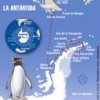
Voyage to the Fragile Beauty of Antarctica
The international renowned photographer Sebastiao Salgado shares with Tierramérica his first days aboard the Tara, which set sail this month on an Antarctic expedition.« Previous Page — Next Page »


Through our global network of local writers, we are continuing our award-winning coverage of global and local environmental challenges, with a focus on the people for whom the ecosphere matters in a direct way: rural dwellers who have little means to protect themselves against adverse conditions; communities that need to switch to sustainable development in order to survive; poor women and children, who are the most vulnerable in natural disasters. Sponsored by the United Nations Environment Program (UNEP), the United Nations Development Program (UNDP) and The World Bank (WB), IPS also maintains the award-winning Tierramérica, a specialised information service on environment and development.

The Week with IPS

Tracking global progress towards a sustainable world


