
Friday, November 27, 2026



News and Views from the Global South
Environment
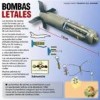
Clusters of Death
A global campaign is aimed at halting the use of cluster bombs, which scatter hundreds of ''bomblets'' and are responsible for the deaths of thousands of civilians worldwide, most recently in Iraq. The 57 nations that stockpile these munitions reject a moratorium.
Renewable Energy Not Always Sustainable
Latin America obtains more than 20 percent of its energy from ostensibly renewable sources. But much of it comes from hydroelectric dams, which can harm ecosystems.Mistreated for the Three-Ring Show
Circus animals suffer mistreatment in Italy. Activists are demanding a ban, but the circus owners refuse.Ecobreves – BRAZIL: Herds of Turtles
Turtle ranching, in some cases for meat exports, is on the rise in the northwestern Brazilian state of Amazonas, where there are 69 entrepreneurs working with the green light from the Brazilian Institute for Environment (IBAMA), a government agency.Ecobreves – CHILE: Forest Monitoring Network
The Chilean forestry research institute, INFOR, announced on Jun. 21 that it is creating an environmental monitoring network for the country's forests, thanks to two projects that demanded state investment of one million dollars.Ecobreves – CUBA: Drought Forces Survival Strategies
The persistent drought that has hit most of Cuba's rural areas has forced farmers and ranchers to seek alternatives for the survival of their animals, which are suffering shortages of water and adequate pastures.Ecobreves – VENEZUELA: River Threatens Capital
A 20-meter gap opened in the cement channel that guides the Guaire River through the Venezuelan capital, and its waters, polluted by the sewage from slum neighborhoods has come into contact with the wall that sustains the canal and the main highway through Caracas.Ecobreves – HONDURAS: Micro-Enterprise Recycles Trash
Ten Honduran provinces will be part of a Latin American project to produce organic fertilizer and thus reduce pollution, Agriculture Minister Mariano Jiménez told Tierramérica.Ecobreves – GUATEMALA: Fewer Forest Fires
Guatemala recorded 368 forest fires from January to early June of this year, just half the 731 that occurred in the same period in 2003.ENVIRONMENT-BOLIVIA: Chainsaws Threaten Nature Preserve
Residents of the town of Apolo, in northeast Bolivia, have been using chainsaws to open a path through Madidi National Park, while the government and defenders of biodiversity say the route would mostly benefit illegal exports of precious wood.RENEWABLES: Asia Going Rapidly More Nuclear
Asia is going rapidly more nuclear to meet its energy needs, a new report by the International Atomic Energy Agency says.ENVIRONMENT-SPAIN: Desertification Threatens One-Third of Territory
The government of Spain is investing heavily in restoring land and in other environmental efforts to fight desertification, which threatens 31.5 percent of Spanish territory.DEVELOPMENT: UN Pact With Business Lacks Accountability – Critics
U.N. Secretary-General Kofi Annan is under fire from the world's leading environmental and human rights groups for his perceived attempts to involve big corporations in shaping the world body's development agenda.ARGENTINA: Provincial Gov’t Auctions Off Nature Reserve for Farming
Despite criticisms from environmental organisations and legal complaints filed by indigenous groups, the government of the northwestern Argentine province of Salta broke up a 20,000-hectare nature reserve into plots and auctioned it off Thursday to farming and ranching companies.RENEWABLES: A Little Less Small Is More Beautiful
Hemant Lamba knows it will be long before most people think of renewable energy projects as more than symbolic projects that rarely make a substantial contribution.HEALTH: Environmental Danger Is In Our Blood
Forget just for a moment the many dangers to the environment from pollutants; many of them are now in our blood, according to tests carried out by WWF.DEVELOPMENT: China Races to Get More World Heritage Listings
As China contends for the rank of number one tourist destination, it is keen to gain World Heritage status for yet more of its national treasures and rival the sightseeing attraction of old European countries like Spain and Italy.ENVIRONMENT: Shell Faces Global Attack
The giant oil company Shell ran into a barrage of charges from around the world Wednesday over the damage it is causing to health and the environment.ENVIRONMENT-CHILE: Growing Scandal over Illegal Logging of ‘Alerce’
The scandal in Chile over the trafficking of the Alerce, a valuable tree species, is growing, after the emergence of reports on a ''mafia'' allegedly involved in logging the slow-growing trees and exporting the wood to North America.DEVELOPMENT: World Bank Oil and Gas Reforms Fall Short – Critics
The World Bank has promised to reform its loans to the oil, gas and mining industries, in what some watchdog groups call a "disappointing" response to a study that recommended the Bank halt all funding of the controversial extractive industries.INDIA: Coca Cola Accused of Guzzling Water in Desert State
Beverage giant Coca Cola's cup of woe never runs dry in India. The company has picked up yet another row with local populations over groundwater mining, this time in the largely desert state of western Rajasthan.« Previous Page — Next Page »


Through our global network of local writers, we are continuing our award-winning coverage of global and local environmental challenges, with a focus on the people for whom the ecosphere matters in a direct way: rural dwellers who have little means to protect themselves against adverse conditions; communities that need to switch to sustainable development in order to survive; poor women and children, who are the most vulnerable in natural disasters. Sponsored by the United Nations Environment Program (UNEP), the United Nations Development Program (UNDP) and The World Bank (WB), IPS also maintains the award-winning Tierramérica, a specialised information service on environment and development.

The Week with IPS

Tracking global progress towards a sustainable world


