Languages
Saturday, October 24, 2026



News and Views from the Global South
Featured

UN Security Council: Reform or Irrelevance
In early January, an emergency UN Security Council meeting on Venezuela followed a familiar path of paralysis. Members clashed over the US government’s abduction of Nicolás Maduro, with many warning it set a dangerous precedent, but no resolution came.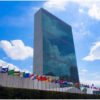
Is the US Planning to Throw a Lifeline to a Sinking UN?
The current UN financial crisis, described as the worst in the 80-year-old history of the world body, triggers the question: is the US using its financial clout defaulting in its arrears and its assessed contributions to precipitate the collapse of the UN?
When Protection Meets the Sea: Rethinking Marine Protected Areas with Fishing Communities
Melanie Brown has been fishing salmon in Bristol Bay, Alaska, for more than 30 years. An Indigenous fisherwoman and a coordinating committee member of the World Forum of Fisher Peoples, she speaks about the sea with deep care and lived knowledge.
To Fix the Rupture, Trade is not Enough
Will trade be enough to navigate the current waves of chaos and disorder that are underpinning the ongoing rifts among competing powerful and hegemon nations and the rest?
‘We Are Seeing an Economic Transition, but No Democratic Transition’
CIVICUS discusses the situation following the US intervention in Venezuela with Guillermo Miguelena Palacios, director of the Venezuelan Progressive Institute, a think tank that promotes spaces for dialogue and democratic leadership.

Myanmar: Five Years Since the Coup and No End in Sight To War
Five years of conflict since the military seized power have reduced Myanmar to a failed state and taken a huge toll of lives lost and destroyed. But with all sides seeking total victory, there is no end in sight.
Support Science in Halting Global Biodiversity Crisis—King Charles
British Monarch King Charles says science is the solution to protecting nature and halting global biodiversity loss, which is threatening humanity’s survival.
Explainer: Why Nature Is Everyone’s Business
Our food, fuel, and fortunes come from nature, but as these resources are turned into profits, the balance between exploiting and replenishing the planet is ever more precarious. Global businesses impact nature through mining, manufacturing, processing and retail operations. At the same time, nature impacts business operations because there is a loss of biodiversity and extreme weather events such as droughts, floods, and high temperatures.
High Seas Treaty Will Transform Our Fragile Ocean for the Better
“The ocean’s health is humanity’s health”, said UN Secretary-General Antonio Guterres, in September 2025. He was commenting after the High Seas Treaty (BBNJ) [1] finally achieved ratification, going on to call for “a swift, full implementation” from all partners. As of January 17, 2026, the treaty has come into force, meaning the time for implementation is now. What is the High Seas Treaty?
Group of 77—Representing 134 Nations, Plus China—Protest Funding Cuts for South-South Cooperation
A sharp cut in funding for “South-South Cooperation” (UNOSSC) has triggered a strong protest from the 134-member Group of 77 (G-77), described as the largest intergovernmental organization of developing countries within the United Nations.
Venezuela at a Crossroads
When US special forces seized Nicolás Maduro and his wife from the presidential residence in Caracas on 3 January, killing at least 24 Venezuelan security officers and 32 Cuban intelligence operatives in the process, many in the Venezuelan opposition briefly dared hope.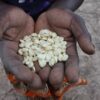
To Develop a Continent, Africa Must Nourish Its Children
Hunger shadowed Mercy Lung’aho’s childhood, fueling her campaign to promote nutrition as a foundation for Africa’s development.
Do Resources Define the Parameters of Faith-based Engagement and Diplomacy Today?
Several events, meetings, consultations, initiatives, etc. taking place among faith-inspired, ‘faith-based’ and a variety of other similar efforts, over the past year, in the United States especially, concern me.
Business Growth and Innovation Can Boost India’s Productivity
India’s productivity growth over the past two decades has been impressive, reflecting rapid expansion in high-value services, gradual efficiency-enhancing reforms, and scale advantages from a large domestic market.
The UN is Being Undermined by the ‘Law of the Jungle’
UN Secretary-General Antonio Guterres was dead on target when he told the Security Council last week that the rule of law worldwide is being replaced by the law of the jungle. “We see flagrant violations of international law and brazen disregard for the UN Charter. From Gaza to Ukraine, and around the world, the rule of law is being treated as an à la carte menu,” he pointed out, as mass killings continue.
‘Unfathomable But Avoidable’ Suffering in Gaza Hospitals, Says Volunteer Nurse
“I’d never encountered anything like it before. I had no idea that there could be a place that needed humanitarian aid and that a government entity wouldn’t allow physicians or health workers into [that place],” says Jane.*
Melting Reserves of Power: Mongolia’s Glaciers and the Future of Energy and Food Security
The International Year of Glaciers’ Preservation in 2025 was a timely reminder that the stability of Mongolia’s economy rests on fragile mountain systems that are melting faster than ever recorded. The loss reverberates across the country’s energy and agricultural systems, two development pillars that draw from the same finite resource: water.
Exiled: Myanmar’s Resistance to Junta Rule Flourishes Abroad
From construction and hotel workers to kitchen and restaurant staff—estimates of the numbers of Myanmar migrants living in Thailand range up to six million, with a surge of new arrivals since the 2021 military coup.
‘Since the Coup, Factory Employers Have Increasingly Worked with the Military to Restrict Organising and Silence Workers’
CIVICUS speaks to the Business and Human Rights Centre (BHRC) about labour rights abuses in Myanmar’s garment industry since the 2021 military coup.
Global South Demonstrates How Countries Can Deal with an Aggressive United States
The United States’ attack on Venezuela marks a key watershed in the world order. We still cannot predict how this violation of another state’s sovereignty will ultimately play out.
Binalakshmi Nepram: Engineering Peace, Creating History
It was Christmas eve: some two decades ago. Binalakshmi Nepram was a witness to the killing of a 27-year-old. In utter disbelief, she saw a group of three men dragging the victim from his workshop. Within minutes, he was shot dead.« Previous Page — Next Page »





The Week with IPS

NEXT STOP - SDGs
Tracking global progress towards a sustainable world
Tracking global progress towards a sustainable world
