Languages
Sunday, October 25, 2026



News and Views from the Global South
Featured
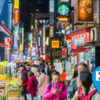
As Korea Ages, Fiscal Reforms Can Help Safeguard Government Finances
Korea’s population is aging faster than almost any other country. That’s because people live longer than in most other countries, while the birth rate is one of the lowest in the world.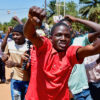
Uganda: Democracy in Name Only
When Ugandans went to the polls on 15 January, the outcome was never in doubt. As voting began, mobile internet services ground to a halt, ensuring minimal scrutiny as President Yoweri Museveni secured his seventh consecutive term. Far from offering democratic choice, the vote reinforced one of Africa’s longest-running presidencies, providing a veneer of democratic legitimacy while stifling competition.
Is the US Board of Peace Aimed at Undermining the UN?
Judging by the mixed signals coming out of the White House, is the Board of Peace, a creation of President Donald Trump, eventually aimed at replacing the UN Security Council or the United Nations itself? At a ceremony in Davos, Switzerland last week, Trump formally ratified the Charter of the Board — establishing it as “an official international organization”.
‘Freedom Always Returns – but Only If We Hold Fast to Our Values and Sustain the Struggle’
CIVICUS speaks with Belarusian activist, blogger and journalist Mikola Dziadok about his experiences as a two-time political prisoner and the repression of dissent in Belarus. Mikola was jailed following mass protests in 2020.
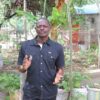
Moving Towards Agroecological Food Systems in Southern Africa
In a quiet village known as Nkhondola, in Chongwe District, Eastern Zambia, Royd Michelo and his wife, Adasila Kanyanga, have transformed their five-acre piece of land into a self-sustaining agroecological landscape. With healthy soils built over time, the farm teems with diverse food crops, fruit trees, livestock and birds, nourishing their family and the surrounding community.
The World’s Ongoing Conflicts Underline Nuclear and Non-Nuclear States
The two current ongoing conflicts, which have claimed the lives of hundreds and thousands of people, are between nuclear and non-nuclear states: Russia vs Ukraine and Israel vs Palestine, while some of the potential nuclear vs non-nuclear conflicts include China vs Taiwan, North Korea vs South Korea and the United States vs Iran (Venezuela, Mexico, Colombia, Cuba and Denmark).
Big Nature-Based Finance Turnaround Needed to Restore, Protect Ecosystems
The world is pouring trillions of dollars each year into activities that destroy nature while investing only a fraction of that amount in protecting and restoring the ecosystems on which economies depend, according to a new United Nations report released on January 22.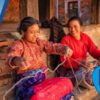
Steering Nepal’s Economy Amid Global Challenges
Nepal has a unique opportunity for transformation. The recent youth-led protests underscored aspirations for greater transparency, governance and a more equal distribution of economic opportunities and resources. This yearning resonated in Nepal and beyond.
Thousands of Kenya’s Smallholder Coffee Farmers Risk Losing EU Market as Deforestation Law Takes Effect
For the last twenty years, Sarah Nyaga, a smallholder farmer from Embu County in central Kenya, has farmed coffee. Like most across Kenya, she relies on the export market. A greater percentage of Kenya’s coffee ends up within the European Union market, but a new law threatens to disrupt what has been a source of income for thousands of farmers like Nyaga.
World Enters ‘Era of Global Water Bankruptcy’
The world is already in the state of “water bankruptcy”. In many basins and aquifers, long-term overuse and degradation mean that past hydrological and ecological baselines cannot realistically be restored.
Guinea’s Path to Electoral Autocracy
In December, the dust settled on Guinea’s first presidential election since the military took control in a 2021 coup. General Mamady Doumbouya stayed in power after receiving 87 per cent of the vote. But the outcome was never in doubt: this was no a democratic milestone; it was the culmination of Guinea’s denied transition to civilian rule.
World Living Beyond Its Means: Warns UN’s Global Water Bankruptcy Report
The world has entered what United Nations researchers now describe as an era of Global Water Bankruptcy, a condition where humanity has irreversibly overspent the planet’s water resources, leaving ecosystems, economies, and communities unable to recover to previous levels.
Karatoya
 Once a lifeline of northern Bengal, Bangladesh’s Karatoya River now drifts through Bogura as a fragmented, polluted channel, where climate change and human neglect quietly reshape livelihoods, memory, and everyday life.

One Carries a Broom, the Other a Schoolbag
While other children her age prepared for school, eight-year-old Tania once began her workday. Each morning, she picked up a jharu—the household broom—and cleaned floors inside a private home. At the same time, another child of her age in that household lifted a schoolbag and left for class. One carried a broom. The other carried books.
How Extreme Weather is Testing Tanzania’s $2 Billion Electric Railway Dream
On a rainy Wednesday morning, in Dodoma, the capital of Tanzania, the Standard Gauge Railway (SGR) terminal bustled with a steady flow of passengers. Women ushered toddlers along. Snack bags dangling on their hands. Tourists dragged wheeled suitcases across the floor. Students scrolled through smartphones as they returned to campus. Each had been attracted by the speed, reliability and comfort of the electric train.
Davos: Meaningful Dialogue Requires a Collective Stand Against Military, Economic and Diplomatic Bullying
“The ‘spirit of dialogue’, the theme for this year’s meeting in Davos, which begins January 19, has been painfully and increasingly absent from international affairs of late. President Trump’s first year back in office has seen the United States withdraw from multilateral bodies, bully other states and relentlessly attack the principles and institutions that underpin the international justice system.
Jailed by the Generals She Defended as ICJ Opens Genocide Case Against Myanmar
Held incommunicado in grim prison conditions for nearly five years, Aung San Suu Kyi quite possibly does not even know that this week the International Court of Justice (ICJ) opened a landmark case charging Myanmar with committing genocide against its Rohingya minority a decade ago.
The Iranian Military Is the Only Institution Capable of Catalyzing the Downfall of the Regime
Unlike ever before, Iran’s Islamic regime is facing a revolt led by a generation that has lost its fear. Young and old, men and women, students and workers, are flooding the streets across the country.
What Next? United States Exits Key Entities, Vital Climate Treaties in Major Retreat from Global Cooperation
President Donald Trump has escalated efforts to further distance the United States from international organizations and entities focused on climate, the environment, and energy. This strategy is in step with his administration’s established approach to undermine and redirect funds and international cooperation away from climate and clean energy programs.
Gaza: Physicians Call For Unimpeded Aid To Restore Reproductive Healthcare
Israel must lift all restrictions on medicine, food and aid coming into Gaza, rights groups have demanded, as two reports released today (Jan 14) document how maternal and reproductive healthcare have been all but destroyed in the country.
Tracking the Invisible: Monitoring Air Pollution from Space
Take a deep breath. Did you know that in many countries in Asia and the Pacific, the air we breathe falls short of the safety standards for air quality set by the World Health Organization? While the start of a new year signals new beginnings, it also marks the continuation of the recurring air quality crisis across many countries in the region.« Previous Page — Next Page »





The Week with IPS

NEXT STOP - SDGs
Tracking global progress towards a sustainable world
Tracking global progress towards a sustainable world
