Languages
Monday, October 26, 2026



News and Views from the Global South
Featured

Asylum Seekers: Offshore, Off Course
The debate on reforming the European asylum system has gained significant momentum following the agreement reached by EU interior ministers last week. Alongside questions of solidarity and distribution, the possibility of establishing ‘return hubs’ outside the EU was at the heart of the meeting.
As Attacks on Women Defenders Intensify, so Must Our Support
A global crackdown on civic freedoms is intensifying – and women are on the frontlines of the attack. CIVICUS’s 2025 People Power Under Attack report analyses the extent to which freedoms of association, expression and peaceful assembly are being respected or violated. The report reveals that people in 83 countries now live in conditions where their freedoms are routinely denied, compared to 67 in 2020. In 2020, 13 per cent of the world’s population lived in countries where civic freedoms were broadly respected; now it’s more like 7 per cent. Among the most documented violations in 2025 were detention of human rights defenders, journalists and protesters, and women human rights defenders (WHRDs) were among the most affected.
Venezuela Needs More Local Data To Understand the Impacts of Climate Change
A group of 55 researchers gathered and analyzed 1,260 bibliographic references to compile the Second Academic Report on Climate Change in Venezuela. Their final conclusion is that more local studies are still needed to record the direct impacts across different Venezuelan regions and, in particular, to provide data to design the adaptation plans necessary to address climate change.
UNDP’s Digital Rights Dashboard: A Conversation Starter on Human Rights in the Digital Age
Within a generation, digital systems have changed much of how we learn, work and participate in civic life, especially in more connected regions. This shift is unfolding at different speeds in developing countries, but the direction of travel is unmistakable.
Sindh People’s Housing Redefines Post-Disaster Adaptation Success
By any comparison, the statistics for Sindh People's Housing for Flood Affectees (SPHF) are phenomenal. In 2022, photographs from the region showed people treading carefully through waist-deep water with their few belongings grasped firmly above their heads in an attempt to escape the flooding caused by 784 percent more than average monsoon rains.
From Law to Lives Saved: How the Maternal Newborn and Child Health Bill Can Deliver Universal Health Coverage
For women in labour across Kenya, reaching a health facility, finding skilled health workers, and affording care can be a matter of life and death. These challenges are not rare, but daily realities for many families.
‘Once Conversations about Democracy and Equality Begin, They Are Very Hard to Silence’
CIVICUS discusses restrictions on civic space in Thailand and the detention of activist and human rights lawyer Arnon Nampa with Akarachai Chaimaneekarakate, Advocacy Lead at Thai Lawyers for Human Rights (TLHR).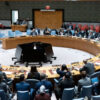
A New UN Secretary-General Needs the Blessings of the US–or Get Vetoed
When there was widespread speculation that a UN Under-Secretary-General (USG), a product of two prestigious universities—Oxford and Cambridge—was planning to run for the post of Secretary-General back in the 1980s, I pointedly asked him to confirm or deny the rumor during an interview in the UN delegate’s lounge.
International Funding for 30×30 Biodiversity Target Falls Billions Short of Global Goals
A new study and interactive dashboard released today in Nairobi at the seventh session of the United Nations Environment Assembly (UNEA) finds that current international financial flows remain billions of dollars short of what is required to achieve the global biodiversity target of protecting and conserving at least 30 percent of the world’s land and ocean by 2030 (30x30).
How Community Radio Is Powering Tanzania’s Climate Resilience
At dawn in the mangrove-choked Rufiji estuary, paddles from wooden canoes slice through still waters as a soft voice drifts across the tide.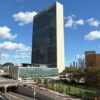
The Daunting Tasks Ahead for the New UN Secretary-General
The election of the next Secretary-General of the United Nations comes at a highly inopportune moment in 2026, when the UN is being bypassed, and multilateralism—with the UN at its core—is under increasing challenge from some of the world’s most powerful states and leaders.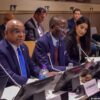
UN Pact for the Future Requires Global Solidarity and Localized Solutions
More than one year since its adoption, the UN Pact for the Future is held up as a critical framework for countries to address today’s issues through global cooperation. Its agenda for global governance and sustainable development is ambitious, and it is for this reason the Pact poses implementation challenges when it comes to the direct impact on local communities. It will require the joint efforts of governments, civil society and international organizations to achieve the goals laid out in the Pact.
Thousands Gather in Nairobi as Science Meets Diplomacy for Planet Protection
“There will never be a better time than now to invest in a stable climate, thriving ecosystems, and resilient lands, or in sustainable development that delivers for all,” said Amina J. Mohammed, the deputy Secretary-General of the United Nations, during the opening plenary of the seventh meeting of the UN Environment Assembly (UNEA-7) taking place from December 8 to 12, 2025.
Climate Crisis Disrupts Sundarbans Community Festival, Prosperity
A dried karam tree branch stands on the bank of a pond in a field in Datinakhali village adjacent to the Sundarbans. Despite many efforts, the tree could not be saved.
Cyclone Ditwah Leaves Millions Affected as Sri Lanka Faces Widespread Flooding, Displacement, and Rising Health Risks
In late November, Cyclone Ditwah made landfall in Sri Lanka and southern India, bringing heavy rainfall that triggered widespread flooding and devastating landslides. The storm caused extensive damage to civilian infrastructure and resulted in a significant loss of life. Communities have been severely impacted, with limited access to essential services, while humanitarian agencies face challenges in reaching the most vulnerable populations.
Sri Lanka & the Global Climate Emergency: The Lessons of Cyclone Ditwah
Tropical Cyclone Ditwah, which made landfall in Sri Lanka on 28 November 2025, is considered the country’s worst natural disaster since the deadly 2004 tsunami. It intensified the northeast monsoon, bringing torrential rainfall, massive flooding, and 215 severe landslides across seven districts.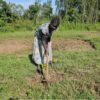
Farmers Earn While Reviving Native Forests Through a Blockchain-Powered App
For years, Morris Onyango had been trying to reforest his degraded land on the shores of River Nzoia, in Siaya county, 430 kilometers from Kenya’s Capital, Nairobi. But every time he planted trees on his farm, his efforts bore little fruit, as floodwaters would not only wash away his tree seedlings but also fertile topsoil on his land.
Africa’s Industrial Future is Within Reach: What we Need now is Intentional Investment
Africa enters 2025 at a pivotal moment in its development. The ambition to transform the continent’s economies through sustainable industrialization, regional integration, and innovation is clearer than ever, and is picking up pace. The foundations are being laid. Industrial strategies are expanding, regional integration is progressing, infrastructure projects are advancing, and a young, dynamic private sector powers local economies.
UN80 is Less a Reform Than a Survival Manual
Let’s just say the quiet part out loud: the UN is not reforming because it suddenly woke up one morning inspired by efficiency. It’s reforming because the Organization is broke. Not metaphorically broke. Not diplomatically broke. Actually broke. The kind of broke where arrears sit at $1.586 billion and everyone pretends that’s just an unfortunate bookkeeping hiccup instead of the fact that the lights are flickering.
In Zimbabwe, School Children Are Turning Waste Into Renewable Energy-Powered Lanterns
When going home after school, Monica Ben not only takes with her a pen and exercise books but also a lantern to light the dark room and completes her daily homework in Mashonaland East province.
Any Resumption of US Tests May Trigger Threats from Other Nuclear Powers
President Donald Trump's recent announcement to resume nuclear testing rekindles nightmares of a bygone era where military personnel and civilians were exposed to devastating radioactive fallouts.« Previous Page — Next Page »





The Week with IPS

NEXT STOP - SDGs
Tracking global progress towards a sustainable world
Tracking global progress towards a sustainable world
