Languages
Tuesday, October 20, 2026



News and Views from the Global South
Featured

Inside Africa’s Big Bet on Youth to Feed the Continent and Who’s Actually Getting Funded
Winnie Wambui leans forward on the panel stage, microphone in hand, scanning the room until she spots a raised hand.
AI Governance: Human Rights in the Balance As Tech Giants and Authoritarians Converge
Algorithms decide who lives and dies in Gaza. AI-powered surveillance tracks journalists in Serbia. Autonomous weapons are paraded through Beijing’s streets in displays of technological might. This isn’t dystopian fiction – it’s today’s reality. As AI reshapes the world, the question of who controls this technology and how it’s governed has become an urgent priority.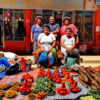
South-South Cooperation: Innovation and Solidarity for a Better Tomorrow
As the United Nations commemorated the UN Day for South-South Cooperation last Friday, we are reminded that solidarity among the countries of the Global South is not just a matter of history or principle, but a proven pathway to building a fairer, more sustainable future.
NGOs on a Virtual Blacklist at UN High-Level Meetings of World Leaders
When the high-level meeting of over 150 world political leaders takes place September 22-30, thousands of non-governmental organizations (NGOs) and their accredited UN representatives will either be banned from the UN premises or permitted into the building on a strictly restricted basis-- as it happens every year.
Africa Calls for Homegrown Climate Solutions in Just Transition
African climate negotiators and civil society organizations at the second Africa Climate Summit (ACS 2) have called on governments to include sustainable farming approaches and other Africa-led solutions in their revised Nationally Determined Contributions (NDC) and National Adaptation Plans (NAP) ahead of COP 30, as the only way to have their priorities on the global climate negotiation agenda.
Experts Launch a Climate and Health Curriculum for African Negotiators Ahead of COP30
Despite climate change being a health risk multiplier, health is often underrepresented in climate negotiation processes. Experts attribute this to a lack of funding by the African governments and a lack of capacity building among climate negotiators.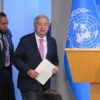
Global Military Spending Shows Misalignment of Priorities, says UN Secretary General
Global military spending has been on the rise for more than 20 years, and in 2024, it surged across all five global regions in the world to reach a record high of USD 2.7 trillion. Yet, such growth has come at the cost of diverting financial resources away from sustainable development efforts, which the United Nations and its chief warn puts pressure on an “already strained financial context.”
Nepal Faces Political Crisis after Deadly Gen-Z Protests
Nepal entered into a new era of constitutional and political crisis after deadly protests by the deeply frustrated young generation (Gen-Z). Prime Minister KP Sharma Oli resigned on Tuesday after protests grew out of control.
Banks Embed Climate Risk, Gender and Sustainability in Finance Products
As climate shocks intensify across East Africa, from failed rains in Kenya’s arid north to devastating floods in Tanzania’s coastal belt, the region’s banks are emerging as unlikely but powerful players in the resilience race.
Is Western Support for Israel Beginning to Crumble?
When the high-level meeting of over 150 world leaders takes place at the United Nations, September 22-30, one of the political highlights would be the announcement by at least 10 Western nations to recognize Palestine as a sovereign nation state. The 10 countries-- some already announcing their recognition ahead of the UN meeting -- include UK, France, Canada, Australia, Portugal, Malta, Belgium, Spain, Ireland and Norway-- proving the longstanding support for Israel is gradually diminishing in the Western world.
UN Mobilizes Amid Cascading Earthquakes in Eastern Afghanistan, Aiming to ‘Build Back Better’
United Nations aid organizations are rallying after a series of earthquakes and powerful aftershocks wreaked unprecedented havoc across eastern Afghanistan—particularly in the mountainous provinces of Kunar and Nangarhar.
‘Angola produces large quantities of oil and diamonds, yet most people don’t see the benefits’
CIVICUS discusses recent protests in Angola with Florindo Chivucute, founder and executive director of Friends of Angola, a US-based civil society organisation established in 2014 that works to promote democracy, human rights and good governance in Angola.

Kerala’s Human-Elephant ‘Conflict’: Time To Understand a Complex Relationship
In the early part of this year, two deaths in Kerala garnered major media attention. A farmer in Wayanad and a female plantation worker in Idukki were killed in two separate events, within a matter of a few days, by wild elephants. Arikomban, another wild elephant, has become a media favorite recently due to his brushes with human settlements near his habitat. Named so because of his love for ari (rice), the elephant had been relocated from Kerala to Tamil Nadu in 2023 following constant protests from people who also claimed him to be ‘life-threatening.’ Kerala's news outlets widely covered Arikomban's relocation.
The Debacle of the Global Plastics Treaty Negotiations –& Some Ideas for a Way Forward
The debacle that was the latest round of negotiations for a global treaty on plastics (including in the marine environment); known as “INC 5.2” has already been written about at length by many colleagues on all sides of the issues. Despite all the very informative posts, articles, and other analyses, I believe I have several key observations to make, particularly about the process to-date.
‘Tell Us When the Next Storm Will Come’—Human Stories From Kashmir’s Deadliest August
The relentless rain that battered the mountains and valleys of Jammu and Kashmir this August shattered lives and records.
Trump’s Tariff Tsunami Hits Brazil
Since January 2025, Donald Trump’s second presidency has been focused on securing the global supremacy of the United States. It justifies a package of international coercive and intimidatory measures, accompanied by an aggressive, arrogant rhetoric. Right at the outset, the new administration announced a veritable tsunami of tariffs and immediately implemented them as a sign of its new independence.
Iconic World Heritage Sites Threatened by Water Risks as Climate Change Marches On
From Zimbabwe's 'The Smoke that thunders,' Victoria Falls, to the awe-inspiring Pyramids in Egypt and the romantic Taj Mahal in India, these iconic sites are facing a growing threat - water risk.
UN 80 – Clustering the Climate Conventions
The international governance of environmental challenges has progressively evolved over the past decades, transitioning from isolated treaties addressing specific issues to a complex web of multilateral agreements that aim to foster sustainable development and environmental integrity.
Togo’s Young Generation Challenges Six Decades of Dynastic Rule
In late June, thousands flooded the streets of Lomé, Togo’s capital, presenting the ruling dynasty with its biggest challenge in decades. The catalyst was constitutional manoeuvring by President Faure Gnassingbé to maintain his grip on power. In March 2024, his government pushed through constitutional amendments that transformed Togo from a presidential to a parliamentary system. This created a new position, the President of the Council of Ministers – effectively Togo’s chief executive – elected by parliament rather than by popular vote, and with no term limits. Gnassingbé assumed this new role in May, making it abundantly clear the changes were only about keeping him in power indefinitely.
From Matriarchy to Victims: An Ongoing Story of Indigenous Women in Canada
If European colonialism had never happened in Canada, matriarchy would still have been strong in Indigenous culture.
Toward Enhanced Synergies among Biodiversity Related MEAs: Addressing Fragmentation with Strategic Coordination
The governance of nature and biodiversity has evolved from early 20th-century treaties on hunting and migratory species to today’s complex web of multilateral environmental agreements.« Previous Page — Next Page »





The Week with IPS

NEXT STOP - SDGs
Tracking global progress towards a sustainable world
Tracking global progress towards a sustainable world
