Languages
Monday, October 26, 2026



News and Views from the Global South
Featured
Climate Pressures are Redefining Macroeconomic Resilience in Asia & the Pacific
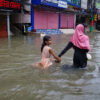
In the past year, Asia and the Pacific has faced intensifying climate pressures, from extreme heat in Bangladesh and India to devastating floods in northern Thailand and rising food insecurity across the Pacific.
Staff Union Unanimously Declares “No Confidence” in Secretary-General & Head of UN Reform Process
The growing opposition to the UN80 restructuring plan -– which has come under heavy fire from staff unions – has now reached the upper echelons of the world body. A motion, adopted at an Extraordinary General Assembly meeting, held July 24, by the Staff Union Council in Geneva (UNOG), reads “The staff have no confidence in UN80, Secretary-General Antonio Guterres and Under Secretary General Guy Ryder” (who is heading the UN restructuring process).
World Bank-Funded Climate Resilience Project Saves Tanzania’s Port City from Drowning
When the rains pounded through the night, 44-year-old Teresia Katimba clutched her rosary and prayed silently, her fingers trembling with each whispered Hail Mary. A devout Catholic and mother of four, she stayed awake, huddling her children, hoping the floodwaters wouldn’t engulf them.
Climate Change An Existential Threat To Humanity, Urges Action – ICJ
The case was “unlike any that have previously come before the court,” President of the International Court of Justice Judge Yuji Iwasawa said while reading the court's unanimous advisory opinion outlining the legal obligations of United Nations member states with regard to climate change.
Kenyan Biochar Project Becomes First in Africa Validated Under European Carbon Standard
In June 2025, Kenyan climate-tech firm Tera became the first African project developer to have its carbon removal initiative independently validated and registered under Riverse, a European standard for engineered climate solutions.
Advancing Circular Solutions for EV Battery Waste in Asia and the Pacific
The Asia-Pacific region is becoming a showcase for regional solutions. As electric vehicles (EVs) rapidly gain traction, the region must confront a dual challenge: managing the environmental and health risks of end-of-life EV batteries, while actively pursuing the economic and technological opportunities of a circular economy.
Protect Women’s Rights, Especially in a Time of Equality Backlash, Say Activists
Discriminatory laws and the absence of legal protections impact more than 2.5 billion women and girls worldwide in various ways. Legal reform is paramount to securing gender equality, and the world cannot afford to roll back on decades of progress in women’s rights.
Soaring Demand for Electric Vehicles, Lithium-Ion Batteries Creates Environmental Crisis in DRC
Electric vehicles contribute to an ongoing environmental and humanitarian crisis in the Democratic Republic of the Congo (DRC). Mining operations cause deforestation, pollution, food insecurity and exploitative labor practices.
‘The Lesson from Gaza Is Clear: When Ai-powered Machines Control Who Lives, Human Rights Die’
CIVICUS discusses the military use of artificial intelligence (AI) in Gaza with Dima Samaro, a Palestinian lawyer and researcher, and director of Skyline International for Human Rights, a civil society organisation (CSO) that defends digital freedoms and human rights in the Middle East and North Africa. Dima serves on multiple boards focused on civic space and surveillance issues, including Innovation for Change’s MENA Hub, the Surveillance in the Majority World Network and the VUKA! Solidarity Coalition, and volunteers with Resilience Pathways to help Palestinian CSOs counter Israeli efforts to restrict civic space and manipulate public narratives.

The Gaza Conundrum: Multilateralism is failing. Here’s why.
“Multilateralism is not an option but a necessity as we build back a better world with more equality and resilience and a more sustainable world."
Humans Have Blown Past 6 of 9 ‘Planetary Boundaries’: Governments Alone Won’t Fix This
Nearly ten years after the Paris Agreement — a legally binding commitment to reduce greenhouse gas emissions — the gap between climate goals and government actions remains stubborn.
Price and Power of Freedom: Celebrating Nelson Mandela International Day
The United Nations celebrated Nelson Mandela International Day in honor of the activist and politician’s lifelong commitment to peace and democracy.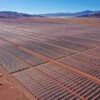
China is the Driving Force Behind More, Newer Renewable Energies in Latin America
China, with its investments, products, technology, and innovation focused on solar and wind farms in Latin America and the Caribbean, as well as on electricity networks and services, stands out as a driving force for the region's shift toward energy less reliant on fossil fuels and increasingly cleaner and greener.
From Drylands to Dignity: How Solar Energy and Climate-Smart Farming Are Empowering Communities in Burkina Faso
In the heart of Burkina Faso’s drylands, in the village of Zoungou, a quiet transformation is underway. Alhaji Birba Issa, a smallholder onion farmer, bends over neat rows of lush green crops, the hum of solar-powered pumps audible in the background.
Intersectional Feminist Leadership Needed to Realise Global Goals
In its 80-year history the UN has never once been led by a woman. As the international community convenes for the 2025 High-Level Political Forum (HLPF) to review progress on gender equality and other Sustainable Development Goals (SDGs), this remains a fundamental hypocrisy at the heart of global governance. How can an institution that has systematically excluded women from its highest office credibly champion gender justice worldwide?
A Fractured World Needs Peace, not more Conflicts, for Human Progress
Who in Asia would ask for an Asian NATO? Past attempts to develop Asian security compacts under US leadership have not been glittering successes. The two treaty organisations that the US set up in the 50s to counter the Communist tide, the CENTO and the SEATO, have long dissipated.
From Streets to Rivers: Driving Bangkok’s Sustainable Transport Future
Thailand’s transport sector is a significant contributor to national greenhouse gas emissions, accounting for 18.4 per cent of the country’s total emissions. Bangkok is at the centre of this challenge. With more registered vehicles than residents, the resulting traffic congestion worsens air pollution and strains the city’s roads and overall mobility infrastructure.
High Stakes: Mountain Tourism in a Warming World
“It started with a thunderous roar in the distance, followed by the clatter of rocks grinding together,” said Mohammad Hussain, 26, a student, who witnessed the flash flood that hit the lakeside of Attabad on June 25, around 12:30 pm, in the mountainous Hunza Valley, a popular tourist spot in the northern part of Pakistan’s Gilgit-Baltistan (G-B).
US Signs Strategic Civil Nuclear Agreement with Malaysia– while Planning a Security Alliance in the Asia-Pacific Region
The US is apparently contemplating the possible creation—either a formal or an informal-- security alliance in the Asia-Pacific region on the lines of the longstanding collective defense pact, the 32-member North Atlantic Treaty Organization (NATO).
Faith on the Frontlines: New Military Chaplain Programme Reaches Soldiers in Africa
It is a cold morning in eastern Zimbabwe as Lieutenant Colonel Reverend Doctor Samba Mosweu celebrates a glorious moment he has been waiting for all his life.
‘International Demand for Coltan Is Linked to Violence in the DRC’
CIVICUS speaks with Claude Iguma, a mining governance expert with a PhD in Social Sciences, who is based in Bukavu, South Kivu province, eastern Democratic Republic of the Congo (DRC).
« Previous Page — Next Page »





The Week with IPS

NEXT STOP - SDGs
Tracking global progress towards a sustainable world
Tracking global progress towards a sustainable world
