Languages
Saturday, May 2, 2026



News and Views from the Global South
Featured

International Women’s Day, 2025
It’s time for a Feminist Woman Secretary General at the UN
In 2025, the United Nations will celebrate 80 years of shaping global policies, fostering peace, and driving international development. Yet, in those eight decades, not a single woman has held the position of Secretary-General.

Anti-LGBTQI Legislation in Europe Curbs Speech Freedom, Democracy—Report
LGBTQI communities across Europe and Central Asia are being ‘weaponized’ by governments as part of a wider attack on fundamental human rights and freedoms, rights activists have warned.
Not Seen in Living Memory: Kashmir’s Rivers Run Dry, Snow Disappears, and Hope Dissipates
The picturesque Kashmir Valley is battling nature’s fury. This time of year, its majestic mountains would typically be capped with thick snow, and its emerald streams would gush with fresh waters. However, none of these scenes are visible this year.
International Women’s Day, 2025
New Report Finds Sexist Laws Persist Worldwide
A new global report analyzing sex discrimination in laws reveals that while some commendable gains have been achieved in strengthening legal protections for women and girls over the past five years, progress remains slow, uneven, and increasingly under threat from a growing backlash against women’s rights.
Tanzanian Speaker Calls for Urgent Investment in Youth to Harness Demographic Dividend
Speaker of the Tanzanian Parliament and President of the Inter-Parliamentary Union (IPU), Tulia Akson, has called for bold and immediate investments in young people to unlock the demographic dividend and accelerate sustainable development across Africa and Asia.
Is the UN Facing its Biggest Single Crisis in 80 Years?
The United Nations, in its nearly 80-year-old history, is on the verge of fighting for its survival, as the Trump administration continues with its threats to drastically cut funding and pull out of several UN agencies which provide mostly humanitarian assistance worldwide. Elon Musk, the tech billionaire, who acts as a virtual Prime Minister to President Trump, has called on the U.S. to exit the North Atlantic Treaty Organization (NATO) and the United Nations.
COP 16 Conference made Key Steps Towards a More Just Transition for Indigenous Peoples & Peasant Communities
With global temperatures continuing to break records and every global indicator of the health of the natural world showing decline, the need to quickly move away from fossil fuels and environmentally destructive practices has never been more apparent. But as has often been pointed out, how this ‘green transition’ is achieved matters.
COP16 Agrees to Raise Funds to Protect Biodiversity
The second round of the UN Biodiversity Conference, COP16, concluded in the early hours of Friday, February 28 in Rome, with an agreement to raise the funds needed to protect biodiversity.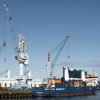
Looming Tariffs Threaten Food Supplies
Who bears the brunt in trade wars? The answer is absolutely everyone. Not just the countries enacting or retaliating with tariffs and export bans, and not just the citizens of those countries. It’s everyone.
African Leaders Challenged To Unite Against Energy Transition Mineral Oppressors
Renewable energy and climate change activists have challenged African heads of state to take a united stance to safeguard essential mineral resources, particularly in the Democratic Republic of the Congo (DRC) and other parts of the continent, which are selfishly exploited by foreign miners with disregard for poverty-stricken local communities.
20 Years of the WHO FCTC: It’s Time to Make Big Tobacco Pay
The world took a historic step in the fight against tobacco when the World Health Organization Framework Convention on Tobacco Control (WHO FCTC) came into force—the first legally binding global health treaty of its kind.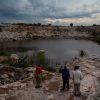
Life-Changing Quarry Mining Shatters Lives in Zimbabwe
On Christmas Day in 2022, 27-year-old Thabani Dlodlo’s eight-year-old son drowned in a flooded pit dug up by quarry miners in the vicinity of Pumula North, a high-density suburb in Bulawayo, Zimbabwe’s second-largest city. As if that was not enough, just a week after New Year’s Day the following year, Dlodlo’s neighbor, 36-year-old Sethule Hlengiwe, also lost her six-year-old daughter after she drowned in another pit flooded with rainwater near her home in Bulawayo.
How AI Can Help Both Tax Collectors and Taxpayers
New technologies have the potential to improve the relationship between governments and citizens. Tax portals, customs IT systems and online services have simplified interactions with public authorities, reduced bureaucratic hurdles, and increased transparency. Now, generative artificial intelligence (GenAI) is emerging as the next transformative force.
Mexican Electric Vehicles Struggle to Accelerate
Mexico has seen several attempts at assembling electric vehicles (EVs), powered by rechargeable batteries, which have faced challenges related to industrial scale, supply chains, and competitiveness
Outlook for 2025: Strengthening the Foundations of Children’s Futures
In 2025, the world is facing a new and intensifying era of crisis for children. Climate change, economic instability, and conflict are hitting harder and more often, intersecting in ways that make the challenges of addressing them even more severe.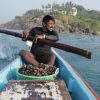
Mussel Divers in Kerala Face Livelihood Loss, with Species Habitat Under Threat
Ibrahim Basheer plunges into the sea and disappears. He remains gone for a couple of minutes before resurfacing for a deep breath of air, repeating this for the next half an hour. When he finally climbs aboard his boat, the net sack around his neck is filled with mussels—his catch for that diving trip. He rests for a short while before diving into the sea again—needing one more such trip to fill the basket he has brought along.
CARICOM Leaders Take Steps to Tackle Crime, Climate, Trade and Food Crises
CARICOM leaders wrapped up a crucial meeting on February 21, reaffirming their commitment to tackling pressing regional challenges with unity and resolve. From crime and security to education, trade and climate change, the leaders highlighted the need for decisive action amid global uncertainties.
Global Heating in The Coldest Place on Earth
It was 7:30 a.m. I got ready the fastest I could, adrenaline kicking in, curiosity and excitement peaking. I rushed out of my cabin, opened the big exit door, and there in front of me was the first visual of the majestic white continent - Antarctica.
Is the UN’s Human Rights Agenda in Jeopardy?
The UN’s human rights agenda is in danger of faltering since the Geneva-based Office of the High Commissioner for Human Rights (UNHCHR) is planning to “restructure” the office, under the moniker OHCHR 2.0. But this proposal, if implemented, would result in the abolition of the Special Procedures Branch, established by the Human Rights Council (HRC), to report and advise on human rights from thematic and country-specific perspectives.
How Tanzania’s Farmers, Pastoralists Paid the Price for a World Bank Project
A hush had fallen over Mbarali District, but it was not the quiet of peace—it was the silence of uncertainty. Just months ago, the rolling plains were gripped by fear as government-backed rangers, dressed in olive green fatigues, roamed through villages, seizing cattle, torching homes, and forcing entire communities to the wobbly edge of survival. The REGROW project, a USD 150 million initiative funded by the World Bank to expand Ruaha National Park (RUNAPA), had promised tourism growth and environmental conservation. What it delivered was a brutal campaign of state-sanctioned land grabbing under the guise of protecting nature.
Where do UN Member States Stand on a Feminist Secretary-General?
The selection of the next UN Secretary-General (UNSG) will be a pivotal moment in global efforts to resist authoritarianism and work together to address shared problems. Where do UN Member States stand on appointing a feminist woman to this role?« Previous Page — Next Page »


The Week with IPS

NEXT STOP - SDGs
Tracking global progress towards a sustainable world
Tracking global progress towards a sustainable world
