Languages
Friday, October 9, 2026



News and Views from the Global South
Gender

Poland’s Democratic Deadlock
Poland’s embattled Prime Minister Donald Tusk emerged bruised but still standing after his government survived a parliamentary vote of confidence on 11 June. He’d called the vote, which he won by 243 to 210, just days after the presidential candidate of his Civic Platform (PO) party suffered an unexpected defeat.
Despite Strong Commitment, SDGs Progress Alarmingly Off Track 10 Years On—New UN Report Finds
Finland now ranks first in global sustainable development goals progress. Barbados is ahead globally in its commitment to UN multilateralism or cooperation among multiple nations. Only 17 percent of sustainable development goals (SDG) targets are on track for 2030, according to the Sustainable Development Report 2025 (SDR) released today by the UN Sustainable Development Solutions Network (SDSN)
‘In the Face of Funding Cuts, Civil Society Has Taken a Leading Role in the Humanitarian Response’
CIVICUS discusses the closure of offices of the United Nations Refugee Agency (UNHCR) in Mexico with members of Integral Human Rights In Action (DHIA), a Mexican civil society organisation (CSO) that promotes and defends human rights in contexts of mobility.

Time to Redesign Global Development Finance
Can the Fourth International Conference on Financing for Development (FFD4) be a turning point? The stakes are high. The international financial system—so important to each and every one of us—feels out of reach and resistant to change, because it is deeply entrenched in unjust power imbalances that keep it in place. We deserve better.
Women in Afghanistan Face a Total Lack of Autonomy
Nearly four years ago, the Taliban took control of Afghanistan and issued a series of edicts that significantly restricted women’s rights nationwide. This has resulted in a multifaceted humanitarian crisis, one marked by a notable decline in civic freedoms, stunted national development, and a widespread lack of basic services.
Women Protestors Targeted, Insulted on Georgian Anti-Government Rallies
Having attended hundreds of anti-government protests in the Georgian capital, Tbilisi, Gvantsa Kalandadze is no stranger to police intimidation and violence.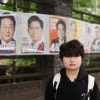
South Korea‘s Democracy Renewed
On a resounding 79.4 per cent turnout, South Korean voters have delivered a clear mandate for change. Lee Jae-myung of the centrist Democratic Party of Korea (DPK) decisively won the 3 June election, becoming the country’s new president after a turbulent time for South Korean democracy.
Broadcasting Hope: Women’s Voice Radio Helps Afghan Teen Reclaim Her Future
Mehrangiz is a sixteen-year-old girl from Badakhshan, a province in the northeastern Afghanistan famed for its rubies, jewels, and a land of love and beauty.
Reviving Mangroves at the Edge of Mozambique Channel
Just before dawn, a flotilla of wooden canoes drifts silently through mangrove-tangled channels where roots sprout from the black mud of the lagoon. Here, at the edge between sea and forest, lies a story of restoration.
UNOC3: A Cry for Global Action to Save Small-Scale Fisheries
Just before dawn, the worn wooden dhows begin gliding toward the shore at Magogoni fish market in Tanzania’s port city of Dar es Salaam. Their tattered sails flutter against the orange sky. Exhausted fishers step out onto the muddy sand, hauling frayed nets and plastic crates, their sun-creased faces tight with fatigue.
Artificial Intelligence Presents Risks and Opportunities for the Disabled
On June 10, the United Nations (UN) held a conference titled Artificial Intelligence for Inclusion: Strengthening Workforce Participation for Persons with Disabilities. This conference, which was organized by the Permanent Mission of Canada to the UN, featured a discussion by a panel of experts from various sectors, looking to shed light on the ways AI tools can be used to create inclusive workforces that maximize fairness and accessibility.
UN vs US: the Battle for Transgender Rights
As the Trump administration continues its battle against the United Nations-- over war crimes, human rights, and the climate treaty, among others -- they also remain sharply divided over Lesbian, Gay, Bisexual, Transgender, and Intersex. (LGBTI) rights. The US has taken several actions, some by Executive Order, related to transgender people, including restricting Access to Gender-Affirming Care, banning Transgender Individuals from Military Service, rescinding Protections for Transgender Students and ending Federal Funding for gender Ideology.
Solar Energy Brings Water to Iconic Salvadoran Village of El Mozote
The worst massacre of civilians in Latin America occurred in the Salvadoran village of El Mozote, where environmental projects are beginning to emerge, slowly fostering awareness about protecting the natural resources of this deeply symbolic site, embedded in the country's historical memory.
Girls in Kenya Are Repurposing the Invasive Mathenge Tree Into Furniture
Char Tito is hammering nails into wood at Kakuma Arid Zone Secondary School in Turkana County, northern Kenya. The 16-year-old is making a traditional chair under the scorching sun outside one of the classroom blocks.
Portugal: No Longer an Exception to Europe’s Far-right Rise
For decades, Portugal stood as a beacon of democratic stability in an increasingly unsettled Europe. While neighbours grappled with political fragmentation and the rise of far-right movements, Portugal maintained its two-party system, a testament to the enduring legacy of the 1974 Carnation Revolution that peacefully transitioned the country from dictatorship to democracy. It was long believed that Portugal’s extensive pre-revolution experience of repressive right-wing rule had effectively inoculated it against far-right politics, but that assumption is now demonstrable outdated. An era of exceptionalism ended on 18 May, when the far-right Chega party secured 22.8 per cent of the vote and 60 parliamentary seats, becoming the country’s main opposition force.
Noor Mukadam Got Justice, But Why Does Pakistan’s Legal System Fail Its Women?
“It’s brought me some closure,” said Shafaq Zaidi, a school friend of Noor Mukadam, reacting to the Supreme Court’s May 20 verdict upholding both the life sentence and death penalty for Noor’s killer, Zahir Jaffer.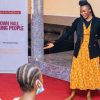
The Africa Our Youth and Women Want
History rarely remembers those who waited quietly. In Africa, it is those who dare to act, to resist, to lead, and to dream aloud who have shaped the continent’s most defining moments.
‘Despite Deep-rooted Prejudice Against Dalits, Encouraging Shifts Are Emerging among Young Urban People’
CIVICUS discusses the challenges facing Nepal’s Dalit community with Rup Sunar, chairperson of the Dignity Initiative, a Kathmandu-based research and advocacy organisation working to dismantle caste-based discrimination.

Lawmakers Work to Build Women’s Representation in Politics and the Workplace
Jelena Pekić, MP of the Federation of Bosnia and Herzegovina (House of People) and Deputy Speaker of the Canton Sarajevo Assembly, Lana Prlić, MP of the Federation of Bosnia and Herzegovina (House of Representatives) and Marina Riđić, Assistant Representative, UNFPA Bosnia and Herzegovina, spoke to IPS ahead of the Study Tour on Gender Equality and Women's Empowerment in Bosnia and Herzegovina.
The 2025 World Social Summit Must Not Be a Missed Opportunity
Rumors circulating at UN Headquarters suggest there is little appetite for ambition at the Second World Summit for Social Development, set to take place in Doha on 4-6 November 2025. Diplomats and insiders whisper of “summit fatigue” after a packed calendar of global gatherings—the 2023 SDG Summit, the 2024 Summit of the Future, and the upcoming June 2025 Fourth International Conference on Financing for Development. Compounding this fatigue is the chilling rise of anti-rights rhetoric and political resistance from some governments, casting a shadow over multilateral efforts. For some, just getting any multilateral agreement is good enough. As a result, the Zero Draft of the Social Summit Political Declaration lacks the ambition required to confront the multiple social crises our world faces.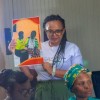
The #ChurchToo Movement: A Wake-Up Call for the Modern Church
I was researching the role of the church in addressing contemporary issues such as gender-based violence, climate change, and social justice when I came across the #ChurchToo movement—and I got really excited. Not because the stories were easy to read (they weren’t), but because this movement was a bold, necessary conversation that faith communities could no longer ignore.« Previous Page — Next Page »





Women make up half the world's population, but don't nearly share half of the world's wealth, well-being and opportunity. Two-thirds of the world poor are women, disproportionally exposing women to precarious living conditions, disease and unmitigated natural disasters. The media, meanwhile, remains a male-dominated sector in much of the world, contributing to women's voices lacking a crucial amplifier to put their concerns on political agendas and unleash the development potential of their ingenuity. Rather than then stereotypical victims of local and global forces, women are also organizer, innovators, conservators and community builders. These are some of their stories.

The Week with IPS

NEXT STOP - SDGs
Tracking global progress towards a sustainable world
Tracking global progress towards a sustainable world
