
Monday, September 28, 2026



News and Views from the Global South
Gender
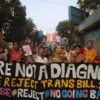
Criminalized Sanctuaries: How India’s 2026 Trans Act Undermines Safety
On 30 March, the eve of Transgender Day of Visibility, the Transgender Persons Amendment Act, 2026 became law in India, narrowing who can be recognized as transgender and requiring individuals to have their identity verified by authorities. This bill risks placing already vulnerable people under deeper scrutiny while destabilizing the informal systems of care they rely on.
No Bones Broken, No Crime Committed: Inside the Taliban’s New Rules on Violence Against Women
The Taliban have announced new laws that effectively legalise domestic violence against women and children. Afghanistan's supreme leader, Mullah Hibatullah Akhundzada, signed a decree introducing a new criminal code in January. It contains three parts, ten chapters, and 119 articles that legalise violence, codify social inequality, and introduce punitive measures widely condemned as a return to slavery.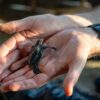
Guardians of the Sea: How GEF Small Grants Program Enables Young Volunteers Take the Lead in Sea Turtle Conservation
Every winter thousands of sea turtles come ashore at Cox’s Bazar, in the Bay of Bengal, Bangladesh, to lay eggs.
Online University Throws a Lifeline to Afghan Women Shut Out of Education
Ever since childhood, Khatera’s (not her real name) dream was to study medicine at university and become a doctor.
Unexpected Ally Stepping Up Against Sexual Assault in Kenyan Slums: Landlord
Trigger warning: This article discusses child rape. Their quiet latent power comes from being ever-present eyes and ears on the ground. As they move around their compounds, collecting rent and checking on anywhere from 10 to 20 houses occupied by as many as 200 people, they see and hear things.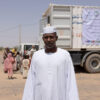
WHO: Migrants and Refugees Face Rising Health Risks as Global Systems Fall Short
Global human migration is at record-high levels, as the World Health Organization (WHO) estimates that roughly 1 in 8 people—about one billion individuals—are on the move. Many of these migrants and refugees face harsh living conditions and heightened challenges, such as poverty, insecurity, and limited access to basic services. With the number of international migrants having doubled since 1990, new findings from WHO call for expanding health systems to meet the growing scale of needs.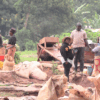
Artisanal Miners in Western Kenya Move Away From Mercury
They call this land Bushiangala. Gold has been mined here for nearly a century. In 1931, colonial prospectors arrived after traces were found in the nearby Yala River, setting off a rush that changed this quiet corner of western Kenya.
Failing to Learn: Afghan Girls Repeat Grades to Avoid Exclusion
It is almost unheard of for a student to deliberately fail final school exams for no apparent reason. Therefore, when 13-year old Sara (not her real name) from Mazar-i-Sharif in Afghanistan took her school report home to her parents, they were shocked to learn that the top-performing student had failed her final exams and would not advance to the next level. But there was no longer a next level for Sara, even if she had passed.
Experts, Rights Groups Warn of Crisis of Obstetric Violence
Government and medical professionals must implement systematic changes to deal with a “crisis” of obstetric violence (OV) across Eastern Europe and Central Asia (EECA), experts and rights campaigners have said.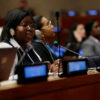
CSW70: Women’s Equality under Siege
On 19 March, the Commission on the Status of Women (CSW) did something unprecedented in its eight-decade history: it held a vote. The Trump administration, having spent two weeks attempting to defer, amend and ultimately block the session’s main outcome document, known as the agreed conclusions, cast the only vote against its adoption. That dissenting vote said a lot, as it came from the world’s most powerful government, backed by financial leverage, bilateral reach and a network of anti-rights states and organisations that are making inroads at many levels.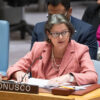
Escalating Violence and Influx of Returnees in DRC Fuel Regional Instability
In the month following the reopening of the Burundi-Democratic Republic of Congo (DRC) border, the humanitarian crisis in the DRC has deteriorated considerably, recently marked by an influx of Congolese refugees returning home, where they face overcrowded conditions and a severe shortage of essential services. This comes in the midst of escalating clashes between rebel groups AFC and M23, and forces affiliated with the Kinshasa government, with drone strikes causing widespread destruction and pushing violence closer to Burundi’s borders, where conditions are most dire.
‘The Political System Only Moves When Threatened Directly’
CIVICUS discusses Nepal’s upcoming election with youth activist Anusha Khanal of the Gen Z Movement Alliance, a youth-led civil society coalition mobilising for democratic accountability and governance reform in Nepal.

Gender Equality: A Global Priority or a Global Consensus?
The 70th session of the Commission on the Status of Women (CSW70) (March 9-19), held at the United Nations headquarters, brought together governments, decision makers, civil society, and international organizations to address a central issue: access to justice for women and girls.
Running on Sunshine: Pakistan’s Solar Boom to Tide Over Middle East Energy Crisis
Energy expert Vaqar Zakaria believes solar power makes “excellent economic sense” – and he lives by it. For over five years, his rooftop panels have slashed his bills, sometimes to zero, even allowing him to sell surplus electricity back through net metering.
80 Percent of Rural Households Without Direct Water Access – World Water Report
A new United Nations report has warned that global water inequality remains one of the most pressing development challenges of the decade, with billions still lacking safe drinking water and sanitation – while women and girls continue to bear the heaviest burden of water insecurity.

Young Afghan Taekwondo Women Coach Chose Resistance over Surrender to Taliban
When Khadija Ahmadzada was arrested in Herat province of Afghanistan in January this year, it sparked widespread domestic and international protests. Women’s rights activists and social media users raised their voices with slogans such as “Sport is not a crime,” “Education is a right for women,” and “Don’t erase women,” often using the hashtag #BeHerVoice.
At CSW70, Advocates Warn Conflict Is Deepening Barriers to Justice for Women and Girls
The 70th session of the Commission on the Status of Women (CSW70) has brought together global leaders, gender equity advocates, and youth representatives at the United Nations (UN) Headquarters to advance efforts to strengthen mechanisms for justice, equality, and representation for women and girls worldwide. With challenges particularly pronounced in conflict zones, this year’s priority theme —“ensuring and strengthening access to justice for all women and girls — focuses on repealing discriminatory laws and addressing persistent structural barriers that prevent women and girls from being fully heard, represented, and treated equally.
Nigeria: Lessons from the Aba Women’s Riots for Today’s Women’s Movements
The Aba Women’s Riots of 1929 remain one of the most powerful demonstrations of Nigerian women’s collective resistance. Thousands of market women, farmers, traders, and mothers mobilized across districts in the then Eastern Nigeria to challenge colonial taxation and the extension of warrant chiefs’ authority over their lives. They organized without formal structures and without institutional support.
Only 1 in 7 Countries is Led by a Woman– as Global Political Power Remains Dominated by Men
Across the world, women remain vastly under-represented in political leadership, with the most powerful decisions still overwhelmingly made by men. In 2026, only 28 countries are led by a woman Head of State or Government, while 101 countries have never had a woman leader, according to the latest data released by Inter-Parliamentary Union (IPU) and UN Women.
Public Flogging in Afghanistan Strips Women of Dignity
In the bone-chilling Afghanistan winter, a woman was dragged into a public square early this year and publicly lashed for a crime she may or not have committed. According to the ruling handed by the Taliban Supreme Court, the woman and the male culprit who was jointly accused of extra-marital affair received 30 lashes each and a one-year suspended prison sentence. The sentence was carried out in the presence of several local officials and residents in a province whose name is left out to protect the victim.
Gender Discrimination: It’s Time to Flip the Narrative
We have heard it all: • When a woman raises her voice, she’s too emotional. • When she stands her ground, she’s too difficult. • When she leads, she’s too ambitious. • If she wears dark suits they whisper ‘why does she always look like a man’ • But oh my gosh! if she shows up in a colorful dresses and high heels….« Previous Page — Next Page »


Women make up half the world's population, but don't nearly share half of the world's wealth, well-being and opportunity. Two-thirds of the world poor are women, disproportionally exposing women to precarious living conditions, disease and unmitigated natural disasters. The media, meanwhile, remains a male-dominated sector in much of the world, contributing to women's voices lacking a crucial amplifier to put their concerns on political agendas and unleash the development potential of their ingenuity. Rather than then stereotypical victims of local and global forces, women are also organizer, innovators, conservators and community builders. These are some of their stories.

The Week with IPS

Tracking global progress towards a sustainable world
