Languages
Tuesday, September 29, 2026



News and Views from the Global South
Gender
Tanzanians Seek Stronger GEF Support to Cushion Vulnerable Communities
In the opulent conference halls of Samarkand, far from the drought-hit fields of East Africa, Tanzanian delegates have warned that unless global climate finance is directed to rural communities, environmental destruction will only accelerate, deepening the vulnerability of those least responsible for the crisis.
At GEF’s Eighth Assembly, Uzbekistan Signals New Role as Donor
In a significant policy shift symbolising rising environmental ambition, Uzbekistan on Thursday announced that it will become a donor of international environmental funding to the Global Environment Facility (GEF), as the Eighth GEF Assembly opened in the historic city of Samarkand.
From War Zones to Global Environment Talks, Communities Seek Faster Green Finance
For three decades, Iffat Rachid Edriss walked Lebanon's coastline with a clear purpose: protecting the sea she loves.
As Three COPs Converge, Leaders at GEF Council Call for Unified Global Action
On day 2 of the Global Environment Facility’s 71st Council Meeting, which focused on process and procedure, a clear message emerged: global environmental governance cannot afford fragmentation.
Afghan Women Complete Medical Studies but Are Barred From Practicing
While Afghanistan faces a serious shortage of female doctors, the country’s Islamist regime has placed restrictions on female students from graduating, further exacerbating the situation. Female medical graduates are barred from writing their final exams, which provide them with the professional qualification to practice as medical doctors.
Ebola Outbreak in the DRC Raises Global Health Concerns Amid Conflict and Displacement
Since May 16, there has been a significant increase in the number of laboratory-confirmed and suspected Ebola cases reported across the Democratic Republic of the Congo (DRC), primarily in Ituri Province, with additional unrelated cases identified in Kampala, Uganda. Although the outbreak has remained largely confined to that region, it has been heavily linked to areas affected by insecurity, civilian displacement, and mining-related migration, raising concerns among global health experts that the outbreak could spread without effective monitoring and response efforts.
How the Global Anti-Rights Movement Is Targeting Women’s Rights in Africa Through Family Laws
The theme of Africa Day 2026, “63 years of unity, integration and development," offers a stark reminder of the gap that often exists between rhetoric and reality. While commendable regional legal frameworks have advanced legal protections for millions of women and girls, injustice remains written into the fabric of national family laws in many African countries, entrenching gender inequality in the home.
Iran War Deepens Activist Dangers
Narges Mohammadi, awarded the Nobel Peace Prize for her human rights activism in Iran, has been allowed to go home. After guards found her unconscious in her cell, the apparent victim of a heart attack, she was granted temporary release from prison and transferred to a hospital. However, she still faces the threat of being taken back to jail once her condition has improved.
Afghan Girl Disguised as Boy to Support Family Under Taliban Rule
Nooria is a young girl who, because of poverty and the absence of a man in her family, had to dress in boys’ clothes so she could work and feed her family. It was not a choice, it was survival. But she was eventually caught by the Taliban.
Civilian Casualties Grow Amid Russian and Ukrainian Drone Strikes
Four years after the start of the Russo-Ukrainian War, 2026 has marked a significant escalation in hostilities, with intensified bombardments from both sides causing immense destruction across the region, complicating humanitarian operations, and deepening an already severe humanitarian crisis. As exchanges of attacks have intensified in recent days, the United Nations (UN) warns that women and girls will be disproportionately impacted as violence disrupts access to basic, lifesaving services.
Breaking Cultural Barriers to Equip Marginalised Kenyan Girls With Entrepreneurial Skills
For generations, communities in Kenya’s arid and semi-arid lands (ASAL) have viewed girls through the lens of marriage, with some being married at 11 in exchange for livestock or soon after secondary school, denying them opportunity for further education and skills training.
Lawmakers From Three Continents Demand Action, Not Pledges, on Population and Health
The word heard most often at a two-day parliamentary forum in Cairo last week was not "commitment"; it was “follow-up.” And the difference mattered.
Has the United States Congress Discovered Sexual Harassment?
After more than two centuries of independence, it appears that the United States Congress, or at least certain parts of it, has finally discovered the existence of sexual harassment within the institution.
Empowering Youth Is the Fastest Path to Transforming Least Developed Countries
The future of the world’s least developed countries (LDCs) will be shaped by a critical choice they make today- strategic investment in their youth. Rich in human potential, the young people in LDCs embody ingenuity, resilience and ambition. With the right opportunities, they can transform challenges into opportunities and put their countries strongly on track to sustainable development.
Speaking Up for Girls’ Education Carries Heavy Risks in Afghanistan
Qadoos Khatibi, an Afghan university lecturer, and Fayaz Ghori, a civil society activist, also from Afghanistan, were detained by the Taliban’s Ministry for the Promotion of Virtue and Prevention of Vice. Their crime? Advocating for girls’ right to education.
Pacific Ocean Under Pressure — Now a Region Finally Armed With Evidence
For generations, Pacific people have understood the ocean not as a resource but as identity, sustenance, and survival. Today, that relationship is being tested in ways science is only just beginning to fully capture.
Solidarity for Whom?
The veil has been lifted—but not the one you think. Not the veil the West has spent decades weaponizing. The veil now exposed is the one that concealed Western feminism’s selective solidarity—its silence on the women it was never truly fighting for. The “othering” of women from the South West Asian and North African region. In other words: us.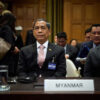
Indonesia’s Genocide Case Shines the Spotlight on Myanmar Atrocities
Yasmin Ullah, from Myanmar’s persecuted Rohingya minority, is determined to see justice. On 13 April, she filed a complaint alleging genocide against Myanmar’s president, Min Aung Hlaing, to Indonesia’s Attorney General’s Office. Min Aung Hlaing led the 2021 coup that ousted a democratically elected government and this month was named president following a sham election held amid intense repression, rubber stamping the army’s continuing grip on power. However secure he appears in his position, Yasmin Ullah’s legal action offers hope his impunity may not be guaranteed.
From Struggle to Strength: Turning Daily Hustle Into a Force for Survival
In the bustling Chifubu constituency of Ndola, the provincial capital of Zambia’s mineral-rich Copperbelt Province, 31-year-old Victoria Bwalya is usually among the early risers, cleaning and setting up for the day in her restaurant business.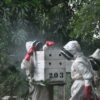
Inside the Funding Model Behind Kenya’s Tana Delta Restoration Project
Lydia Hagodana stands next to a bee yard (apiary) in Golbanti, Tana Delta, where she lives. The air carries a low, steady hum as bees move in and out in a constant stream. She lifts the back of one hive slightly, gauging its weight.
The Good Bold Days – Rethinking the Fight for Gender Equality and Human Rights
The world of 2026 is marked by overlapping crises that continue to expose the fragility of our systems and the persistence of inequality. Geopolitical conflicts enrich a few while devastating many, intensifying the already catastrophic impacts of climate change. These political choices are not neutral—they shrink civic spaces, reinforce political extremism, and unleash coordinated assaults on gender equality and human rights. These attacks are not incidental; they are deliberate strategies to undermine multilateralism and global solidarity, eroding the foundations of peace and planetary well-being.« Previous Page — Next Page »


Women make up half the world's population, but don't nearly share half of the world's wealth, well-being and opportunity. Two-thirds of the world poor are women, disproportionally exposing women to precarious living conditions, disease and unmitigated natural disasters. The media, meanwhile, remains a male-dominated sector in much of the world, contributing to women's voices lacking a crucial amplifier to put their concerns on political agendas and unleash the development potential of their ingenuity. Rather than then stereotypical victims of local and global forces, women are also organizer, innovators, conservators and community builders. These are some of their stories.

The Week with IPS

NEXT STOP - SDGs
Tracking global progress towards a sustainable world
Tracking global progress towards a sustainable world
