Languages
Saturday, November 7, 2026



News and Views from the Global South
Gender

The Fuzia Story: Empowering Women Through the Fusion of Cultures and Ideas
A young and dynamic digital platform, named Fuzia, has attracted millions of women social media followers and 100,000 active global users with its eclectic mix of content. The platform showcases women’s talent and provides a support network.
Education Cannot Wait Interviews Karina Gould, Canada’s Minister of International Development
The Honourable Karina Gould was first elected as the Member of Parliament for Burlington in 2015. A graduate of McGill University and the University of Oxford, Minister Gould is passionate about public service and international development. Before her election as the Member of Parliament for Burlington, she worked as a trade and investment specialist for the Mexican Trade Commission in Toronto, a consultant for the Migration and Development Program at the Organization of American States in Washington, D.C., and spent a year volunteering at an orphanage in Mexico.
Women and Girls with Disabilities: Planning for Periods During a Pandemic
The Coronavirus pandemic and the resulting lockdown has intensified most inequities in society- specifically those that affect vulnerable communities, including persons with disabilities, particularly young girls. As an aftermath of recent media attention, many government organizations, nonprofits and philanthropies have come together to ensure girls and women in remote communities have access to menstrual care products.
Q&A: How Kazakhstan’s Transgender and Lesbian Women are Being Impacted by COVID-19
The coronavirus lockdown in Kazakhstan, and the resultant limited public oversight and limited publication engagement, has paved the way for the government to propose amendments to the country's laws around gender that could see the exclusion of the rights of the Lesbian, Gay, Bisexual, Transgender, and Queer (LGBTQ) community.
World Population Day 2020 – ‘The Time is Now to Accelerate the Promise for Women and Girls’
Fulfilling women’s and girls’ rights through promoting sexual and reproductive health and rights (SRHR) is an essential prerequisite for reaching national development goals as well as the Sustainable Development Goals (SDGs).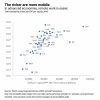
Teleworking Is Not Working for the Poor, the Young and the Women
The COVID-19 pandemic is devastating labor markets across the world. Tens of millions of workers lost their jobs, millions more out of the labor force altogether, and many occupations face an uncertain future. Social distancing measures threaten jobs requiring physical presence at the workplace or face-to-face interactions. Those unable to work remotely, unless deemed essential, face a significantly higher risk of reductions in hours or pay, temporary furloughs, or permanent layoffs. What types of jobs and workers are most at risk? Not surprisingly, the costs have fallen most heavily on those who are least able to bear them: the poor and the young in the lowest-paid jobs.
The Quiet Survivors of a Global Pandemic
The issue of women’s rights, feminism and gender is complex and ongoing in most countries including Bangladesh. When I was asked to write about impact of COVID-19 on women and girls, I found myself drawn towards writing about women’s situation in general as that automatically impacts COVID-19 response as well. Since I am a woman who has been a part of many different cultures, yet a Bangali at heart, I am not only a survivor within its ranks but also responsible for being a part of the solution to the problems we face.
Impact of COVID-19 on Women and Children in South Asia
The onset of the coronavirus pandemic in early 2020 set off a series of health and economic crises that feed upon each other. The health crisis exacerbates the economic crisis by disrupting supply chains, throwing large number of people (particularly those working in the informal sector) out of work and closing down large numbers of enterprises – particularly micro, small and medium enterprises (MSME).
Has COVID-19 Pushed Women in Politics off Kenya’s Agenda?
In 2013, Alice Wahome ran in her third attempt to win the hotly-contested Kandara constituency parliamentary seat in Murang’a County, Central Kenya. As is typical of rural politics, the field was male-dominated, with the stakes being high for all candidates but more especially so for Wahome — no woman had ever occupied the Kandara constituency parliamentary seat.
When Women and Children Cannot Escape their Abusers
Reports of escalating violence against women and children made the news almost everyday in March and April following the announcement of lockdowns to control the spread of Covid-19. The main concern has been that victims cannot escape their abusers or seek help when they share a confined space and are under constant scrutiny and the threat of violence.
Q&A: Child Marriage, FGM and Harmful Practices on Women’s Bodies to Increase Because of COVID-19
An additional 5.6 million child marriages can be expected because of the coronavirus pandemic, which resulted in a short-term increase in poverty and the shutdown of schools. The current pandemic is also expected to have a massive impact on the projected growth of harmful practices on women’s bodies.
The Goan Village Women Helping Mitigate Plastic Pollution by Making Eco-friendly Sanitary Pads
Jayashree Parwar has not traveled much outside of her village of Bicholim in the western coastal Indian state of Goa. But the homemaker-turned-social-entrepreneur has been reaching women in dozens of cities across the country with a hygiene product she makes at home along with women from her community. Called Sakhi (friend in Hindi), the plastic-free sanitary pad is Goa’s first menstrual hygiene product made with organic materials.
COVID-19 Pandemic Could Widen Existing Inequalities for Kenya’s Women in Business
Pauline Akwacha’s popular chain of eateries, famously known as Kakwacha Hangover Hotels and situated at the heart of Kisumu City's lakeside in Kenya, is facing its most daunting challenge yet. Akwacha and other women in business across this East African nation are bracing themselves for the post-COVID-19 economy.
Indigenous Farmers Harvest Water with Small Dams in Peru’s Andes Highlands
A communally built small dam at almost 3,500 meters above sea level supplies water to small-scale farmer Cristina Azpur and her two young daughters in Peru's Andes highlands, where they face water shortages exacerbated by climate change.
Safety of Children an Afterthought for Tech Companies
Global upheaval caused by the COVID-19 pandemic has left society’s most vulnerable exposed. Instances of child sexual exploitation material (CSEM) found online have increased at an alarming rate over past months.
What still needs to happen to win the fight against human trafficking
In late 2019, we learned of the harrowing plight of Suma Akter, a Bangladeshi woman in Saudi Arabia who secretly recorded and shared on social media her story of abuse and exploitation abroad. In Saudi Arabia, Akter said, her employer beat her and at one point poured hot oil on her hand. Later on, when she fell ill, Akter said her employer sold her to another person for 22,000 riyals (almost Tk 5 lakh).
African Governments Failing Survivors of Child Sexual Exploitation
In Malawi, Mary* was only 14 years old when she was recruited and trafficked to the city of Blantyre and sold for sex in a bar. A man had arrived in her village looking for girls to work as domestic helpers for families.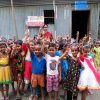
Looking Beyond the Lowest-common Denominator? DFID/FCO Merger
Nazia has a herd of 5 cows. She has two daughters in secondary education, a seat on the Village Council, a savings account and a permanent home. Nazia has dignity, security and prospects beyond poverty. This is Nazia’s story because alongside her commitment and conviction to create a better life, she benefited directly from the UK government, and its global leadership in the drive to end extreme poverty.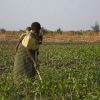
The Critical Role of Women in Avoiding a Covid-19 “Food Pandemic” in sub-Saharan Africa
As infections with Covid-19 appear to be intensifying in sub-Saharan Africa (SSA), fears of severe food shortages have prompted experts to warn that the region may be “on the brink of a hunger pandemic.” Efforts are intensifying to rally a major global response.
Senegalese Women’s Participation in Energy Sector equals Empowerment
Aïssata Ba, 45-year-old widow and mother of seven children, has been practising market gardening for the past 30 years in Lompoul Sur Mer village in the Niayes area of north-west Senegal. For many women in the village, endowed with fertile soil and favourable climate, it is the primary source of income throughout the year.
Racism, Shitholes and Re-election
Over the course of his presidency, US President Donald Trump’s racism has become more evident with more leaks of his private remarks, which he has been generally quick to deny, qualify and explain away.« Previous Page — Next Page »





Women make up half the world's population, but don't nearly share half of the world's wealth, well-being and opportunity. Two-thirds of the world poor are women, disproportionally exposing women to precarious living conditions, disease and unmitigated natural disasters. The media, meanwhile, remains a male-dominated sector in much of the world, contributing to women's voices lacking a crucial amplifier to put their concerns on political agendas and unleash the development potential of their ingenuity. Rather than then stereotypical victims of local and global forces, women are also organizer, innovators, conservators and community builders. These are some of their stories.

The Week with IPS

NEXT STOP - SDGs
Tracking global progress towards a sustainable world
Tracking global progress towards a sustainable world
