Languages
Saturday, November 21, 2026



News and Views from the Global South
Global Geopolitics
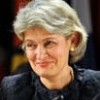
CULTURE: First Woman Head Seeks New Direction for UNESCO
The rapturous applause that greeted Irina Bokova Thursday as she was confirmed UNESCO's new director-general was a sign that the organisation is keen to move on from recent controversies.ECONOMY: ‘It’s Smart to Invest in Girls’
Sending more girls to school may help poor countries get out of the economic slump faster, the NGO Plan International says in a new report. Just a one percent rise in the number of girls attending secondary school boosts a country's annual per capita income growth by 0.3 percent.FINANCE: IMF Rebuts Critical Report on Lending
The International Monetary Fund is on the defensive over a recent study which charged that a majority of countries with IMF agreements have been subjected to pro-cyclical fiscal or monetary policies during the global economic downturn, exacerbating the effects of the recession and harming some of the world's poorest economies.
Q&A: Africans Won’t Just Be on Receiving End of Arts and Culture
Global initiatives have in recent years stressed the contribution that arts and culture can make to development. This has led African and European artists, bureaucrats and policy makers to increasingly confront the unequal relations in North-South cultural and artistic exchanges.DEVELOPMENT: A 'Great Persuasion' Gets Under Way
They are calling it 'The Great Persuasion' in Britain as millions prepare around the world to stand up for action against poverty.
POLITICS: U.S. Berated for Shielding Israel on Gaza Killings
A U.S. decision to stall Security Council action against Israel and the Palestinian militant group Hamas for war crimes during the 22-day conflict in Gaza last December has come under heavy fire both from inside and outside the United Nations.DR-CONGO: Rights Groups Urge U.N. to Rein in Army
U.N.-supported military operations in eastern Democratic Republic of Congo have had an "unacceptable" cost for the civilian population, said a coalition of rights groups Tuesday.RIGHTS: Unsafe Abortions Killing 70,000 a Year
Unsafe abortions kill about 70,000 women a year, says a report by the U.S.- based Guttmacher Institute. An additional five million women are treated annually for complications arising from unsafe abortion, adds the report, based on a global survey.MIDEAST: Security Council Urged to Take Up Gaza War
Pressure has been building on the U.N. Security Council to address the impact of the Gaza war on civilians in advance of its meeting Wednesday to discuss the Middle East.DEVELOPMENT: Meeting MDGs “Not Rocket Science”
Achieving an ambitious set of anti-poverty benchmarks will take much more financing from rich countries, Jeffrey Sachs, the special advisor to the U.N. secretary-general on the Millennium Development Goals (MDGs), warned Monday.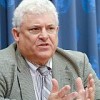
HEALTH: Study Faults Unregulated Trade in Human Organs
A growing new market for human organs has prompted the United Nations and the Council of Europe to call for an international convention to regulate the sale of body parts, mostly kidneys and livers, in transplant surgery worldwide.BIODIVERSITY: Earth’s Life Support Systems Failing
The world has failed to slow the accelerating extinction crisis despite 17 years of national and international efforts since the great hopes raised at the 1992 Earth Summit in Rio de Janeiro.AFRICA: Climate Change Worsening Farming’s Trade-Related Woes
Numerous research institutes and international organisations agree that climate change will in the short and medium term worsen Africa's agriculture and food production capabilities, unless greenhouse gases emissions (GHE) are substantially reduced and adequate trade and investment policies put in place.TAIWAN: Low-key National Day Brings Thoughts of Near, Far Mainland
Ten days after China’s mammoth Oct 1. parades celebrating its 60th anniversary as a communist nation, Taiwanese celebrated their own National Day with thoughts of brighter days despite overcast skies — and ties with the near yet far mainland.
Q&A: Invest in Young People in Latin America
To fight inequality, Latin American countries must double the financial commitment they made at the 1994 International Conference on Population and Development in Cairo, Marcela Suazo, the regional director for the United Nations Population Fund (UNFPA), told IPS.DEVELOPMENT: Hunger Hurts Also the Well-Fed
Ask food experts whether it is in the interest of well-fed people in wealthy countries to fight hunger, and most will say: Yes. But ask whether we should tell them, and the answer you are likely to get is: maybe not.POLITICS: Defiant China Asserts Role in Global Affairs
The symbolism of Beijing dispatching its second top leader for celebrations with the reclusive North Korean leader Kim Jong-il almost at the same time as Washington was deciding to break a tradition by refusing the Dalai Lama a meeting with the U.S. President last week has not been lost on observers here — keen to glimpse ever more signs of China's rise.CLIMATE CHANGE: Kyoto Protocol Is a Lifeline for Island Nations
"It was a little bit scary," says Dessima Williams, describing how the two weeks of United Nations climate change negotiations ended here on Oct. 9. "Our concerns need to be heard more."CLIMATE CHANGE: New Financial Scheme Turns Heat on Rich Nations
A new financial mechanism to help the developing world deal with the challenges posed by climate change looms as a major hurdle on the road leading up to a United Nations summit in Copenhagen in mid-December.ENERGY: Crisis Has Hurt Investment in Renewables
In Latin America, Brazil is the leader in the development of renewable energies, while nations like Mexico, Peru, Chile and Argentina are taking slow steps to change their energy mix.BIODIVERSITY: Dwindling Fish Catch Could Leave a Billion Hungry
Fish catches are expected to decline dramatically in the world's tropical regions because of climate change, but may increase in the north, said a new study published Thursday.« Previous Page — Next Page »


Is the world dominated by three great empires -- the U.S.A, China and the European Union? How much power do the great behemoths of the south -- India, Brazil, and South Africa -- wield? And where does Russia fit in that equation? Are we in the middle of a new Cold War? What are the implications of the armed conflict with Georgia? What about the new axis: Venezuela-Russia? And what role does Turkey play? What about issues like Climate Change and other global forces like the food crisis and the high energy prices? How is all this reshaping the world's forces? IPS looks for some answers.

The Week with IPS

NEXT STOP - SDGs
Tracking global progress towards a sustainable world
Tracking global progress towards a sustainable world
