Languages
Monday, November 23, 2026



News and Views from the Global South
Global Geopolitics
HEALTH: Europe Ignoring TB Research
Funding from the European Union's Brussels headquarters for research into tuberculosis stands at about a fifth of what it should be given the EU's enormous wealth, a new study has found.VENEZUELA-RUSSIA: Business Deals Consolidate Alliance
"Tovariches! Comrades! Today I feel I must say to you: let us work to find gas and oil under these waters!" said Alexander Medvedev, deputy chairman of the Russian firm Gazprom, when drills on the Escorpión Vigilante marine platform finally perforated the Venezuelan sea bed.
DEVELOPMENT-SOUTH AFRICA: From A ‘‘Red Bush’’, Opportunity Is Born
Nestled in a valley in the Cederberg region of the Western Cape, South Africa’s southern most province, lies the charming little village of Wupperthal.
POLITICS-US: Feminists Say the Work Has Just Begun
Women's right activists see an open door to the White House of President-elect Barack Obama, and they plan to walk right in and take a seat.BURMA: Polls in View Junta Stifles All Dissent
Burma’s military rulers have renewed efforts to eliminate all opposition to their authority in the lead up to planned elections in 2010.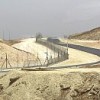
FINANCE: Corporate Vows Tested in the West Bank
A company that is a member of the U.N. Global Compact for corporate social responsibility has ties to production in an Israeli settlement on the West Bank considered illegal by the United Nations.
CLIMATE CHANGE: Science Proves Warming of Antarctica
The Antarctic holds the world’s largest amount of fresh water in its icy grip, and it is most certainly warming as a result of greenhouse gases, say new scientific studies.
RIGHTS: Women Leaders Reject "State of Living Death"
United in their fight against discrimination and inequality, three women from crisis-struck countries received the 2008 Gruber International Women's Rights Prize - Yanar Mohammed from Iraq, Sapana Pradhan Malla from Nepal, and Nadera Shalhoub-Kervorkian, a Palestinian woman living in the state of Israel.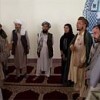
DEVELOPMENT: UNFPA Battles “Norm” of Gender Inequality
Despite a slew of U.N. conventions and international agreements against discrimination of women, gender inequality is widespread and remains deeply rooted in many cultures, according to the U.N. Population Fund (UNFPA).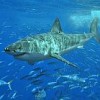
BIODIVERSITY: Ten-Year Probe Reveals Oceans in Peril
A thousand points of light are being shone into the dark ocean depths as scientists from 82 countries work to complete the decade-long global research effort called the Census of Marine Life.ECONOMY: China May Decide That Charity Begins at Home
Internal concerns are beginning to supersede China’s ambition to play the role of responsible international stakeholder and spearhead demands for the establishment of a new global financial order.ECONOMY-SRI LANKA: ‘War Budget’ Ignores Int’l Criticism
President Mahinda Rajapakse’s annual budget, that increases spending on the armed forces, has drawn mixed reactions. While supporters have welcomed it as a budget that breaks away from dependency on foreign loans and grants, opponents say it will exacerbate economic woes.DEVELOPMENT: Two Summits to Focus on Financial Crisis
As the financial meltdown continues to spread to the far corners of the globe, over 30 world leaders are scheduled to participate in two key international conferences aimed at seeking short- and long-term solutions to the economic crisis worldwide.U.S.: First, Close Guantanamo, Say Rights Groups
President-elect Barack Obama should make the closure of the Guantanamo Bay detention facility a top priority when he takes office Jan. 20, U.S. and international human rights groups said Monday.BIODIVERSITY: The Real Price of Farmed Salmon
Salmon aquaculture is devastating the world's oceans and an international coalition of scientists, Canadian First Nations and tourism operators have called for a global moratorium.U.S.: Obama Foreign Policy May Not Require a Clean Break
While much of the world and many of his U.S. supporters are expecting a sharp break with his predecessor's foreign policy after President-elect Barack Obama takes office Jan. 20, they may be surprised by the degree of continuity between the two administrations.AUSTRALIA/US: Afghanistan – Potential Sticking Point For Obama
While change may have come to the United States - as professed by president-elect Barack Obama following his election victory, a result largely welcomed here - Australia’s alliance with the superpower is likely to remain strong.ECONOMY: Emerging G20 Consensus on Solutions to Crisis
For now, a consensus seems to prevail in the Group of 20 (G20) major industrialised and emerging nations, whose finance ministers and central bank presidents ended their 10th annual meeting Sunday, which took on a high profile due to the global financial crisis.ECONOMY: G20 in New North-South Battle
Brazilian President Luiz Inacio Lula da Silva called for "a pact between governments to create a new global financial architecture," while stressing the need to open up the global financial bodies controlled by the industrialised world to emerging economies.POLITICS: World Leaders Seek Culture of Peace
When more than a dozen world leaders meet in New York next week to discuss "the culture of peace", the primary focus will be the growing misperception of religion, specifically Islam, and the increase in racism, xenophobia and intolerance worldwide.ECONOMY: Another G20 Takes Centre Stage
The Group of 20 (G20) that will meet this Saturday and Sunday in Brazil could have a more defining role in shaping a new global order than any of the alliances forged in past international negotiations - like the other G20 formed by developing countries in the Doha Round of multilateral trade talks.« Previous Page — Next Page »


Is the world dominated by three great empires -- the U.S.A, China and the European Union? How much power do the great behemoths of the south -- India, Brazil, and South Africa -- wield? And where does Russia fit in that equation? Are we in the middle of a new Cold War? What are the implications of the armed conflict with Georgia? What about the new axis: Venezuela-Russia? And what role does Turkey play? What about issues like Climate Change and other global forces like the food crisis and the high energy prices? How is all this reshaping the world's forces? IPS looks for some answers.

The Week with IPS

NEXT STOP - SDGs
Tracking global progress towards a sustainable world
