Languages
Tuesday, November 24, 2026



News and Views from the Global South
Global Geopolitics
CHINA: Temblor – Test of Openness
As the death toll from a devastating earthquake in south-western China continues to climb, the disaster is proving a credibility test for the government, whose mandate is derived from maintaining stability and social order and providing for the welfare of people.TRADE: Doha Talks Sweating Over Tropical Products
The hot potato these days in the Doha Round of World Trade Organisation (WTO) negotiations is tropical products, a burning issue for the world’s poorest countries.POLITICS: Gulf Seen Between Democracy in Theory and Practice
The basic democratic principle that "the will of the people should be the basis for the authority of government" is supported by overwhelming majorities throughout the world, according to a major new survey of more than 17,000 adults in 19 countries released here Monday.
DEVELOPMENT: Food Crisis Symptom of Dubious Liberalisation
The high food prices that have sparked riots in many parts of the developing world - from Indonesia, India and Bangladesh to Cameroon, Cote d'Ivoire and Haiti - should come as no surprise. These are only the latest in a series of events many developing countries have suffered as a result of opening their borders and neglecting domestic agriculture.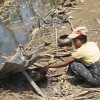
BURMA: 'Junta Aid Blocks Could Multiply Cyclone Toll'
Burma’s military regime may soon face charges of allowing tens of thousands of its own people to die through incompetence and bureaucratic red-tape placed in the way of international relief efforts for over one million cyclone victims in the country.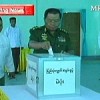
BURMA: Junta Holds Referendum in Cyclone Aftermath
Shortly after sunrise on Saturday, a few men and women in this town on the banks of a river broke their morning routines to cast ballots - an act unusual in the military-ruled country.
BURMA: Junta Does U-Turn on Relief Aid
The military government of Burma (Myanmar), in a dramatic turnaround, has offered to cooperate with the United Nations in its massive relief efforts in the cyclone-devastated country where the death toll could exceed 100,000.IRAN: Can P5+1 Offer Break the Nuclear Stalemate?
The P5+1 - the permanent members of the U.N. Security Council and Germany - will present Tehran with a secret incentive package in the next few days to convince Iran to suspend its enrichment programme and enter negotiations.
BURMA: UN Aid Arrives, But Many Doors Still Closed
As the first U.N. relief planes landed in Yangon early on Thursday, humanitarian officials complained that the aid flowing into cyclone-devastated Burma (Myanmar) is still encountering bureaucratic obstacles that are threatening the lives of desperate survivors.CHINA: Buying Farmland Abroad, Ensuring Food Security
Rattled by rapidly rising global grain prices, China is looking at strategies to ensure long-term food security for its 1.3 billion people such as procuring farmland overseas and opposing the formation of any international grain price- fixing monopolies.DEVELOPMENT: Food Crisis Linked to Doha Deal
The issue of rising food prices was raised at the WTO's General Council meeting Wednesday, and for the first time, discussed in some detail. But there remains, as one African delegate put it, "a lot of confusion about the rising prices of commodities and the Doha Round. Somebody needs to demystify the links. The D-G (Director-General) is using this as a bait to catch us on concluding the Round as soon as possible."EUROPE: Still without a ‘Coherent’ Human Rights Policy
More than 50 years after its inception, the European Union continues to lack a "coherent and hard-hitting policy to uphold and promote human rights around the world", a new report by the EU's only directly-elected body has complained.
BURMA: Junta Gives Referendum Priority Over Cyclone Relief
Disregarding the disaster caused by Cyclone Nargis, Burma’s military rulers are bent on holding a constitutional referendum on Saturday, said to be designed to enhance the junta’s grip over the country.INDIA/US: Nuke Deal Set to Time Out
Faced with continuing domestic opposition to the United States-India nuclear cooperation deal, the Indian government has launched 'one last push' to complete negotiations before the window of opportunity slams shut.
JAPAN/CHINA: Tibet Haunts Hu Jintao's 'Historic' Visit
Although the Japanese government is keen not to embarrass Chinese President Hu Jintao, while here on a ‘historic’ five-day state visit, the Tibet question does not seem to go away.RIGHTS: CIA Flights Haunt Romania
Romania has still not convincingly answered repeated calls from the European Commission and others to clarify allegations that it hosted CIA detention centres and that rendition flights passed through its territory.DEVELOPMENT: NGOs Pressure AsDB to Strengthen Safeguards
Behind-the-scenes lobbying by non-governmental organisations (NGOs) paid off by the end of the annual meeting of the Asian Development Bank (AsDB) concluding here Tuesday. Leading financial officials from a host of European countries came out in favour of the strong "safeguard policies" that activists are championing.
CLIMATE CHANGE: Indians Speak Out Against Carbon Markets
International policymakers are facing fierce criticism from leaders of the world's 370 million indigenous peoples over plans to use carbon markets as one of the tools to mitigate climate change.DEVELOPMENT: Food Crisis Escapes Security Council Scrutiny
The food crisis that has triggered street demonstrations and riots in nearly 30 countries - including Haiti, Indonesia, Cote d'Ivoire, Mauritania, Mozambique, Senegal, and most recently in Somalia - continues to escape the scrutiny of the most powerful body at the United Nations: the Security Council.DEVELOPMENT: AsDB Soliciting Private Investments
When he was not attending seminars at a conference centre in the Spanish capital, the Asian Development Bank’s (AsDB) Seethapathy Chander was trying to broker deals to attract European investors to developing regions of Asia.EUROPE: Warnings Against Biofuels Get Louder
European efforts to promote biofuels should be rethought because of the contribution they have made to rising food prices, according to Jeffrey Sachs, a top economic advisor to the United Nations.« Previous Page — Next Page »


Is the world dominated by three great empires -- the U.S.A, China and the European Union? How much power do the great behemoths of the south -- India, Brazil, and South Africa -- wield? And where does Russia fit in that equation? Are we in the middle of a new Cold War? What are the implications of the armed conflict with Georgia? What about the new axis: Venezuela-Russia? And what role does Turkey play? What about issues like Climate Change and other global forces like the food crisis and the high energy prices? How is all this reshaping the world's forces? IPS looks for some answers.

The Week with IPS

NEXT STOP - SDGs
Tracking global progress towards a sustainable world
