Languages
Tuesday, November 24, 2026



News and Views from the Global South
Global Geopolitics
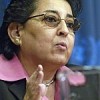
RIGHTS: Women Out in the Cold at Peace Talks
As the United Nations continues its two-week long discussions on the status of women worldwide, there is one nagging fact hovering around the conference rooms in the Secretariat: peacemaking is still largely in the hands of "men in suits, puffing on cigars".
Q&A: ''Plan by TNCs to Control Seeds Bound to Fail''
An attempt by a handful of developed countries and trans-national corporations (TNCs) to monopolise and control the world's seeds is doomed to failure, says Tewolde Berhan Gebre Egziabher, director-general of Ethiopia's Environment Protection Agency, and a formidable negotiator at biodiversity-related fora.AUSTRALIA: Act Now On Climate Change Gov’t Warned
An interim report on Australia’s ability to combat climate change has called on the government to take action now as a matter of urgency.CLIMATE CHANGE: Brazilian Ethanol Goes It Alone
Despite the urgency to reduce emissions that contribute to climate change, Brazil has been unable to stave off the doubts that are slowing the growth of an international market for plant-based biofuels.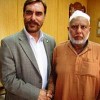
DEATH PENALTY-PAKISTAN: Condemned Indian 'Discovered' After 35 Years
"I am convinced I became a minister just for him," Ansar Burney, Pakistan’s recently-appointed minister of human rights, said in a telephone interview from Islamabad with IPS.TRADE-AFRICA: Make or Break for WTO Doha Round
The World Trade Organisation’s beleaguered Doha Round could either be wrapped up in the next two to three months or be stalled for an indefinite period of time.RIGHTS: ‘Europe Turning Away Guantanamo People’
European countries have been urged to allow detainees in Guantanamo Bay to settle on their soil.HEALTH-US: Rare Consensus Behind 50-Billion-Dollar AIDS Plan
In an increasingly unusual display of bipartisanship, both the White House and the Republican and Democratic leadership of the House of Representatives have agreed on a bill that, if passed, would provide 50 billion dollars to fight AIDS, malaria and tuberculosis over the next five years.
RIGHTS: U.N. Inaction Threatens "Mass Killings" in Africa, Asia
The international failure to respond aggressively to the killings in Sudan, and more recently in Kenya, is threatening the spread of genocide and ethnic cleansing in other parts of Africa, a London-based human rights organisation warns.
BIODIVERSITY: Life Under the Macroscope
Free, authoritative and online: 1.8 million species.AUSTRALIA/INDIA: Uranium Export Policy Not Set In Stone – Analysts
Despite Australia’s recently confirming that it will not be exporting uranium to India - reversing an agreement made by the previous government - analysts argue that a deal could yet be struck.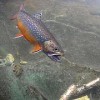
ENVIRONMENT: Household Chemicals Wreaking Havoc in Fish
When people take their daily doses of birth control pills, antidepressants and antibiotics, fish are being dosed too.
Q&A: As Civil Wars End, Child Soldiers Decline
The number of child soldiers, who are forcibly pressed into military service in conflicts worldwide, has declined: from about 300,000 in 1997 to an estimated 250,000 now, says U.N. Under-Secretary-General Radhika Coomaraswamy.TRADE-EU: Deals with Africa a ‘PR Disaster’
Trade talks between the European Union and African countries have been a public relations "disaster" for the Brussels bureaucracy, a high-ranking official confessed Feb. 26.RIGHTS: U.N. Takes Lead on Ending Gender Violence
The United Nations has launched a multi-year global campaign to intensify its efforts to help eliminate violence against women, which has long remained hidden in a "culture of silence".ECONOMY-CHINA: Staring At Grain Imports
With global food prices on an upward spiral, China is facing renewed fears that its growing demand for grain to feed the world’s largest population may lead to imports from international markets, driving prices higher and spurring further food inflation.
AFGHANISTAN: Ousted By Iran, Afghan Refugees Languish At Home
Thousands of Afghan refugees, forcibly repatriated by Iran, have been living in makeshift camps across Afghanistan.RIGHTS-US: Renditions Clothed in State Secrets Mantle
As the U.S. Central Intelligence Agency acknowledged it had erroneously denied using British territory to transport victims of "extraordinary rendition", a federal court bowed to pressure from the George W. Bush administration to dismiss a case against a Boeing subsidiary being sued for providing the aircraft that carried the suspected terrorists.POLITICS: U.N. Plans to Resume Capital Punishment Debate
The contentious debate on the death penalty - which split the 192-member U.N. General Assembly last December - is refusing to die.IRAN/UAE: US Efforts to Scuttle Economic Ties Fail
Iran and the United Arab Emirates have begun top level talks to boost economic relations despite efforts by the United States to disrupt trade ties and an unresolved territorial dispute over the three strategic islands of Abu Mousa, the Lesser and the Greater Tunb in the Strait of Hormuz.POLITICS-BURMA: UN Envoy’s Next Visit May Turn Farcical
The next visit of a special U.N. envoy to military-ruled Burma is in danger of turning into a farce.« Previous Page — Next Page »


Is the world dominated by three great empires -- the U.S.A, China and the European Union? How much power do the great behemoths of the south -- India, Brazil, and South Africa -- wield? And where does Russia fit in that equation? Are we in the middle of a new Cold War? What are the implications of the armed conflict with Georgia? What about the new axis: Venezuela-Russia? And what role does Turkey play? What about issues like Climate Change and other global forces like the food crisis and the high energy prices? How is all this reshaping the world's forces? IPS looks for some answers.

The Week with IPS

NEXT STOP - SDGs
Tracking global progress towards a sustainable world
