Languages
Thursday, October 15, 2026



News and Views from the Global South
Global Governance

Veteran Human Rights Leader Has Seen Enough: Israel Perpetrating Genocide in Gaza
A widely respected humanitarian law expert who has resisted using the term "genocide" for Israel's killing of tens of thousands of Palestinians in Gaza—a word used "sparingly" in the international human rights movement, he noted—said he has concluded a genocide is indeed taking place, evidenced particularly by Israel's blocking of humanitarian aid.
How Netanyahu Made the Creation of a Palestinian State Irreversible
It is ironic how Prime Minister Netanyahu, who vehemently opposed the establishment of a Palestinian state, made it all but irreversible because of his misguided policies and extreme ideological bent.
Lessons From Youth-Focused ‘Future Action Festival’ Ahead of UN Summit of the Future
The world has crossed the halfway point to the end of the Sustainable Development Goals (SDGs) era amid multiple, unprecedented, and significantly destructive global shocks. Two of the most pressing global challenges are the climate crisis and the threat of nuclear armament. Of serious concern is a severe lack of youth engagement on issues of critical global importance. Speaking to IPS during the 2024 UN Civil Society Conference, the outcome of which will inform high-level discussions when the UN hosts hundreds of world leaders, policymakers, experts, and advocates in September at the Summit of the Future in New York, Tadashi Nagai stressed the importance of coalition and movement building and youth engagement to escalate progress towards attainment of the SDGs.
Empowering Women Could Boost Fertility, & Economic Growth in Japan and Korea
Women in Japan and Korea face especially tough challenges juggling career and family. Many young women witness their peers encountering promotion delays after marriage and childbirth, dealing with problems splitting housework responsibilities, and having difficulty finding adequate childcare.
Small Island Developing States can be Nature-Positive Leaders for the World
Small island developing states (SIDS) are scattered across the globe, dotting the Pacific Ocean, the Caribbean, the west and east coasts of Africa and the Indian Ocean.
ICC War Crimes Charges a Milestone but Falls Far Below Expectations
The ICC Prosecutor’s applications for arrest warrants regarding the Situation in Palestine represent a milestone. But they are of little credit to Prosecutor Karim Khan.
ICC Move to Seek Warrants for War Crimes in Gaza Triggers a Backlash from US
The International Criminal Court’s (ICC) decision to seek warrants on Israeli Prime Minister Benjamin Netanyahu and his Defense Minister Yoav Gallant has triggered a strong backlash both from the Biden administration and a group of pro-Israeli Senators in the US Congress. The names in the ICC arrest warrants also include Yahya Sinwar, Mohammed Diab Ibrahim Al-Masri (Deif) and Ismail Haniyeh—all leaders of Hamas.
Biodiversity Meet Suggests New Guidelines on Synthetic Biology Amid Persisting Questions
After a week-long discussion by delegates from 196 countries, the 26th meeting of the Subsidiary Body of Scientific, Technical, and Technological Advisors (SBSTTA) of UN Biodiversity has concluded with a set of recommendations on several issues, including living modified organisms (LMOs) and synthetic biology. All nations must consider the recommendations, discuss them, and possibly adopt them at the Biodiversity COP in October. However, many questions remain unanswered and unclear.
Billions will Vote this Year – LGBTIQ+ People Must not be Excluded
This year has been called the ‘super election’ year, with 3.7 billion people potentially going to the polls. This historic political moment is also an opportunity to reflect on what these billions of voter experiences will look like. Who will vote, who can run for office and who might be excluded from the political process?
More Diversified Trade Can Make Middle East & Central Asia More Resilient
Dislocations from the pandemic, geoeconomic fragmentation, and Russia’s war in Ukraine have shifted world trade dynamics. While this has created challenges, the redirection of trade has also generated new opportunities, particularly for the Caucasus and Central Asia.
The US a Direct Partner in the Israeli War
A major mistake we often commit in our analysis of the US political discourse on the Gaza war is that we assume that the US and Israel behave as if they are two political entities with separate agendas and sets of priorities.
US Senators Threaten Criminal Court & Advise Israel to Nuke Gaza
As the ancient Greek saying goes: those whom the Gods wish to destroy, they first drive them mad. Perhaps destruction is too far-fetched here, but madness is closer home—in Washington DC With the 7-month-old Israeli-Gaza conflict showing no positive signs of a permanent solution, there is a lingering sense of growing political craziness in Capitol Hill, the seat of the US government, once described as Israeli-occupied territory.
From Dorms to Demonstrations
The campus protests that have spread to universities in every part of the United States are not about the war between Israel and Hamas, despite the heated rhetoric around this topic. Most of the students who are protesting know little about the conflict, its history and its ramifications for international politics.
Chronicle of a Catastrophe Foretold
The IMF warns of a decade ahead of ‘tepid growth’ and ‘popular discontent’, with the poorest economies worst off. But as with inaction on Gaza, little is being done multilaterally to avert the imminent catastrophe.
South Africa will be President of G20 in 2025: Two much-needed Reforms it Should Drive
South Africa will play an important international role in 2025 as president of the G20. The G20 is a group of 19 countries as well as the African Union and the European Union. Between them they represent 85% of global economy, 75% of world trade and 67% of global population. The G20 defines itself as the premier multilateral forum for international economic cooperation.
General Assembly Strengthens Palestine’s Status at UN — with New Privileges
The United States and its closest political and military ally, Israel, once again found themselves isolated last week when 143 of the UN’s 193 member states approved a resolution enhancing the role of Palestine providing it with new diplomatic privileges. And the US, meanwhile, has implicitly threatened to cut off funding-- if and when the UN provides legitimacy to Palestine. But that legitimacy is not likely to be achieved as long the US continues to exercise its veto to deny Palestine the status of a full-fledged UN member state.
Biden ‘Moving the Goal Post’ With Threat to Withhold Bombs from Israel
While some Palestine defenders on Wednesday welcomed U.S. President Joe Biden's threat to withhold bombs and artillery shells from Israel if it launches a major invasion of Rafah, critics noted that an invasion is already underway and accused the American leader of walking back a previous "red line" warning against an Israeli assault on the southern Gaza city.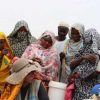
The Bleak déjà vu in Darfur
As dawn breaks over Darfur, my return after two decades feels heavy. Many millions are suffering once again. Twenty years ago, I was part of the humanitarian effort to make a difference. That was in the early 2000s, when celebrities and world-famous journalists would make the trek in a well-intentioned effort to focus attention on the atrocities across Darfur.
How do Taxes Drive the Sustainable Development Goals?
Tax revenue remains the most sustainable source of income for governments and plays a crucial role in financing the Sustainable Development Goals (SDGs). It diminishes the need for international assistance and contributes to the repayment of burdensome debt, ultimately strengthening a country’s ability to withstand external shocks.
A Russian Veto Threatens to Trigger a Nuclear Arms Race in Outer Space
When the 15-member UN Security Council failed last month to adopt its first-ever resolution on outer space—co-sponsored by the US and Japan—the Russian veto led to speculation whether this was a precursor for a future nuclear arms race in the skies above. The vetoed resolution was expected to “affirm the obligation of all States parties to fully comply with the 1967 Outer Space Treaty, including not to place in orbit around the Earth any objects carrying nuclear weapons or any other kinds of weapons of mass destruction, install such weapons on celestial bodies or station such weapons in outer space in any other manner.”
Many African Nations Making Progress in the Rule of Law
The United Nations Office of Rule of Law and Security Institutions (OROLSI) supports the promotion of the rule of law, security, and peace in conflict-affected countries.« Previous Page — Next Page »





The Week with IPS

NEXT STOP - SDGs
Tracking global progress towards a sustainable world
Tracking global progress towards a sustainable world
