Languages
Saturday, November 28, 2026



News and Views from the Global South
Global Governance

ECONOMY: Get the Cab From Shanghai to London
The black, curvy London cab is so much more than just a taxi. It is an icon without which the picture of London can never be complete.Nukes Lobbying Brings Obama’s Foreign Policy into Focus
The past two weeks have been marked by major foreign policy accomplishments for U.S. President Barack Obama, including the Nuclear Posture Review (NPR), the signing of a new Strategic Arms Reduction Treaty, and what appear to be improvements in the increasingly tense Washington-Beijing relationship.Zoellick Sees End of “Third World”
The 2009 global financial crisis marked the definitive end of longstanding paradigms of the global economy and development, such as the "Third World" and "North-South", according to World Bank President Robert Zoellick.MEXICO-CHINA: Trade Winds from the East
China has replaced Mexico as the top supplier of goods to the United States, and experts say that a specific trade strategy is needed for this Latin American country to compete successfully with Beijing in the U.S. market, the world's largest.DEVELOPMENT: Farmers on Fringe of Intl Agriculture Policy?
How's this for short-sighted: A billion people go hungry every day, food prices have climbed 30 to 40 percent, climate change is reducing agricultural production - and for the past two decades, the world has slashed investments in publicly-funded agriculture until it is a pittance in most countries.MIDEAST: Israel Trapped in Nuclear Isolation
As the world grapples with controlling the spread of nuclear weapons, it's a time of complex choices in a Middle East edging between possible confrontation with Iran and possible movement towards Israeli-Palestinian peace.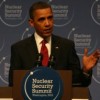
POLITICS: Nuclear Security Summit Boosts Disarmament Agenda
On the second and last day of the largest gathering of world leaders ever in Washington, U.S. President Barack Obama connected the commitments made here on securing vulnerable nuclear materials to the broader goal of a "nuclear-free world".US-NIGERIA: Acting President Gets Attention
Among the almost four dozen heads of state who have gathered here for this week's Nuclear Security Summit, Nigeria's acting president, Goodluck Jonathan, has been receiving a disproportionate share of high-level attention.HEALTH: Empowering Women to Slash Mother and Child Deaths
In developed countries, child and maternal mortality is a health problem that has largely been solved.JAMAICA: Nursing Exodus May Only Get Worse
The shortage of nurses throughout the Caribbean has reached chronic proportions, in a region already struggling with an ailing health care system.
AFRICA: Land Grabs Continue as Elites Resist Regulation
A year after the purchases of vast swathes of farm land in Africa first drew public attention, transactions remain as opaque as ever.DISARMAMENT: NGOs Praise U.S. Leadership on Nukes
One of the largest gatherings of world leaders ever on U.S. soil began Monday with representatives of 47 countries gathering here for the Nuclear Security Summit.DISARMAMENT: U.N. Chief Doubts Mideast Nuke-Free Zone
Against the backdrop of a major summit meeting of world leaders on nuclear non-proliferation hosted by the United States, Secretary-General Ban Ki-moon expressed strong doubts about the longstanding proposal to create a nuclear-free zone in the militarily-volatile Middle East.DISARMAMENT: Developing World Lags in Arms Manufacture
The world's developing nations are still far behind Western industrial countries in the latest Top 20 rankings in one of the most lethal industries: arms manufacture.HAITI: Disorganised Diaspora on Fringe of Post-Quake Decisions
For years, Haitians living overseas have been the lifeline of the troubled country, sending billions of dollars to relatives back home.
ENVIRONMENT-NIGER: French State-Owned Company “Poisoning” Poor
Recent research by Greenpeace suggests that French state-owned company Areva’s public claims of decontamination of populated areas near uranium mines in Niger are false. High radio-activity persists in towns and rural areas near the mines, affecting some 80,000 people.MIDEAST: ‘Poetic Justice’ in Jerusalem
President Barack Obama has made plain he means to deconstruct Israel’s 43-year-old grip on East Jerusalem. But, for all Washington’s pressure, Israel seeks to tighten its hold on the occupied part of the city.POLITICS-EGYPT: Critics Question ElBaradei’s Promises of Change
Mohamed ElBaradei, former head of the International Atomic Energy Agency (IAEA), rocked Egypt's political arena last year by announcing his desire to contest the presidency. But while the idea has fired the imagination of political activists, many analysts remain sceptical.SOUTH-EAST ASIA: Leaders Take Softly, Softly Approach to Burma
South-east Asian leaders did not push Burma’s junta too hard at their just- finished annual summit, hoping that a more subtle approach would nudge it to make sure the elections planned for later this year are credible.SOUTH AFRICA: Coal Plant Won’t Promote Development, Say Groups
As the World Bank approved a controversial three-billion-dollar loan for a coal-fired power plant in South Africa Thursday, both the details and the broader impacts of the loan continue to be criticised by community and environmental groups.DEVELOPMENT: Fragile Nations Speak Up To Donors
An international dialogue meeting in East Timor Saturday saw fragile states make giant steps in showing developed nations how aid can be more effectively channelled to achieve their key development goals.« Previous Page — Next Page »


The Week with IPS

NEXT STOP - SDGs
Tracking global progress towards a sustainable world
