Languages
Sunday, November 29, 2026



News and Views from the Global South
Global Governance
MIDEAST: Israel Taking Sharp Measures Over Iran
Questions about Iran's nuclear thrust are tumbling out, echoing around the world in several directions.LATIN AMERICA: "The More Guns, the More Violence"
Traffic in light weapons and small arms is one of Latin America's major disarmament concerns, because they fuel urban violence, especially in countries like Mexico, Guatemala and Brazil.COLOMBIA: Neutrality Impossible for Indigenous Groups
The latest killings of Awá Indians in southern Colombia – 12 members of a family, including four children and three teenagers –, the forced displacement of hundreds of native villagers, and death threats against indigenous leaders and teachers are signs indicating that their demand to be considered neutral in the armed conflict is still being ignored.ECONOMY: Speculators Undermining Recovery, Report Says
The current economic meltdown will continue for years if the world community does not take firm and coordinated action to regulate the flow of capital, say researchers who have just concluded a new study for the United Nations.
Q&A: The World Needs a Marshall Plan for Climate Change
When world leaders meet for a mega talk-fest on climate change at the United Nations in late September, the focus will be more on politics and less on finance.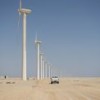
ENVIRONMENT: Desert Winds Stir New Hope
With oil and gas reserves running dry, the most populous country in the Arab world is eyeing wind power as a solution to its looming energy crunch.
AFRICA: "Have Your Own Policies, as Long as They’re Like Ours"
The controversial conditionalities attached to World Bank and International Monetary Fund (IMF) loans over the past 20 years may, from the World Bank’s point of view, no longer be necessary as African countries are of their own accord imposing similar policy restrictions on themselves.BRAZIL: Military Deal with France Strengthens Multipolar Focus
With the announcement of a multi-billion-dollar military technology-sharing deal with France, Brazil is projecting itself as a future regional military supplier, while sending out a clear signal about the multipolar focus of its foreign policy.POLITICS-US: Obama Struggles to Regain Early Momentum
The United States Congress returns to work Tuesday after a turbulent summer recess that has raised doubts over President Barack Obama's ability to face down domestic opposition from Republicans and enforce party cohesion on issues ranging from healthcare reform to troop commitments in the increasingly unpopular war in Afghanistan.CLIMATE CHANGE: Survival Means Anticipating and Adapting
Imagine being able to know months in advance when and where floods or droughts may occur. That is what over 150 countries participating in the third World Climate Conference, which concluded last Friday in Geneva, pledged to achieve through the creation of a Global Framework for Climate Services.CLIMATE CHANGE: Rising Seas Demand Better Family Planning
A rising population and climate change need to be considered together in an integrated policy, experts demanded at a forum on sexual and reproductive health and development held in Berlin Sep. 2-4.SOUTH AMERICA: Glaciers – Going, Going…Gone?
South America is perhaps most often associated with the Amazon jungle, the world's largest tropical rainforest. But along its western edge, from Ecuador to southern Chile and Argentina, it also harbours huge glaciers which are rapidly melting due to global warming.G20: Moving Up BRIC by BRIC
Every one of these 'G' meetings becomes now an occasion for the developing countries - say the emerging economies - to turn that extra energy into a louder voice in the business of global decision-taking.RIGHTS: U.N. May Shelve Creation of New Women’s Body
A coalition of over 300 international non-governmental organisations (NGOs) is "outraged" that an impending decision to create a new women's entity at the United Nations is being postponed once again.IRAQ: Stormy Times as U.S. Withdraws
Political violence in Iraq killed 456 Iraqis in August, the highest monthly death toll since July 2008. And with the U.S. showing no sign it plans to reverse the troop withdrawal that is now well underway, numerous struggles for power are shaping up inside Iraq.G20: More May Be Needed, to Do More
The tests are coming thick and fast. After the G20 summit in Washington last year, the G20 in London in April, and the G8 in L'Aquila that was substantially a G20, the G20 finance ministers are meeting in London this Friday and Saturday ahead of the G20 gathering in Pittsburgh later this month.
AFGHANISTAN: Best Left Alone for Democracy to Grow
If the numerous foreign diplomats, envoys and super envoys assigned to Afghanistan really want to help the country, the best thing they can do during these vote counting and election-fraud investigation days and maybe weeks ahead is to go on vacation.POLITICS: Developing Nations Sceptical of Climate Summit
The 130-member Group of 77, the largest single coalition of developing nations, is at loggerheads with Secretary-General Ban Ki-moon over an upcoming one-day global summit on climate change in New York on Sep. 22.TRADE: Will Obama Steer New Course in Delhi and Pittsburgh?
A "mini-ministerial" meeting has been convened by the World Trade Organisation (WTO) in Delhi to help member countries draft a roadmap to conclude the troubled Doha round and set the stage for the G20 later this month and the WTO ministerial in Geneva in November.BRAZIL: More Growth, Less Carbon
Achieving sustainable growth is one of the major challenges facing Brazil, an emerging power and the fourth largest emitter of greenhouse gases in the world. To do this it will have to curb emissions, 30 percent of which are caused by industry and power generation.
ECONOMY: CAADP: The African Solution for Net Export
Rodger Phiri is a wealthy man. And the most amazing thing is that he made his money through farming.« Previous Page — Next Page »


The Week with IPS

NEXT STOP - SDGs
Tracking global progress towards a sustainable world
