
Saturday, November 21, 2026



News and Views from the Global South
IPS UN: Inside the Glasshouse
SYRIA: Humanitarian Crisis Intensifies as Security Council Remains Idle
When reports of protests and subsequent civilian deaths as security forces fired on protestors began filtering in from the southern Syrian city of Dera‘a in March, many wondered what turn events would take in both Syria and the international community in the wake of earlier uprisings during the ‘Arab Spring’.AU Concerned With One-Sided Interpretation of Libya Resolution
Like Russia, China, India and Brazil, the African nations seem to be getting increasingly wary of the consequences of the Western powers’ military strikes in Libya - the oil rich North African country currently embroiled in violent political upheaval.OP-ED: G20 Ministers of Agriculture Must Focus on Smallholder Farmers
The first-ever official meeting of Ministers of Agriculture from G20 countries, to be held in Paris Jun. 22-23, presents an extraordinary opportunity. Tasked with developing an action plan to address price volatility in food and agricultural markets and its impact on the poor, the ministers are uniquely positioned to not only tackle the immediate price volatility problems, but also to take on a more fundamental and long-term challenge - extreme poverty and hunger.BALKANS: Serbia Promoting Partition of Kosovo
For most of the world the issue of Kosovo is long over. The nation declared independence from Serbia in 2008 and has gained recognition from 76 out of 192 U.N. member states.U.N. Still Lags Far Behind on Gay, Lesbian Rights
The United Nations is lagging far behind some of its own member states in recognising the rights of gays and lesbians who remain closeted in an institution that does not always practice what it preaches to the outside world.Women’s Groups Unite Ahead of Busan Aid Forum
Twenty women from four continents consider the words discussion leader Anne Schoenstein, of the Association for Women’s Rights in Development (AWID), has written on a flip chart. She strikes out in blue ink a previous sentence. She begins writing a new one - a demand aimed at aid donors - dictated by Nurgul Djanaeva.Q&A: Universal Energy Access is Possible With the Right Support
Providing electricity and modern cooking technology to billions of ‘energy poor’ people worldwide is one of the priorities of the U.N.’s Millennium Development Goals (MDGs) - one that experts say is achievable over the next few decades.ICC Urged to Accept ‘Ecocide’ as an International Crime
Images of the immense, dark stain of oil covering the waters of the Gulf of Mexico made their way across the globe last year as one of the largest oil spills in history unfolded. Other images - of the ‘Great Pacific Garbage Patch’, a gigantic pile of litter floating in the North Pacific Ocean; of countless felled trees in the Amazon; of tar sands in Canada - have gained much fewer headlines, but are likely to remain as monuments to the price tag of wanton human appetites.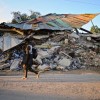
HAITI: Behind the Closed Doors of Port-au-Prince “Reconstruction”
Almost 17 months after the Jan. 12, 2010, earthquake that devastated Port-au-Prince and three other cities, reconstruction of the capital's downtown appears stalled, and over 800,000 people still live in tents – some 30,000 of them right across from the collapsed National Palace.Reducing Soot and Smog Would Help Stabilise Climate
Clean the air, cool the planet and prevent millions of deaths with fast action on soot and smog, a new report urges.Canada Spurns Kyoto in Favour of Tar Sands
Canada was roundly criticised by other nations at a major U.N. climate meeting last week after being caught underreporting carbon emissions from its tar sands oil production facilities, one of the country's biggest and fastest growing sources of global warming gases.OP-ED: Global CO2 Emissions Reach a New Record High
The alarm bells this time are not being rung by climate scientists or by environmental activists. They are being rung by none other than the International Energy Agency (IEA) - the institution established in the 1970s to defend the interests of Western oil consuming nations.OP-ED: The War in Libya: The African Union’s Mistake of Policy and Principle
Africa's handling of the Libyan crisis at the United Nations has been timorous and confusing, but it presents an opportunity as well as a challenge for the continental body on how it defines its future strategic interests.AIDS Funding Gap Threatens Treatment Targets
A staggering nine million people are still awaiting HIV treatment, yet the 22 billion dollars the Joint United Nations Programme on HIV/AIDS (UNAIDS) says is needed to give them access to medicine and care has far from materialised.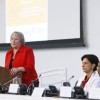
Thirty Years On, AIDS Epidemic a Women’s Battle
As world leaders gather in New York for a high-level conference on HIV/AIDS, United Nations agency heads, goodwill ambassadors and activists alike hope they will remember the virus's most vulnerable victims: women and girls.Russia, China Shield Syria from Possible U.N. Sanctions
A resolution inspired by Western nations critical of civilian killings in politically-beleaguered Syria is facing threats from two veto-wielding permanent members of the Security Council: Russia and China.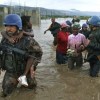
Millions May Soon Be Fleeing the Floodwaters
Mass migration will inevitably be part of human adaptation to climate change, experts agree, since parts of the world will become uninhabitable in the coming decades.OP-ED: Religion, Revolution and Two Languages
The elderly Venerable Tep Vong, the Supreme Patriarch of the Buddhist community in Cambodia, traveled to Jaffna in Sri Lanka in the midst of the recent civil war. In a broken city under siege, he joined others - Buddhists, Hindus, Muslims and Christians - to try to bring a peaceful end to the violent separatist conflict.
Q&A: “Warts and All, Peacekeeping Works”
U.N. peacekeeping missions face myriad problems but they remain the most effective strategy for dealing with post- conflict situations, says Page Fortna, a political science professor at Columbia University who has extensively researched the impact of various missions around the world.Rich Nations Wage Assault on Generic AIDS Drugs
Moves by developed nations such as the United States to tighten intellectual property laws are threatening to limit production and distribution of generic drugs, which experts say have been and will remain key in the prevention and treatment of HIV/AIDS and currently account for 80 percent of HIV/AIDS treatment.
Q&A: “The U.N. Overlooks Native Rights in Developed Countries”
The United Nations has largely overlooked the plight of indigenous peoples in developed countries, says Crystal Lee, a Native American activist from the Navajo tribe.« Previous Page — Next Page »


It was dubbed "The Glass House" by U.S. ambassador James Wadsworth in 1966. Half a century later, the United Nations has gradually expanded its role as agent of peace and protector of the world's vulnerable populations, while simultaneously facing internal pressures to become more inclusive, increase transparency and maintain legitimacy in the post-Cold War political and economic order. Highlighting the local impacts of global policies on economic development, environment, health and human rights, IPS's coverage goes beyond the edicts of the Security Council to illuminate the power struggles, successes and shortcomings of the 193-member institution as it grapples with crises like climate change, armed conflict, poverty and HIV/AIDS.

The Week with IPS
