
Saturday, September 26, 2026



News and Views from the Global South
IPS UN: Inside the Glasshouse

Who Should be the Next UN Leader?
Part 1
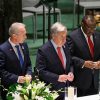
Could a UN insider take the top job? Amina J. Mohammed is the current Deputy Secretary-General of the United Nations. She has been in the role since early 2017, making her something of a veteran within senior circles.
Rwanda: A Ravaged Country That Bounced Back
As we contemplate the clouded futures of Gaza, Ukraine, and other dire conflict zones that get far less coverage, it may be instructive to recall the surprising success story of a ravaged country that bounced back: Rwanda.
When the Man Who Built the Bombs Met the Man Who Dropped the Bombs…
The award-winning Hollywood movie Oppenheimer portrays the life of J. Robert Oppenheimer, who helped create the atomic bomb, which claimed the lives of an estimated 140,000 to 226,000 people and devastated the two Japanese cities of Hiroshima and Nagasaki in August 1945.
China, India & Sri Lanka Embroiled in the Geo-Politics of the Indian Ocean
Unfortunately, a rivalry that should not exist and did not exist historically between China and India is being stoked by the media and some policy makers, especially in the West. It is not too difficult to discern the Machiavellian geo-strategic objectives of this complex game plan.
Kwibuka30: Learning from the Past, Safeguarding the Future Against Genocide
One should never lose sight that for people who experienced genocide, the warning signs were there. Genocide is a process. It requires preparation and capacities to carry it out.
UN Staff Warned Against Public Comments on the Devastating Conflict in Gaza
The deadly six-month-old Israeli-Hamas war, which has claimed the lives of more than 32,000 Palestinians in Gaza and over 1,200 in Israel, has sharply divided the world with vociferous protestors on both sides of the conflict. But the United Nations is no exception with some of the estimated 35,000 staffers—both in New York and UN affiliates worldwide-- have been increasingly vocal, mostly on social media, critical of either Israel or Hamas.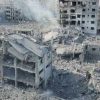
In the Shadows of the Wars in Ukraine & Gaza, Iran and Russia are Growing Ever Closer
Russia and Iran currently appear to be pulling firmly in the same direction in terms of foreign policy; ‘What has caused humanity’s suffering is unilateralism and an unjust global order, one manifestation of which can be seen in Gaza today.’ These were the words of Iranian President Ebrahim Raisi during a meeting with his Russian counterpart, Vladimir Putin, on 7 December.
Civil Registration is Shaping World’s Largest Election Year With 76 Nations Going to the Polls
Over four billion people will take to the polls in 2024 as 76 countries are set to hold elections. In Asia, this includes populous countries such as Bangladesh, India, Indonesia, Pakistan, and Russia.
Has the World Progressed or Regressed, 30 Years After a Landmark Population Conference?
As the world commemorates the 30th anniversary of the landmark International Conference on Population and Development (ICPD) held in Cairo in 1994, one lingering question remains: Has the world progressed-- or regressed-- in implementing some of the recommendations in the Programme of Action (PoA) approved by 179 UN member states.
‘The World Is Bigger than 5’
The title of this piece is not mine. It’s from the President of Turkiye calling for a reform of the United Nations Security Council. It has since become a motto in the UN reform campaign encapsulating the shared resentment at a global system that gives the five Permanent members – The P5 of the UN Security Council – the United States, France, Britain, China and Russia – unfair and often destructive veto powers that undermines the very ideals for which the UN was established.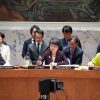
UN Security Council Holds Rare Nuclear Disarmament Debate
Japan chaired a rare, high-level UN Security Council meeting on nuclear disarmament and nonproliferation on March 18. Although the meeting underscored the urgency of addressing the growing threats posed by nuclear weapons, it also highlighted the chronic divisions among key states on disarmament and nonproliferation issues.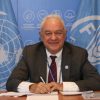
“I’m More Optimistic than Before Regarding the Goal of Ending Hunger in Latin America”
"I'm more optimistic than before" about the goal of ending hunger included in the 2030 agenda for Latin America and the Caribbean, said FAO regional representative Mario Lubetkin in an interview with IPS.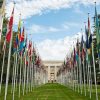
UN in Geneva to Partially Shut Down— for Second Time— Due to Cash Flow Crisis
Faced with a continued cash flow crisis, the United Nations in Geneva (UNOG) will partially close down – for the second time since December last year— as it scales back its operations, including building closures, official travel restrictions, and budgetary cuts on spending. The UN is studying plans to close the Palais des Nations beginning 22 April. Only conferences would run, but some of the offices would shut.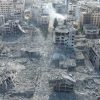
Biden Quietly OKs More 2,000-Pound Bombs & Warplanes for Israel
Despite growing worldwide calls for an arms embargo, the Biden administration in recent days has approved the transfer of billions of dollars worth of new weapons shipments to Israel, including warplanes and 2,000-pound bombs that have been dropped on densely populated areas of Gaza with devastating results.
The Gambia Must Not Repeal FGM Ban
Earlier this month, a UNICEF report on the prevalence of female genital mutilation (FGM) showed that while some success is taking place, the pace of progress remains slow - lagging behind population growth, especially in places where FGM is most common.
Will Israel Defy Another Security Council Resolution?
The UN Security Council (UNSC) resolution for a temporary cease-fire in the ongoing conflict in Gaza— adopted by a 14-0 vote with the US abstaining –- marks a significant step forward in momentarily halting the five-month-old fighting which has claimed the lives of over 32,000 Palestinians and 1,200 inside Israel. But a lingering question remains: how will Israel respond? Clearly, Israel has had a longstanding notoriety for flouting UNSC resolutions ---and still never having to pay a price for such violations—primarily because of the unyielding support of the United States.
South Asian Network on Human Rights Calls on Bhutan to Free Political Prisoners
South Asians for Human Rights (SAHR), a regional network of human rights defenders, has called on the Government of Bhutan to release the political prisoners it has detained for decades.
Defending Human Rights is Increasingly Dangerous: US Congress & Companies Must Act
Human rights defenders are under fire. At a time when the climate crisis is deepening and threats to democracy are on the rise, activists working to protect people and the environment are facing deadly threats. Front Line Defenders documented more than 400 murders of defenders in 2022—the highest number ever recorded.
World’s Democracies Threatened by Disinformation Generated by Artificial Intelligence
Speaking at the third Summit for Democracy in South Korea last week, US Secretary of State Antony Blinken warned that a malicious "flood" of disinformation is threatening the world's democracies—triggered in part by the rise of artificial intelligence (AI). But AI is also a critical arena in which democracy is being challenged. “So, while we seek to harness the power of AI and other digital technologies for good, some governments are abusing those same technologies to do just the opposite,” he said.
Breaking Down Barriers to Women’s Land Rights Starts in Our Homes
At the opening of the 68th session of the Commission on the Status of Women (CSW) on March 11, UN Secretary-General António Guterres said, “Your gathering this year is focused on how tackling poverty and strengthening institutions and financing with a gender perspective are critical to accelerate gender equality. The reason is simple: globally, poverty has a female face. Women have less access to land, natural resources and financial assets. They suffer the impacts of climate change more than men. And they are more likely to be food insecure. Many women and girls are also facing a war on their fundamental rights at home and in their communities.”
Reimagining Cooperation in a Polarized World in the Context of Zimbabwe?
This year’s UNDP Global Human Development Report (HDR) marks a dramatic shift away from the cautious optimism espoused in the HDR just four years ago: despite reaching a new high, the Global Human Development Index now evolves meaningfully below the 2019 trend – threatening to make global development losses permanent.« Previous Page — Next Page »


It was dubbed "The Glass House" by U.S. ambassador James Wadsworth in 1966. Half a century later, the United Nations has gradually expanded its role as agent of peace and protector of the world's vulnerable populations, while simultaneously facing internal pressures to become more inclusive, increase transparency and maintain legitimacy in the post-Cold War political and economic order. Highlighting the local impacts of global policies on economic development, environment, health and human rights, IPS's coverage goes beyond the edicts of the Security Council to illuminate the power struggles, successes and shortcomings of the 193-member institution as it grapples with crises like climate change, armed conflict, poverty and HIV/AIDS.

The Week with IPS
