Languages
Thursday, October 15, 2026



News and Views from the Global South
Headlines
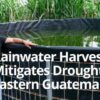
Rainwater Harvesting Mitigates Drought in Eastern Guatemala – VIDEO
 Plagued by drought, farming families living within the boundaries of the Dry Corridor in eastern Guatemala have resorted to rainwater harvesting, an effective technique that has allowed them to cope.
The Rising Threat of Digital Abuse: Women’s Vulnerability in the Age of AI and Online Harassment
As the digital landscape continues to expand and integrate into various aspects of daily life, humanitarian experts have raised concerns about the associated risks, particularly as artificial intelligence (AI), online anonymity, and the absence of effective monitoring frameworks heighten the potential for abuse and harassment. Women and girls are disproportionately affected by digital abuse, facing heightened risks, with nearly half of them worldwide lacking effective legal protections.
The UN General Assembly, Over Burdened with Repetitive Resolutions, Aims at Revitalization
The 193-member General Assembly (GA), the UN’s highest policy-making body, has long been the repository for scores of long-winded outdated resolutions accumulated over several decades-- and lying in cold storage.
Evaluation Finds Food Systems Programs Deliver Results but Warns of Missed Transformation Chances
A new independent evaluation of the Global Environment Facility’s food systems programs says they are delivering strong environmental and livelihood gains in many countries but warns that a narrow focus on farm production, weak political analysis, and shrinking coordination budgets are holding back deeper transformation.
School Days Lost, but Non-Economic Loss and Damage Not Part of Global Talks
Jyoti Kumari missed her online classes again today. Her father, a vegetable seller in West Delhi’s vegetable market, had to go to work, taking with him the only smartphone the family uses. Kumari has been taking online classes since November 11, when the state government declared a shutdown of all elementary schools due to air pollution hitting the “severe” category.
‘Future Shaped by Ocean-Based Innovations Within Reach’
The oceans are a fundamental part of Earth's climate system, regulating it by absorbing and storing vast amounts of solar heat, redistributing that heat around the globe through currents, and absorbing a significant portion of human-caused carbon dioxide (CO₂) emissions—yet scientific research into them remains underfunded.
COP30: Urgent Financing to Transform Agrifood Systems
Climate change is no longer a future threat; it is a reality that is reshaping agrifood systems and compromising global food security. Its impacts are evident in both the quantity and quality of food, affecting agricultural yields, water availability, pest emergence, disease spread, and fundamental processes such as pollination. Even changes in atmospheric CO₂ concentration are altering crop biomass and nutritional value.
Sidelined—Quilombos Fight on for Health of World’s Largest Rainforest
Just 30 minutes from where the UN climate negotiations are unfolding in the port city of Belém, Afro-descendant communities are engaged in a fierce struggle for the full recognition and legal titling of their ancestral territories—critical as their security and livelihoods are compromised by businesses wanting to set up contaminating landfill sites and drug cartels.
From COP28 to Belém – Climate Security is Health Security
Around the world, the climate crisis is fast becoming the biggest public-health threat of the century. Extreme heat now kills more Europeans than any other natural disaster. Floods in Asia displace millions and contaminate water supplies. Mosquito-borne diseases once confined to the tropics are appearing in southern Europe and the United States.
Beyond Buzzwords: COP30’s Opportunity to Deliver on Sustainable Food Systems
The language of agricultural sustainability changes like the seasons—from “climate-smart” to “regenerative,” “agroecological,” and “nature-positive.” Each term reflects good intentions, but the growing list risks duplication, confusion and delays.
Africa has a Debt Crisis: Momentum from G20 in South Africa can Help Find Solutions
The end of South Africa’s G20 presidency does not mean the end of its ability or responsibility to promote the issues it prioritised during 2025. It can still advocate for action on some of these issues through its further participation in the G20 and in other international and regional forums.
Cold or Heat, A Disputed Roadmap to Leave Fossil Fuels Behind in COP30
The heat in the Hangar Convention Center of the Amazonia, in the northeastern Brazilian city of Belém, has reached the negotiation rooms of the climate summit. Over the past 72 hours, one of the most delicate and significant discussions of this climate meeting has been taking place: the path to progressively abandon the production and use of coal, gas, and oil.
Civil Society Warns of New Land Grabs as World Bank Pushes for Tenure Reforms in Africa
As the COP30 negotiations intensify in Belém, Brazil, civil society organizations and research experts have called out major financial institutions for promoting foreign interests in controlling Africa's land by formalizing land tenure and seeking to convert Africa's land into industrial farms or carbon markets.
Explainer: Inside COP30’s 11th Hour Negotiations for Legacy-Building Belém Climate Deal
At a Conference of the Parties, where science intersects with politics, reaching agreements is often a tricky business. What is inside the last-minute negotiations as the COP presidency tries to get the parties to agreement at the final plenary?
The Uneven Race of Mexican Protected Areas against Climate Change
Ezequiel Sánchez, a 63-year-old Mexican fisherman, owes everything to the sea. “My life, my work, my family,” he says, pointing around his office, which is located just a block from the ocean in Puerto Morelos town, in the southeastern state of Quintana Roo, Mexico.
The U.S. President Doth Protest Too Much, Methinks
With the longest shutdown of the U.S. government now over, the White House, Congress, the media, and the public have shifted their attention to the contentious and highly political issue of releasing the files related to Jeffrey Epstein. The White House’s resistance to releasing Epstein-related documents brings to mind the famous line from Shakespeare’s Hamlet that the U.S. president “doth protest too much, methinks.”
AI and the Future of Learning
“Sometimes the best way to grasp a concept,” says Chris Folayan, co-founder and executive officer of Luma Learn, “is to learn it in your native language.”
Why Climate Finance Is Vital for the Implementation of NDCs in Africa
Funding cuts from the United States, the United Kingdom and Europe have left a funding gap in climate change programmes across Africa.
Faith Leaders Endorse Fossil Fuel Non-Proliferation Treaty at COP30
Decades ago, a little girl was born in a place called Cleveland, Ohio, in the heart of the United States of America. Born to a woman from the deep South, the place of Martin Luther King, her mother left her ancestral lands for the economic opportunities in the north.
Why Food and Agriculture Should Be at the Centre of COP30 Agenda
As the COP30 entered its second week in Brazil, the urgency to tackle climate change has never been greater, as is the appetite to feed a growing world population.
Pan-African Activist Advocates for Climate-Resilient Food, Education Systems at Belém Talks
“I am the founder of the ‘I Lead Climate Action Initiative,’ which is a Pan-African movement that carries out grassroots-based climate action to address the climate crisis in Africa. We advocate for the restoration of Lake Chad, the world’s largest environmental crisis through research and engagement,” says Adenike Titilope Oladosu.« Previous Page — Next Page »





