Languages
Monday, October 5, 2026



News and Views from the Global South
Headlines

Landlocked Nations Form New Bloc to Confront Climate Crisis and Inequity
“The term ‘negotiation' must be understood in ethical context… When an arsonist comes and burns down my house and then asks me to negotiate so I can rebuild my house, that becomes the paradox.”
Landlocked Developing Countries’ Group to Negotiate Way Out of Agricultural Catastrophe
Agriculture is a critical sector in landlocked developing countries, as more than half (55 percent) of the population is employed in the agriculture sector – significantly higher than the global average of 25 per cent. As such, the deterioration of food security in landlocked developing countries (LLDCs) is an unfolding catastrophe.
‘We Must Build Healthier Digital Environments Where Reliable Information Plays a Leading Role’
CIVICUS discusses Bolivia’s upcoming presidential election with Juan Carlos Uribe and Lucas Illanes from ChequeaBolivia, an initiative that monitors and verifies social media content.
Embracing the Innovation Imperative: Tech-Governance at a Crossroads
Technological progress and the course of human history have moved forward together; more recent technological innovations have emerged with unprecedented speed and reach, deeply influencing many areas of human activity.
Roma’s Long Standing Exclusion Compounded As Ukraine War Continues
As Russian forces continue to lay waste to civilian areas of towns and cities across Ukraine, Roma in the country are struggling to access compensation to help them rebuild their damaged homes.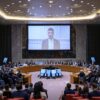
Aid Denied, Questions Ignored: Israel Keeps Focus on Hostages
At the United Nations media stakeout on Tuesday, Israeli officials kept focus exclusively on the hostages, avoiding questions entirely.
UN Chief Hails Turkmenistan’s Quiet Diplomacy as Launchpad for Landlocked Solidarity
In the glass-panelled hallway straddling Buildings 2 and 3 at the Awaza Congress Centre, two smartly dressed young Turkmens stood behind an ornate national pavilion—anxious, alert, and surprisingly eloquent.
How One Caribbean Country Is Changing the Face of Debt
The beauty of the majestic Piton mountains, vibrant culture, dazzling beaches and lush landscapes of Saint Lucia are invaluable assets. The country also takes pride in having two Nobel laureates, which is remarkable for a nation with a population of over 180,000.
Equal Footing: Building Pathways for Landlocked Developing Countries to Participate in Global Economy
Heads of State, ministers, investors and grassroots leaders are gathered in Awaza on Turkmenistan’s Caspian coast for a once-in-a-decade UN conference aimed at rewiring the global system in support of 32 landlocked developing countries whose economies are often ‘locked out’ of opportunity due to their lack of access to the sea.
Biogas to Wipe Out Poultry Industry Pollution in El Salvador – VIDEO
 El Granjero, the second-largest egg producer in El Salvador, invested US$2.5 million in 2017 to build a biogas plant, proving that there is a solution to the thorny issue of environmental pollution caused by most poultry companies in the country.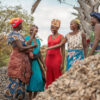
For LLDCs, the Next Decade Must be About Unlocking the Untapped Potential
As the world’s youngest and fastest-growing nations, LLDCs are home to immense untapped potential, yet remain cut off from the currents of international commerce and opportunity. Imagine being surrounded by opportunity, yet separated from it by mountains, borders, and vast distances from the nearest port—this is the daily reality for the world’s landlocked developing countries (LLDCs).
UN Trade and Environment Agencies Target Plastic Pollution through Global Negotiations and Trade Measures
They are lightweight, cheap, and able to be used in every sector of every supply chain. Few materials have revolutionized manufacturing and the global economy as much as plastics have. They are essential in almost everything, however this comes at a cost. A cost of 1.5 trillion annually in environmental damage, and a 75 percent waste ratio of all plastic ever produced.
The Missing Link in Africa’s Climate Plans: Animal Health
One would expect that this year’s wetter than average rainy season in parts of Africa would be viewed with relief, not fear. Yet many areas in the region sits at a knife’s edge—still recovering from years of drought and a historic famine, too much rain leads to flooding and water-borne diseases. Both varieties of extreme weather place enormous stress on livestock systems across the region, on which communities rely for both sustenance and livelihoods.
Japan’s Right-wing Populist Rise
Rice queues – something once unthinkable – began appearing around May. As the country’s staple food hit record prices, frustrated shoppers found themselves breaking a cultural taboo by switching to rice from South Korea. It was a symbol of how far Japan’s economic certainties had crumbled, creating fertile ground for a political shift.
Belem City Limits: How to Host a Successful Climate COP
There is no question that most climate activists and governments were delighted when Brazil offered to host the 2025 UN Climate Conference taking place this November.
Do Nuclear Tests Still Remain a Future Threat — as World Commemorates the 80th Anniversary of Hiroshima & Nagasaki?
The 80th anniversary of the atomic bombings of Hiroshima and Nagasaki during World War II triggers the question: Is nuclear testing dead or is it still alive--and threatening? The August 6-9 anniversary marks the devastating bombings, which claimed the lives of between 150,000 and 246,000 civilians-- and still remains the only use of nuclear weapons in an armed conflict.
The Constitution Isn’t Optional: Why USA Belongs on the CIVICUS Monitor Watchlist
Successive United States governments have prided themselves on being governed by the Constitution of 1788. The First Amendment introduced in 1791 lays the foundations for secularism, respect for fundamental freedoms, and the right to seek redress of grievances.
Spotlight on Landlocked Developing Countries Ahead of Third UN Conference
Landlocked developing countries face a unique set of challenges. Without coastal ports, they rely on transit nations, causing higher trade costs and delays.
Climate Reparations are Necessary but Not Sufficient: World Needs Less Growth & More Justice
While recent heat waves were causing thousands of deaths, the Trump administration was busy dismantling policies that regulate greenhouse gases on the theory they don’t harm human health.
Survey by Staff Federation Expresses Disappointment over UN’s Reform Process
The Coordinating Committee for International Staff Unions and Associations of the United Nations System (CCISUA)* staff federation has conducted a quick survey of staff in its member unions of their thoughts on the UN80 initiative.
IPC Alert Declares the Worst Famine Conditions in Gaza since October 2023
Amidst the ongoing conflict in Gaza, the risk of famine among rising need of consumption and nutrition have reached their worst levels since the start of the conflict. Without urgent analysis to latest report from the Food Security Classificat “IPC ALERT: Worst-case scenario of Famine unfolding in the Gaza Strip”.« Previous Page — Next Page »





