Languages
Sunday, October 11, 2026



News and Views from the Global South
Headlines

Pandemic Agreement: Important Step but Big Decisions Deferred
When the next pandemic strikes, the world should be better prepared. At least, that’s the promise states made at the World Health Organization’s (WHO) World Health Assembly on 19 May when they adopted the first global pandemic treaty. This milestone in international health cooperation emerged from three years of difficult negotiations, informed by the harsh lessons learned from COVID-19’s devastating global impacts.
Pacific States, Territories Gift the World its ‘Largest Conservation Project’
While the island states in the Pacific may be modest, the ocean that surrounds them represents a huge oceanic state—an area equivalent to the entire European Continent.
UN Pushes for 10,000 Ships To Track Ocean Changes
A groundbreaking initiative to revolutionize global ocean observation is being launched this week at the UN Ocean Conference side event, aiming to enlist 10,000 commercial ships to collect and transmit vital ocean and weather data by 2035.
Waves of Change: From the Glittering Shores of Nice to Struggling Seaweed Farmers in Zanzibar
The late afternoon sun sparkles on the waters of the French Riviera as yachts dock at the Port of Nice with mechanical grace. A tram glides past palm-lined boulevards, where joggers, drenched in sweat, huff past leisurely strollers and sunbathers. Just beside the promenade, a crowd gathers around a young girl. With braided hair bouncing in rhythm, she belts out Beyoncé’s Halo with stunning precision. Her bare feet dance on the cobblestones, her voice echoing against the pastel façades.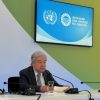
‘Ocean Health Is Inseparable From Human Health, Climate Stability’—UN Chief Urges Swift Action, Partnership for Ocean Conference
“When we poison the ocean, we poison ourselves,” UN Secretary-General António Guterres told reporters on the second day of the UN Ocean Conference (UNOC3).
Older Men and Women Living Longer
Older men and women are now living longer than ever before. Across the globe, individuals who reach old age can expect to have more years of life ahead of them than in previous generations. However, these additional years of life, coupled with the disparities among and within countries, including variations between older men and women, present substantial economic, social, and political challenges for societies.
What Can We See About Climate Change in Macroeconomic Data?
Year by year researchers improve and deepen our understanding of economic activity. The primary example, and probably the most commonly used, is the detailed data and analysis available on gross domestic product (GDP).
UNOC3: World Leaders Recognize Urgent Need for Ocean Action
The world has converged along the Mediterranean Sea to affirm their commitments to the sustainable use and protection of the ocean.
‘The Regime Seeks to Consolidate Absolute Control by Eliminating All External Oversight’
CIVICUS discusses Nicaragua’s withdrawal from the United Nations Educational, Scientific and Cultural Organization (UNESCO) and other international organisations with Wisthon Noguera, an activist, student and deputy coordinator of the National Youth Platform of Nicaragua.

How to Spur Economic Growth in Africa’s Fragile and Conflict-Affected States
More than half of sub-Saharan Africa’s population lives in fragile and conflict-affected states (FCS)—economies that face profound challenges such as stagnant economic growth, weak institutions, inadequate public services, extreme poverty, war, and forced internal displacement.
UN vs US: the Battle for Transgender Rights
As the Trump administration continues its battle against the United Nations-- over war crimes, human rights, and the climate treaty, among others -- they also remain sharply divided over Lesbian, Gay, Bisexual, Transgender, and Intersex. (LGBTI) rights. The US has taken several actions, some by Executive Order, related to transgender people, including restricting Access to Gender-Affirming Care, banning Transgender Individuals from Military Service, rescinding Protections for Transgender Students and ending Federal Funding for gender Ideology.
Oceans at Risk: Report Warns Global Fossil Fuel Expansion Threatens Marine Biodiversity
A newly released report by Earth Insight in collaboration with 16 environmental organizations has sounded a global alarm on the unchecked expansion of offshore oil and gas projects into some of the most biologically rich and ecologically sensitive marine environments on the planet.
UN Ocean Decade vs. Coastal Reality: ‘They Took Our Sea,’ Say Vizhinjam Fishworkers
As the UN Ocean Conference (UNOC) approaches, bringing renewed attention to SDG 14 (Life Below Water) and the rights of ocean-dependent communities, India’s Vizhinjam coast highlights the environmental injustice and human cost of unchecked coastal development.
Solar Energy Brings Water to Iconic Salvadoran Village of El Mozote
The worst massacre of civilians in Latin America occurred in the Salvadoran village of El Mozote, where environmental projects are beginning to emerge, slowly fostering awareness about protecting the natural resources of this deeply symbolic site, embedded in the country's historical memory.
Girls in Kenya Are Repurposing the Invasive Mathenge Tree Into Furniture
Char Tito is hammering nails into wood at Kakuma Arid Zone Secondary School in Turkana County, northern Kenya. The 16-year-old is making a traditional chair under the scorching sun outside one of the classroom blocks.
While Population Rises, Jobs Decline: Global Job Markets Tied to U.S. Consumerism
While Asia and the Pacific seem to be booming in employment and GDP growth, reports reveal a possible volatile and fragile market pegged to U.S. consumerism.
Is There a Case for UN Optimism?
On April 16, Seton Hall University's School of Diplomacy and International Relations hosted UN General Assembly President Philemon Yang as part of its World Leader Forum.
Why we Must Put Ocean-Positive Solutions at the Heart of Global Development
The ocean is far more than a vast expanse of water; it is a cornerstone of life and a critical driver of sustainable development. The intricate relationship between human development and the ocean underscores why ocean governance and sustainability are pivotal to global progress. Its significance becomes particularly evident in Small Island Developing States (SIDS), where the ocean is not just a resource but an intrinsic part of identity and survival.
CIVICUS’ New Leader Speaks on Global Declines in Civic Freedom
On June 1, CIVICUS Global Alliance, announced the appointment of Mandeep Tiwana as its new Secretary-General. With his tenure underway, Tiwana sat down with an IPS correspondent to discuss CIVICUS’s work in promoting civic freedom and solidarity in an increasingly autonomy-restrictive world.
Why the UN Staff Union Does Not Agree with the High Commissioner’s Expensive & Poorly-Managed Project
Like you, we attended last week’s townhall where UN High Commissioner (for Human Rights) Volker Turk presented his latest plans for moving staff out of headquarters. We note that this project has been carried out without adequate consultation with the staff union. The key points we learned and which we are concerned about:
South-West Pacific Communities Threatened by Ocean Heat, Sea-Level Rise
The South-West Pacific experienced unprecedented warming in 2024, according to a World Meteorological Organization (WMO) report released today (June 5)—threatening islands in a region where half the population lives close to the coast.« Previous Page — Next Page »





