Languages
Wednesday, August 26, 2026



News and Views from the Global South
Armed Conflicts
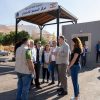
Attacks on Aid Personnel in Lebanon Impede Relief Efforts
In the midst of Israel’s ground incursion of southern Lebanon, frequent airstrikes have demolished civilian infrastructure, which is only contributing to the increasing rates of civilian casualties and displacement. Humanitarian organizations fear that conditions in Lebanon will soon resemble those of Gaza if a ceasefire isn’t reached soon.
Mortality in the Gaza-Israel War
Following the 7 October 2023 attack on Israel by Hamas-led militants, Israel’s response has led to unprecedented high mortality levels in the Gaza Strip. The Palestinian death toll over the twelve month period is believed to be among the highest such civilian casualty rates in the 21st century.
Civil Society Fights Against Budget Cuts Amid Calls for “Aid” Reform
Multiple conflicts, the climate emergency and other crises are destabilising many parts of the world and intensifying the strain on the resources needed to finance the global sustainable development agenda. Amid these challenges, data from 2023, shows that Official Development Assistance (ODA) reached a record-breaking US$223.7 billion, up from US$211 billion the previous year, according to Eurodad.
The Health of Gaza is Dependent on Humanitarian Pause
The next round of the polio vaccination campaign in Gaza, a major undertaking for health partners, began on October 14, as continuous attacks and strains whittle down the healthcare and humanitarian systems.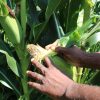
World Told Act Now or Face 136 Years of Hunger, Report Warns
High levels of hunger will continue for another 136 years in many developing countries, according to a new report assessing global hunger.
Continued Airstrikes Threaten Civilians and Aid Workers in Lebanon
As Israel continues its siege on the southern borders of Lebanon, concerns among humanitarian organizations grow as the frequency of attacks rise. Lebanon’s Ministry of Public Health reports that approximately 2,169 people have been killed and over 10,212 have been injured in the past year. Humanitarian Coordinator for Lebanon, Imran Riza, has described this conflict as one of the deadliest in recent memory.
WORLD FOOD DAY – 2024

The world's farmers produce enough food to feed more than the global population. Yet around 733 million people are facing hunger in the world.

What do Russia and Israel Share in Common?
Russia is pursuing, during these contemporary times, a new form of economic architecture, non-hegemonic policies and simultaneously portraying its first-class military power in the world. Russia's development paradigm is distinctively different and largely oriented towards Global South.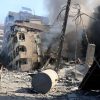
Death Toll Rises During Israel’s Siege in Lebanon
One week has passed since the beginning of Israel’s invasion of Lebanon. Over the past three weeks, Lebanon has seen a considerable uptick in hostilities from the Israeli armed forces. Routine bombardments have resulted in significant civilian casualties as well as the failure of several critical infrastructures. The United Nations warns that displacement continues to grow as shelters approach maximum capacity.
The Future of Civic Freedoms: Lessons from My Time at CIVICUS
When I joined CIVICUS in 2019, I came in with two decades of work on influencing and monitoring public policies through grassroots and global activism. Joining CIVICUS as Secretary-General felt familiar, like returning home after a period of separation. My first international role in 2006 – as Campaign Director of the Global Call to Action against Poverty – was initially hosted by CIVICUS. One of my most memorable campaign endeavours, The World We Want 2015, was conceptualised in the basement of CIVICUS House in 2011.
Strategic Patience can Mitigate Conflict Between Israel & Iran
How will Israel respond to Iran’s recent ballistic missiles barrage? “Strategic patience” is the best course. Israel has its hands full with Hamas and Hezbollah. Now is not the time to escalate a new major war with Iran, which could have nuclear implications.
Playing Nuclear Games: Tickling the Tail of the Promethean Nuclear Fire Dragon
In recent years, the rhetoric, strategy and practice of nuclear deterrence has grown riskier, more urgent, more dangerous, less stable, and increasingly in the hands of deficient leaders and policymakers.
Agroecology: The Game-Changing Solution to Global Food, Climate and Conflict Crises
Edward Mukiibi, President of Slow Food, champions agroecology as a transformative answer to the world's most pressing crises: food insecurity, climate change, and violent conflicts. In a world where these challenges intersect, Mukiibi called for an urgent rethink of our approach to food systems.
Continued Hostilities in Gaza Threaten the Second Round of Polio Vaccinations
Over the past two months, the polio epidemic in Gaza has slowly mitigated due to response efforts by the World Health Organization (WHO) and the United Nations (UN). The first round of the polio vaccination campaign has been largely successful, with around 506,000 children having been immunized. If the Israel authorities allow for further humanitarian pauses, the second round is expected to begin on October 14. However, health officials are concerned that this will be more difficult than expected due to the continuance of deadly attacks in the past few weeks.
“Escalation Dominance” . . . and the Prospect of More Than 1,000 Holocausts
Everything is at stake. Everything is at stake with nuclear weapons. While working as a nuclear war planner for the Kennedy administration, Daniel Ellsberg was shown a document calculating that a U.S. nuclear attack on communist countries would result in 600 million dead. As he put it later: “A hundred Holocausts.”
May Teacher Voices Echo Around the Globe
We must build a new social contract for education – a contract based on equality, equity, and universal human rights. At the center of our global efforts to ensure education for all, we must put teachers first in everything we do. They are frontlines heroes who deliver every day to educate children, cultivate young talent, and build a strong society. They are the substitute parents, the mentors and the ones who contribute to shaping the identify of a child in war, in refuge or in climate change.
Human Toll on Lebanon Under Threat of Israeli Invasion
On September 23, Israel began launching a barrage of airstrikes on Lebanon, targeting the Iran-backed militant group, Hezbollah. According to statements from the Israeli Defense Force (IDP), approximately 3,600 sites have been struck, making this the deadliest aerial campaign on Lebanon in the last 20 years.
BRICS+ Prioritising Expansion to Fight Western Hegemony
In an interview with Sky News Arabia on September 20, Russian Foreign Minister Sergey Lavrov expressed scepticism but was straight to the point about the strategic expansion of BRICS, an association comprising Brazil, Russia, India, China and South Africa. Under Russia's BRICS presidency which began in January 2024.
UN, Lebanon Launch $426 Million Humanitarian Emergency Appeal
The escalating hostilities between Israel and Lebanon have already threatened the safety and security of more than 1 million civilians, urging Lebanon’s government and the United Nations to take swift humanitarian action and call for international support.
The Approaching Rainy Season Signals Trouble for Gaza
As the humanitarian crisis in Gaza continues to grow more dire as a result of the Israel-Hamas war, concerns of diminishing public health are growing due to prolonged flooding. Repeated airstrikes and forced evacuations in recent weeks have pushed many displaced citizens to flooding hotspots. An influx of torrential rain has greatly exacerbated the failing sanitation system, increasing the risk of contracting waterborne diseases. Health experts fear that conditions will continue to worsen in the coming winter months.
Nuclear Annihilation Threatened by Revival of 20h Century McCarthy Era Cold War & Red Scare
The world may have dodged an immediate bullet when the US intelligence agencies warned, this week, that by giving in to Ukraine’s pleading for long range missiles that could attack targets deep into Russia, we would be poking the Russian bear beyond its patience without even influencing the outcome of the war in Ukraine’s favor.« Previous Page — Next Page »


Armed conflicts are a sad constant on daily front pages worldwide. Wars, civil wars, revolts, coups, genocides, ethnic and political violence, and global terrorism capture our attention for the geopolitical landslides, human suffering, food crises and streams of migration that follow in their wake. As in times of natural disaster, man-made crises claim frequent casualties among the poor, women and children. IPS examines emerging and ongoing armed conflicts around the world with an eye on the underlying social and political dynamics, and special focus on the lived experiences of those most affected by armed conflict.

The Week with IPS

NEXT STOP - SDGs
Tracking global progress towards a sustainable world
Tracking global progress towards a sustainable world
