Languages
Tuesday, November 17, 2026



News and Views from the Global South
Asia-Pacific

Papua New Guinea First to Finalize National Climate Plan Under Paris Agreement
On March 29, Papua New Guinea became the first country to formally submit the final version of its national climate action plan (called a “Nationally Determined Contribution,” or NDC) under the Paris Agreement. The small Pacific nation’s plan to transition to 100 percent renewable energy by 2030 is no longer just an “intended” nationally determined contribution (INDC) – it is now the country’s official climate plan.Streamlining opportunities to migrate
In Bangladesh, remittances from people living and working abroad added up to nearly Tk. 1.2 trillion last year—more than four times the nearly Tk. 250 billion that foreign aid agencies spent in the country.
Challenges of Polio Vaccination
Pakistan and Afghanistan, the two remaining polio-endemic countries, have joined forces to eradicate poliomyelitis by vaccinating their children in synchronised campaigns.Yemen’s Health Crisis is “Critical,” Says WHO
The health situation in Yemen has severely deteriorated and is critical, the World Health Organisation (WHO) has reported.
Why Poverty Won’t Go Away
In an email interview, Dr Geof Wood shares with Amitava Kar of The Daily Star why poverty and inequality persist despite all the fuss. Emeritus Professor of International Development at the University of Bath, Dr Wood is an internationally renowned development anthropologist and author of several books and numerous journal articles, with a regional focus on South Asia. On March 9, he presented a seminar titled “The Security of Agency: Towards a Sociology of Poverty” at Bangladesh Institute of Development Studies (BIDS). Here is a condensed version of the interview.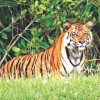
The Last of the Tigers
The mighty beast's hypnotic eyes may strike fear into the hearts of its prey, while its majestic thick orange- black striped fur serves as a reminder of its supremacy in the swampland, as it roams around like a king, ruling over the tropical kingdom of the Sundarbans. The spirit of a Bengal Tiger lives in the heart of every Bangladeshi. Hence, the nickname 'Tigers' for our beloved cricket team. Yet, it is a shame that our tigers, the ones in the forest, are in peril, struggling to survive in the kingdom they rule over. Our negligence in protecting our national asset has resulted in those with selfish motives to take advantage of the scenario, as their activities threaten to push these mighty creatures further towards extinction.
Quake Fear Stalks Kathmandu
Early evening, there is a play of light and shadow over Kathmandu’s famous Durbar Square. The rising monuments, damaged by the April 2015 earthquake, appear as dark silhouettes while large flash lights streak through in between them.How Smart Solutions to Tax Reform Can Help Develop Infrastructure
Bangladesh's public sector faces serious challenges. Poor infrastructure is one of the main factors that hold back economic growth. Government-funded health clinics struggle to provide the population with quality, specialised services. And beyond primary school, quality public education opportunities are extremely limited. These are just a handful of the challenges, and they are partly due to a stark fact: the country has one of the lowest tax-to-GDP ratios in the world.
Corruption Swallows a Huge Dose of Water
While the United Nations marked this year’s World Water Day on March 22 focusing on the connection between water and jobs, a new report has rung loud alarm bells about the heavy impact of corruption on the massive investments being made in the water sector.The Fuel of Economic Growth
Water has become Pakistan`s number one development and governance issue. While water availability in our river systems has remained fairly stable, per capita water availability has diminished from about 1,500 to nearly 1,000 cubic metres, owing to a fast-growing population.
Water and Sanitation Challenges Amidst Social Inequality in Urban Areas in India
During the month of March 2016 and ironically very close to the World Water Day, the Supreme Court of India had to step in to resolve a water sharing dispute between three contiguous states including the National Capital Region. That, this was not the first time that the Supreme Court had to intervene is a stark indicator of the extent of the water crisis that is confronting India, a country that aspires to be a global power. Earlier Supreme Court had to step in to resolve a bitter dispute on water sharing between two Southern states of India – Karnataka and Tamil Nadu.Farce Americana
The German language is truly underappreciated. Talce `Drachenfatter` for example: translating as `dragon fodder` this is the gift one gives as a peace offering to an angry partner or spouse. Then there`s `Schadenfreude` which means: `pleasure derived from another person`s misfortune` There`s a lot of that going around these days, with careful statistical research showing that global schadenfreude levels peak whenever Donald Trump opens his mouth.
Corruption Threat to Pacific Island Forests
The vast rainforests of Papua New Guinea (PNG) and the Solomon Islands in the southwest Pacific Ocean are crucial for environmental sustainability, survival of indigenous peoples and the wider goal of containing climate change. But forest degradation, driven primarily by excessive commercial logging, most of which is illegal, is a perpetual threat.
It’s Not Just Poverty
You give dowry and I receive it, why are you bringing government into this?”said a woman in a village in Rangpur district during a discussion on women's status. I had the opportunity to facilitate the session, and have thought of this many times since hearing several years ago. The comment reminds me that it is extremely challenging to get rid of a harmful practice if it is socially accepted, even when it is prohibited legally. Law is important, but not enough to bring social change.Women`s Revolution
For as long as I can remember, people have been talking about the possibility of revolution in Pakistan. They were originally inspired, or perhaps frightened, by the Iranian Revolution in 1979, when ordinary Iranians rose up under the leadership of the clergy and overthrew Western-backed Reza Shah Pahlavi.
The List of Shame
He stood there at the reception, with a sling bag filled with documents. He worked for a courier company. He was 10 years old. He was handsome. And he had the brightest eyes I had ever seen before.Dhaka’s Risky Streets with Kids Driving Buses, Human Hauliers
In any country, one has to be an adult to qualify as a driver. But in Bangladesh, one does not have to obey that law to become a driver – and that literally means it is “allowed”.
Myanmar’s Rohingya Humanitarian Crisis
The persisting humanitarian crisis of the Rohingya minority in Myanmar has been a global concern after two bouts of organised mass violence against them in 2012. While the Rohingya persecution has been going on for nearly four decades, Myanmar’s reforms launched in 2011 facilitated the international media’s coverage of the mass violence.Using Smarter Stoves to Combat Household Air Pollution
When it comes to cooking indoors over open fires, the harmful health effects can be equal to smoking two packs of cigarettes a day. This indoor air pollution plagues nearly nine out of every 10 Bangladeshi households, which use wood and other biofuels to cook inside.Who Guards the Guardhouse?
In a surreal digital theft that befits a high octane movie thriller, we were recently informed of the daring heist at Bangladesh Bank in which nearly a billion dollars were siphoned off last month. As if this was not enough, the theft took place over several days early February through a series of about three dozen electronic fund transfers from the Bank to New York Federal Reserve for a total amount anywhere between eight hundred fifty to eight hundred seventy million dollars. All of the looted amount made through dozens of transfers would have been cashed had it not been due to the now famous spelling error in a twenty million check made to a Sri Lankan NGO. The error prompted the routing bank, Deutsche Bank, to seek clarification from the Bangladesh central bank, which stopped the transaction. But the mystery hackers still managed to swipe $80 million, one of the largest recorded bank thefts in history.
Fat’s Heavy Burden on the World Economy
About 2.1 billion people are regarded as overweight or obese today, or almost thirty per cent of the world’s population. With over 800 million people estimated to be chronically hungry in the world, it appears that the number of overweight is more than 2.5 times the number of undernourished.« Previous Page — Next Page »


The Week with IPS

NEXT STOP - SDGs
Tracking global progress towards a sustainable world
Tracking global progress towards a sustainable world
