Languages
Sunday, November 22, 2026



News and Views from the Global South
Asia-Pacific

PHILIPPINES: Designing Defence Against Climate Change
As the impact of climate change worsens around the globe, a disaster-resilient village is poised to be a solution for urban poor battling the constant floods and typhoons that hit the Philippines.MALAYSIA: Muslim Gay Faces Govt Wrath
Muslim engineer Azman Ismail has sparked a huge storm of criticism, invited official censure and even death threats by going on YouTube.com and confessing that he is a gay.China Moves to End ‘Modern Slavery’
Authorities in remote Xinjiang province rescued a group of mentally ill men last month. The men had been sold by a shelter operator and forced to work in a factory. The rescue shone a light on the darkest side of China’s rapid economic growth – slavery.India Gathers Military Might
Russia’s President Dmitry Medvedev signed a large number of contracts with India during a two-day visit to New Delhi in December. These deals were part of a series of agreements that have placed India in progressively more advantageous positions in global arms markets.Wikileak Cables Reveal China’s Modernising Military Might
A Wikileaked January 2009 diplomatic cable from the United States' Beijing embassy forecasting the next three decades of U.S.-China relations warned of the Asian giant's "rapid military modernisation".Sanctions Forced Iran to Slash Bloated Energy Subsidies
Touring Iran's Arab rivals this week, U.S. Secretary of State Hillary Rodham Clinton sounded almost triumphant as she asserted that economic sanctions have helped slow Tehran's nuclear progress.INDIA: Smaller States Demand Self-Rule
In the Himalayan Mountains of eastern India’s Darjeeling locals are coping with the economic fallout of tourists cancelling their holiday plans in the area.CLIMATE CHANGE: ‘Water Towers of Asia’ Show Cracks
A concerted effort to formally document the magnitude and directions of climate trends in the Eastern Himalayas and thereby decide regional adaptation strategies is critical to ensure the region’s water security, according to water experts.VIETNAM: Communists Gag the Web
By clamping down on the Facebook.com social networking service, Vietnam’s ruling Communist Party is revealing its discomfort with the rapidly expanding avenue for free expression even as it pushes to transform the once poor agrarian nation into a modern industrial society by 2020.Report Shows Rollback on Rights in China
A new report released Tuesday by Human Rights Watch (HRW) charges that China has largely failed to meet the commitments laid out in its first-ever National Human Rights Action Plan (NHRAP), introduced in 2009.UZBEKISTAN: Muslims Face Horrific Torture in Jails
Muslims are facing a dark future of repression and torture in Uzbekistan for years to come as the government’s relentless campaign of religious suppression continues.
SRI LANKA: Media Freedom Still Distant
January is indelibly linked to the tumultuous recent history of the media in Sri Lanka. Two years ago, on Jan. 8 Lasantha Manilal Wickrematunge, editor of the The Sunday Leader newspaper, was murdered while on his way to work.
AFPAK: People Turning Against Taliban
The Taliban once regarded as true jihadists here are rapidly losing popularity in response to their ongoing targeting of mosques, schools and innocent people.CAMBODIA: Chinese Dams Challenge Western Development Monopoly
A steady rise of new dams in Cambodia is becoming a platform for the country’s prime minister to showcase where the Southeast Asian kingdom’s ties with China - a late arrival among Cambodia’s foreign aid and development partners - is headed.Afghanistan Solutions Heighten Central Asian Crisis
International efforts to replace poppy fields with food crops and improve living standards in impoverished northern Afghanistan seem undeniable progress in the conflict-ridden country. But some experts worry that these efforts will have unintended negative consequences for the nation’s neighbours, where water and energy resources are sparse and tensions run high.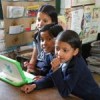
INDIA: 100-Dollar Laptops Bring In Distant Kids
Responding to the lack of computer training in Mukteshwar’s schools, Veena Sethi, a retired Delhi University professor, set up two used personal computers in the basement of her home with the aim of bringing the basics of computing to school children.
Suicides Rise Across India
"India has become the suicide capital of the world," says Daya Sandhu, a counselling psychology professor at the University of Louisville in the U.S.Bahrain’s Farms Disappearing Under Concrete Towers
Environmentalists are engaged in a nation-wide campaign to protect what is left of the agricultural belt in Bahrain. Seventy percent of farms have been eliminated due to urbanisation, according to environmentalists who are warning of a serious environmental crisis.
PHILIPPINES: Catholics Risk Excommunication Over Reproductive Rights
Support for reproductive health legislation, popularly known as the RH Bill here, has snowballed on social websites and among peer networks, yet passage and funding of the bill remain uncertain. Catholic bishops have long used the threat of excommunication in the raging debates over use of modern contraceptive methods - such as pills, IUDs and condoms - in the Southeast-Asian nation of over 92 million, 85 percent of whom are Catholic.RIGHTS-INDIA: Judiciary On Trial
Rights activists hope that a contempt case before India’s Supreme Court will add impetus to calls for greater accountability in the judiciary, the integrity of which has been seriously questioned in recent years.TRADE: China Opens New Markets for Asian Economies
In response to growing labour costs, China is increasingly turning to its neighbours to supply what it once produced locally - raw materials and intermediate goods, such as machine components and parts - to retain its international reputation as the ‘factory to the world’.« Previous Page — Next Page »


The Week with IPS

NEXT STOP - SDGs
Tracking global progress towards a sustainable world
Tracking global progress towards a sustainable world
